Regeneration Takes Root

A Message from our CEO
Anyone who has ever planted something with their own hands knows the satisfaction that comes from seeing those first green shoots emerge. Your work is paying off. The conditions have been set. A healthy harvest lies ahead.
That’s what 2025 felt like for us at the Rainforest Alliance: After years of preparing the ground—developing systems and partnerships to accelerate a regenerative transition—we are seeing our efforts take root.
I came to lead this organization five years ago because I believed that we have to change the way we farm, and that markets have the power—and responsibility—to make that happen. Agriculture drives 80 percent of tropical deforestation, and these are forests we can hardly afford to lose. The most biodiverse terrestrial ecosystems on Earth, tropical forests are also essential for global climate stability and rainfall.
And now climate change threatens to reduce global agricultural production by up to 35 percent by 2050. This vicious circle spells disaster for millions of rural communities already living in poverty. It won’t just affect farmers, of course: Agriculture represents 15 percent of global GDP and 40 percent of global employment.
It’s a matter of survival, then: We simply must shift to a way of farming that gives back to the land more than it takes. I want to reach the point where every bar of chocolate we buy, every cup of coffee we drink, leaves tropical forests and the communities who steward them healthier and stronger. To make such a transition, there has to be action at every level: supporting farmers to adopt new practices, pushing companies to invest in sustainable sourcing, helping governments secure their agricultural economies, leveraging impact investors to close the green finance gap, and giving consumers products that they can feel good about choosing.
And that’s why 2025 has been such a banner year for the Rainforest Alliance—because our efforts on all these fronts are taking root. We see the green shoots emerging. With continued, coordinated effort and care, the fruits of our labor will be healthy ecosystems, a stable climate, and robust farmer incomes.
Seeds of regeneration
As one of the largest and most trusted sustainability organizations in the world, we felt it was incumbent upon us to lead the regenerative shift. After four years of research and development, in 2025 we published our Regenerative Agriculture Standard, a science-based, measurable, field-tested tool for scaling regeneration across global supply chains. Built on 119 rigorous requirements spanning soil health, crop resilience, water, biodiversity, and critical social impacts, the standard is as much about restoring ecosystems as it is strengthening the resilience of farmers who depend on them.
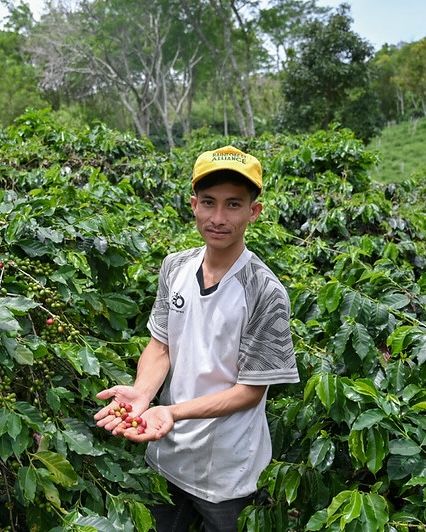
We are already seeing what this looks like in practice. At La Cumplida in Nicaragua—our first certified regenerative farm—investments in soil health across 2,200 hectares have boosted the vitality of their coffee plants. In Brazil, Fazenda Pinheiros credits regenerative practices with strengthening their climate resilience against soaring temperatures and severe droughts.
Studies show that regenerative practices can result in a 20 to 30 percent increase in net farm income. Given that 80 percent of farmers already live in severe poverty, a shift to regenerative practices could literally save lives.
We know consumers care. In 2025, we reached one million followers on Instagram, all of them looking to us for guidance on how to create a better world. They know our renowned little green frog seal—now found on 66,000 products worldwide—and with the first Rainforest Alliance Certified Regenerative coffee hitting shelves in 2026, they’ll have another way to turn their purchasing power into meaningful collective action.
Innovation across the board
And we didn’t stop there. Meeting this moment calls for new tools and new approaches—and we’re delivering them.
In 2025, we introduced version 1.4 of our Sustainable Agriculture Standard—the most streamlined, data-driven, and effective version to date. By reducing unnecessary complexity, it allows farmers to focus on practices that deliver the greatest impact, while giving companies clearer data to support responsible sourcing and compliance with emerging regulations.
We also reimagined and expanded how we engage companies. Not every actor is at the same stage, and accelerating change means meeting them where they are. Our Corporate Advisory Services team can direct companies to the next best step on their sustainability journey—whether that step is our new Sourcing Risk Assessment (which analyzes risks down to the field level), defining targets and strategy, or taking action on the ground through certification, one of our existing field programs, or building a new initiative through our Project Center.
Innovations continued in our 80 landscape and community programs, as well, and the results—from cocoa farmers in Ghana planting more than 1.3 million trees, to tea farmers in Vietnam embracing nature-friendly pest management—give every reason to hope.
Taken together, our tools—certification, landscape and community programs, risk assessments, field projects, and advisory services—reflect a broader shift from standalone interventions to a holistic approach to driving systemic change. It works because it serves every actor in the value chain—farmers, companies, governments, investors, and consumers—no matter their starting point.
Impact that matters
In 2025, our work helped avoid or sequester 5.5 million metric tons of greenhouse gas emissions. We supported the protection, better management, restoration, and sustainable cultivation of 11.9 million hectares of ecosystems—including precious tropical forests. Nearly 10.8 million farmers and workers on certified farms were informed of their rights and responsibilities. And through sustainability premiums and higher yields, we contributed to generating more than US$2 billion in additional farm income—helping build pathways toward living incomes for farming families.
These aren’t just numbers. They represent real change on the ground. Real families. Real forests. Real hope.
The path forward
Our task now is to ensure that what has taken root this year continues to grow—and flourish. I am convinced that we can do it. I have personally seen what happens when farmers are supported with the right tools and knowledge. I have seen what happens when companies move beyond compliance to genuine investment. I have seen what happens when governments, investors, and civil society work together toward shared goals. And when consumers are given a means to push the market in the right direction.
In 2025, our efforts took root and sent up promising green shoots. With further investment, care, and commitment, we can count on the harvest ahead: a better world for people and nature. Thanks for being a part of our movement for a regenerative future.

Santiago Gowland
Rainforest Alliance CEO
Our GlobalImpact
From field to market: Our alliance in action
Our need to protect tropical forests has never been greater: Covering only about six percent of the Earth’s land surface, they house more than 60 percent of vertebrate species—and crucially, they also regulate climate. But tropical deforestation and degradation continue at an alarming pace. The main culprit? Agriculture.
It’s urgent that we transform the way food is produced. But real change doesn’t happen in isolation. It requires action at every level—from the field to the boardroom.
On the ground, in critically important tropical landscapes, we work with frontline communities, governments, donors, and other local partners to promote sustainable land-management practices and thriving rural livelihoods. And across the breadth of our business solutions, we work with both producers and companies to transform markets.
Together, these efforts form our comprehensive strategy to make markets and agriculture into forces for a regenerative future.
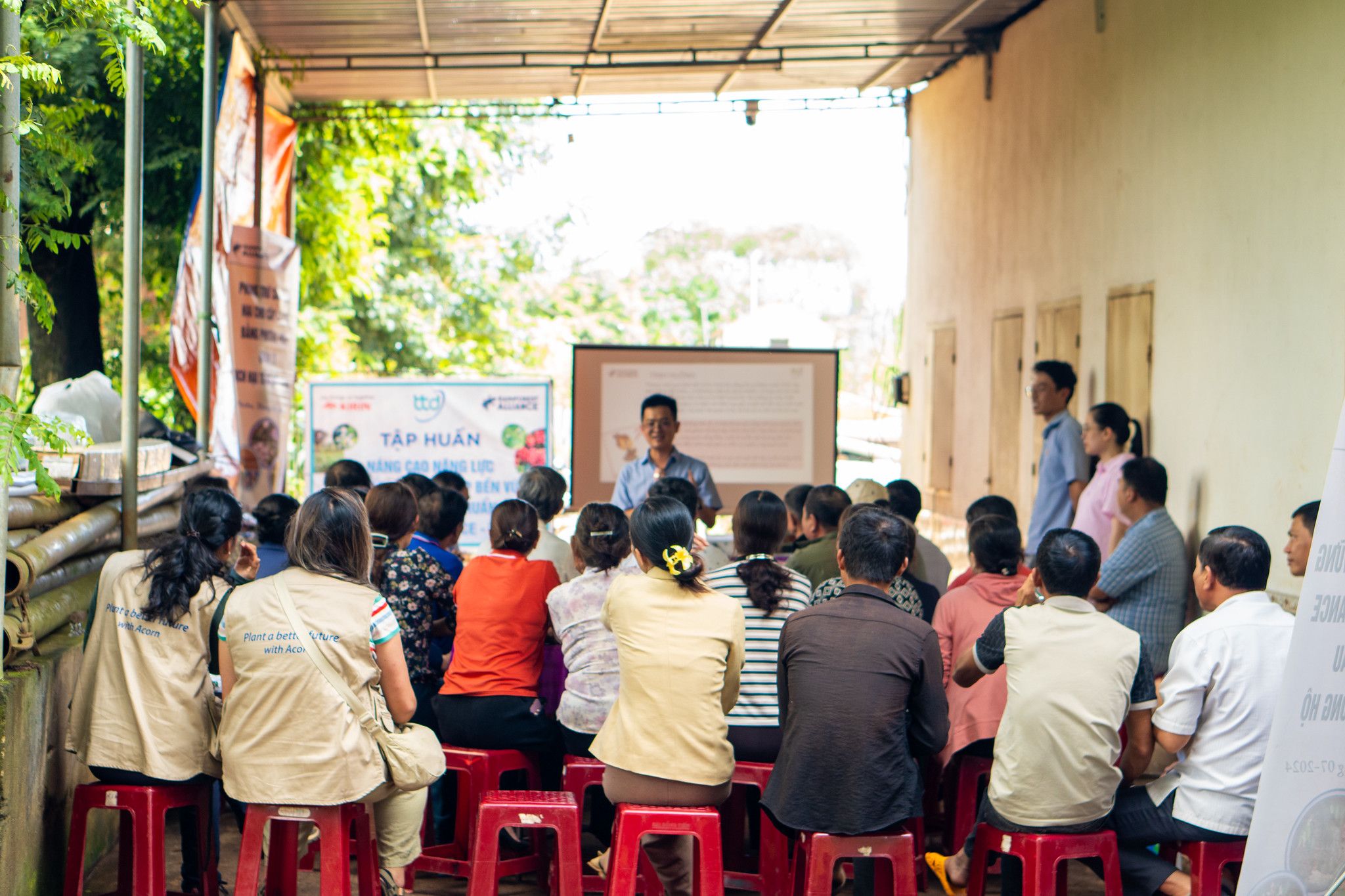
Certification & business solutions
Landscape & community programs
Driving impact in 64 countries
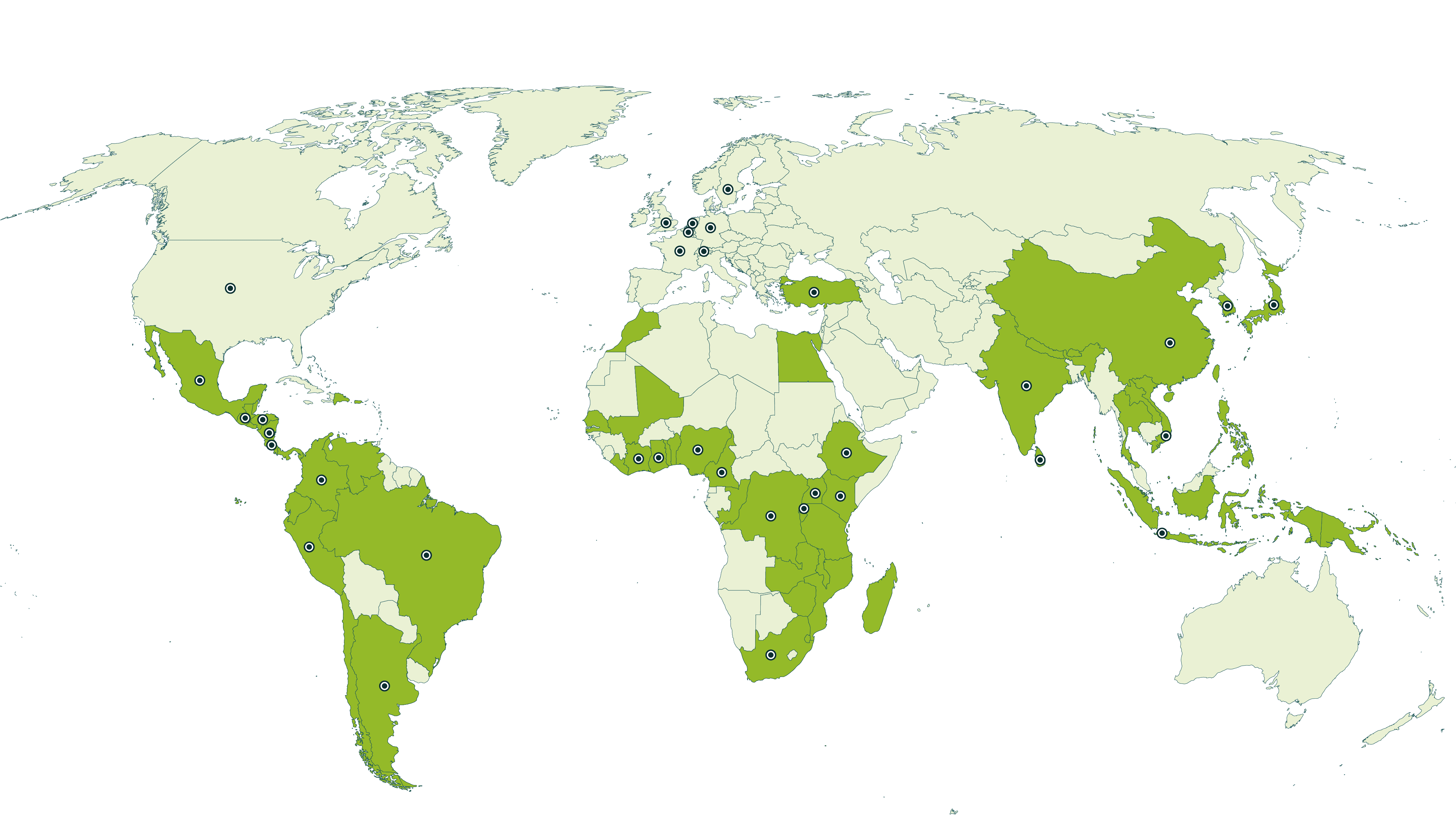 Countries with certified farms
 Rainforest Alliance offices and staff locations
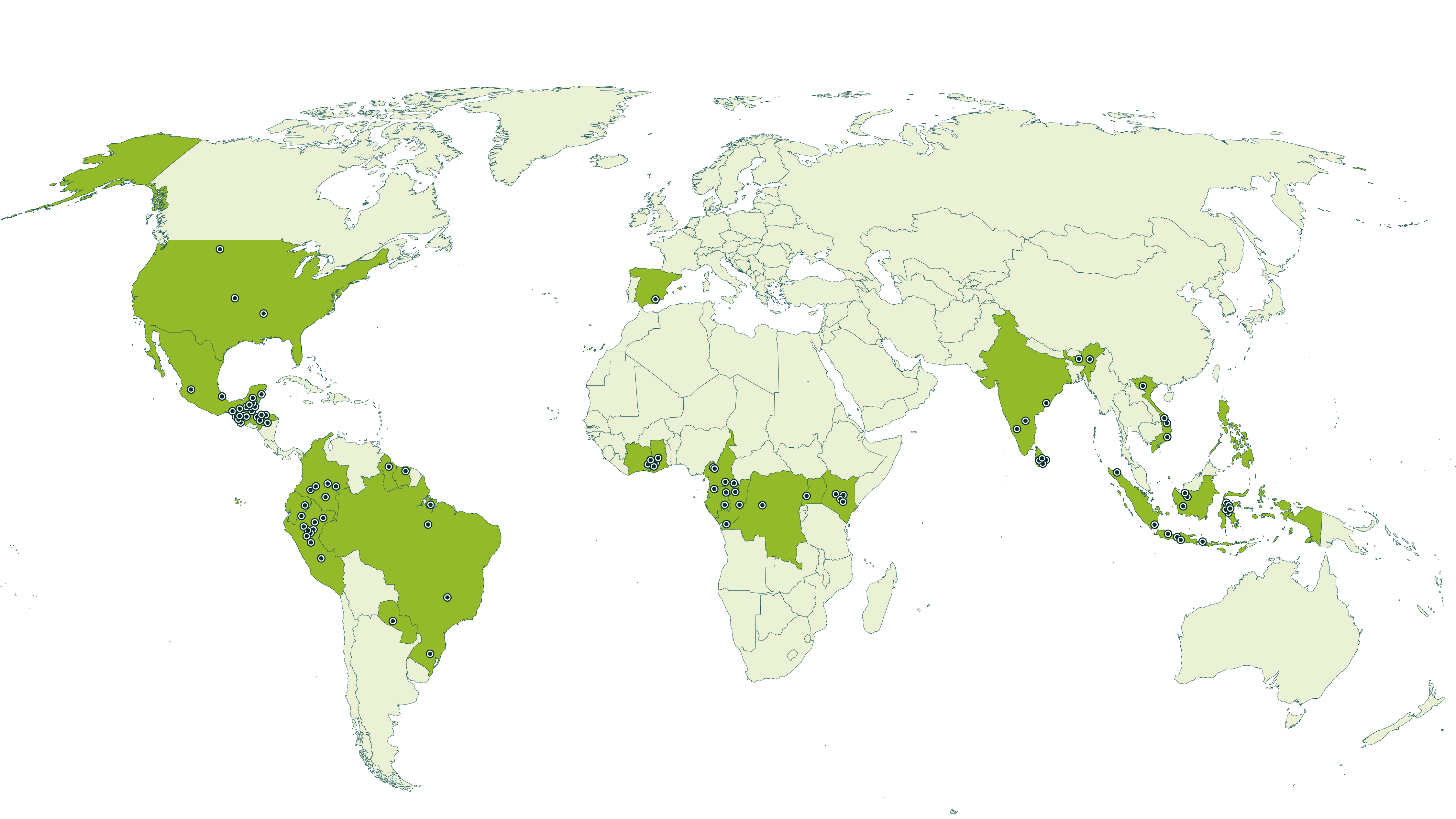 Landscape and community project sites
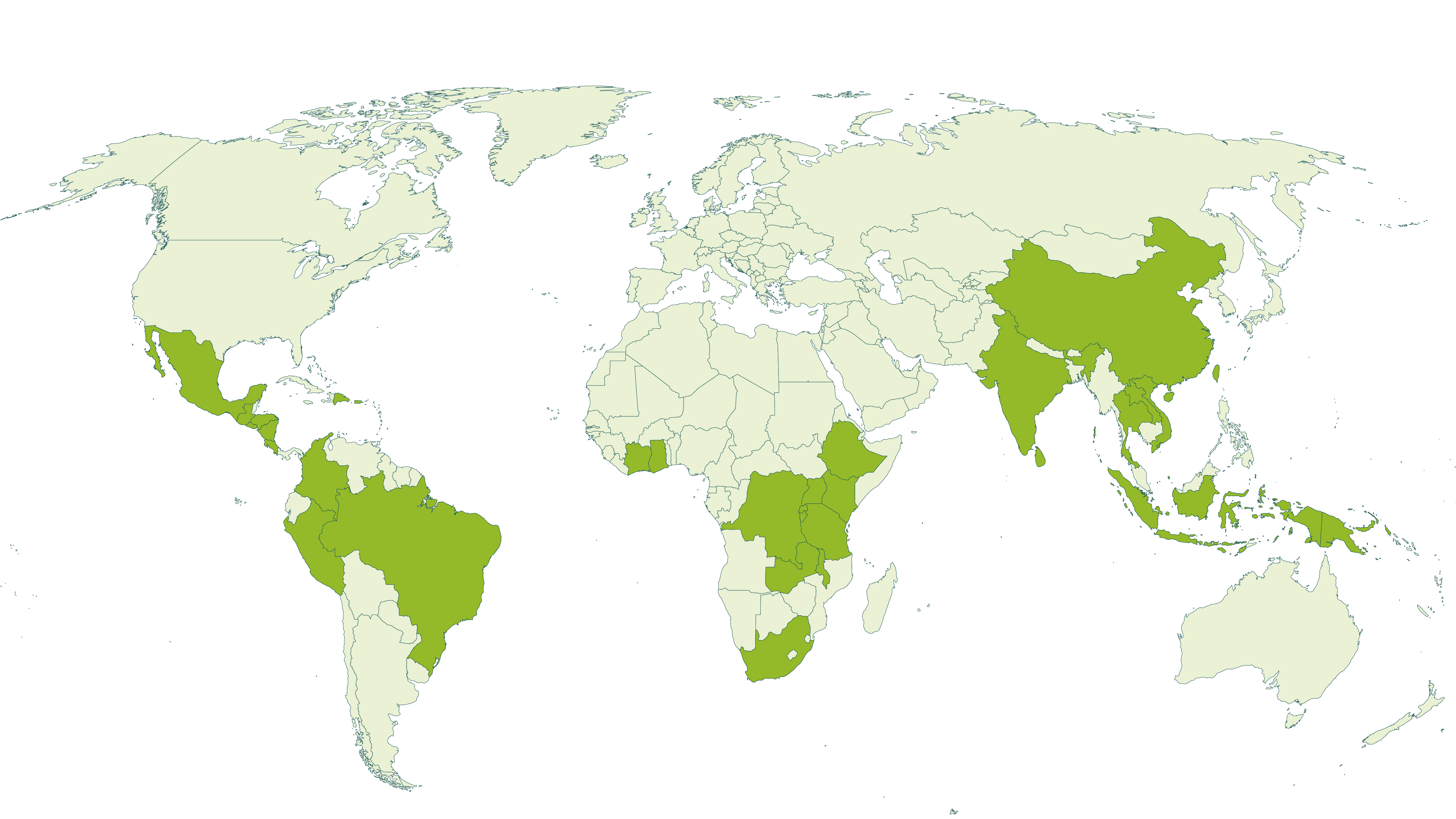 Countries with certified coffee farms
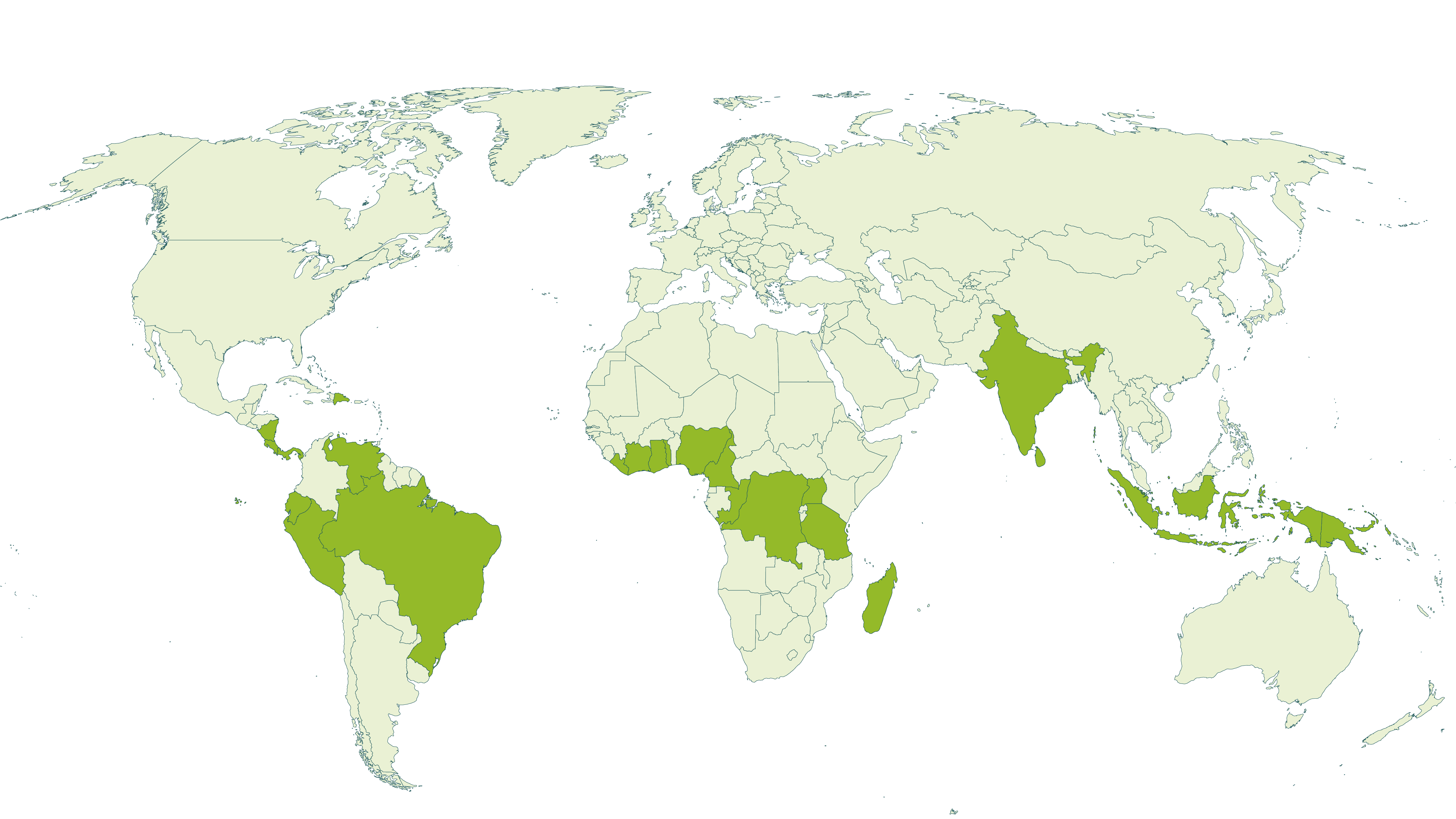 Countries with certified cocoa farms
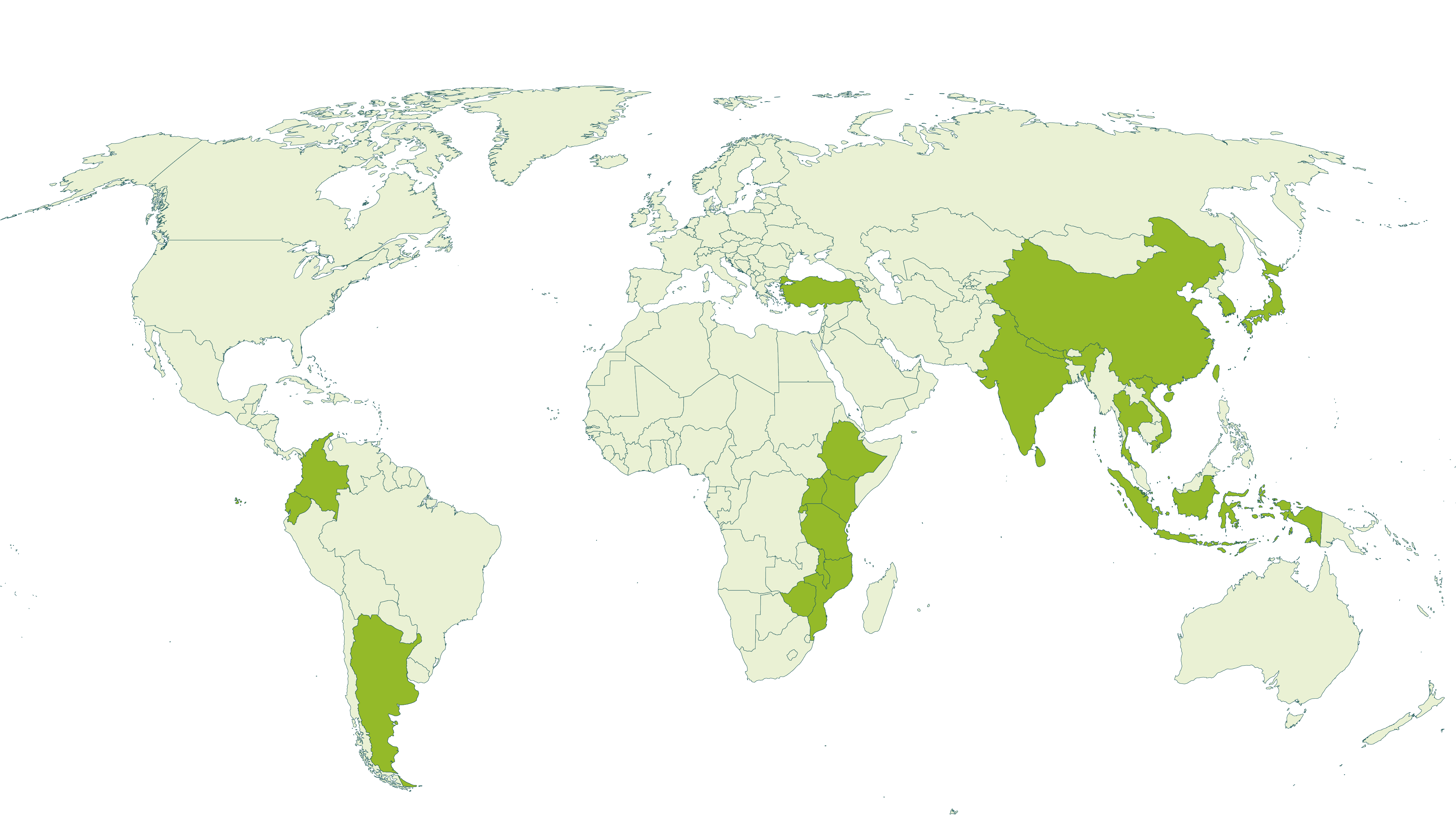 Countries with certified tea farms
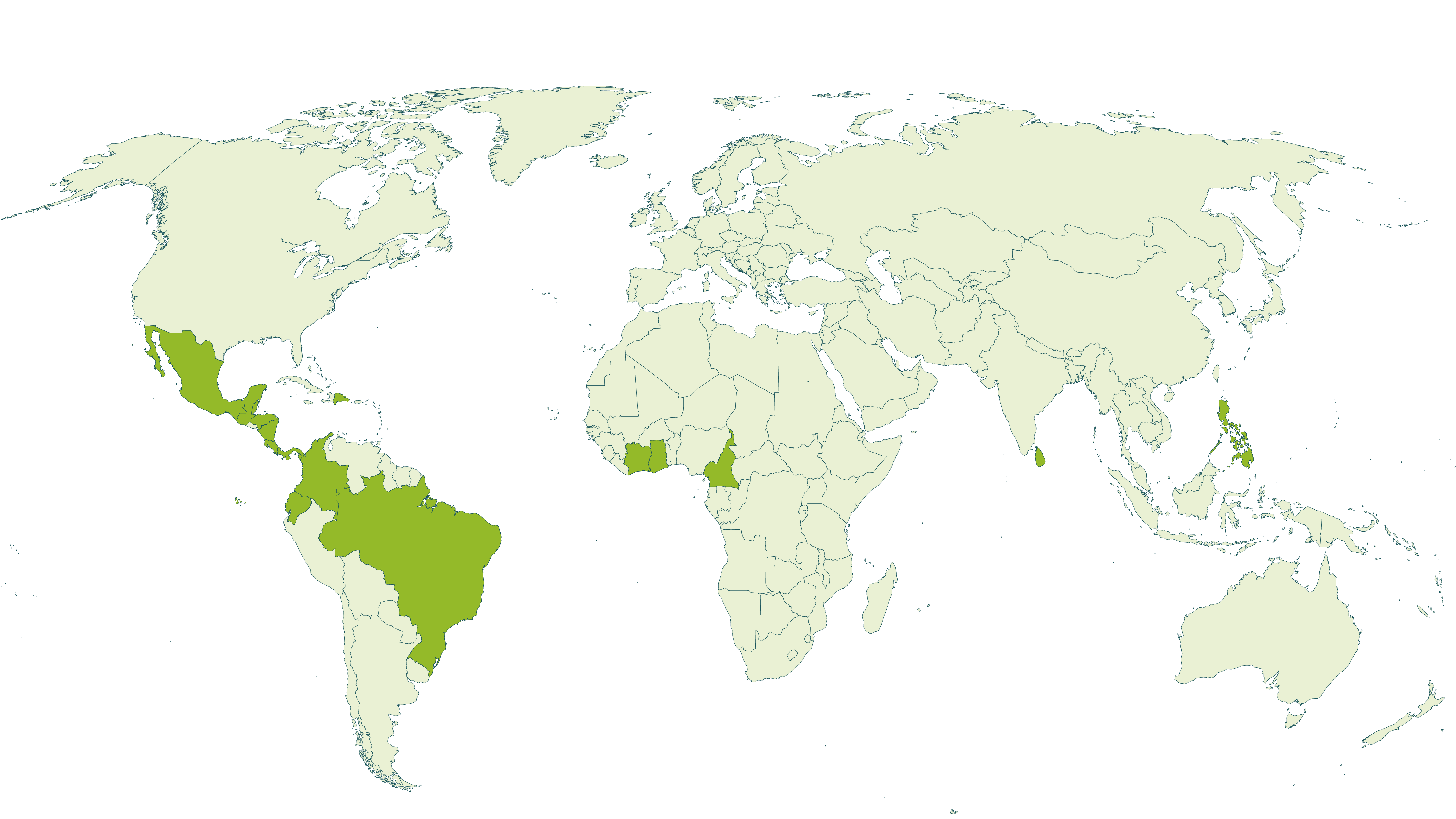 Countries with certified banana farms
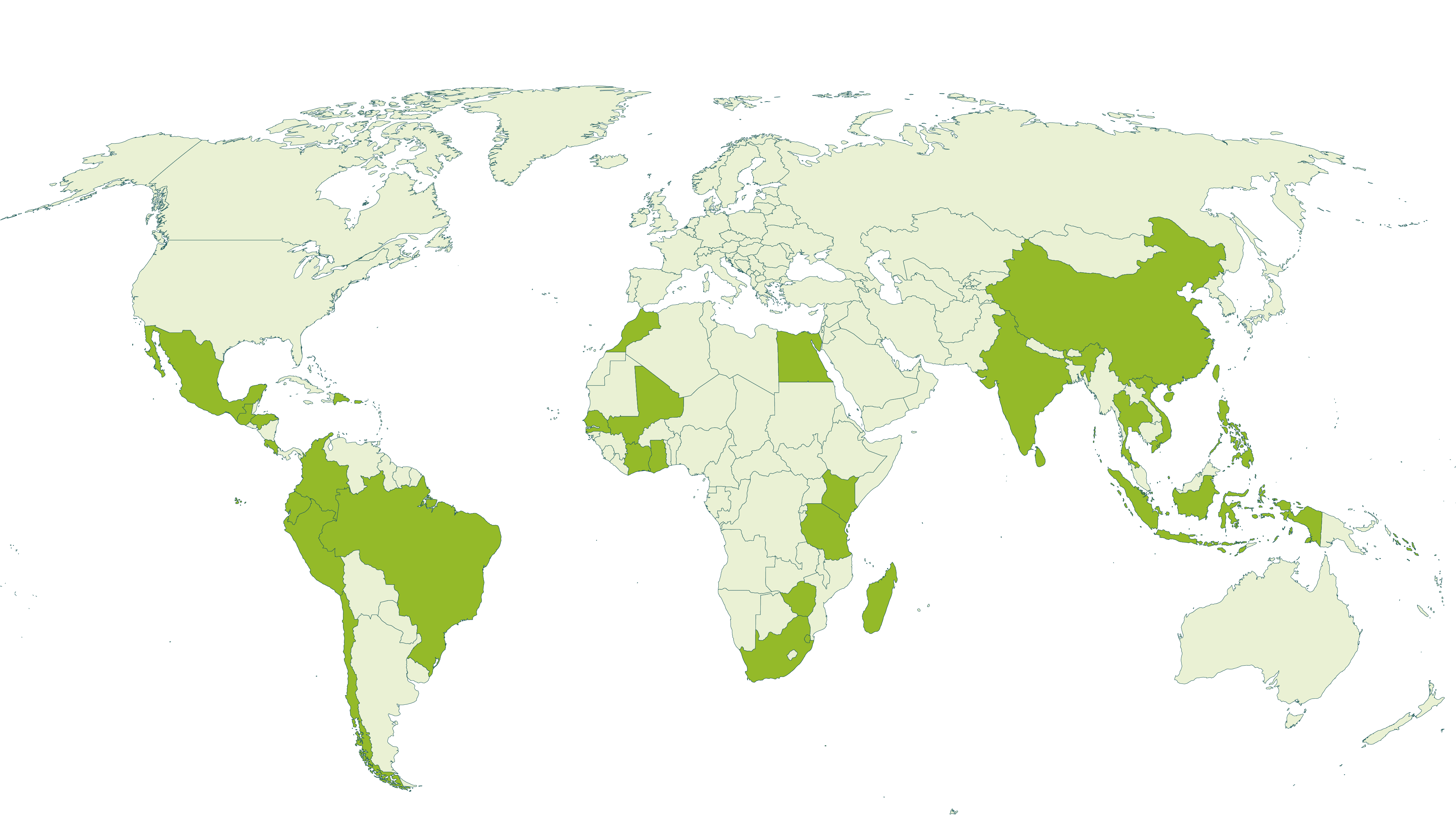 Countries with certified fruit farms (see our Crop List for details)
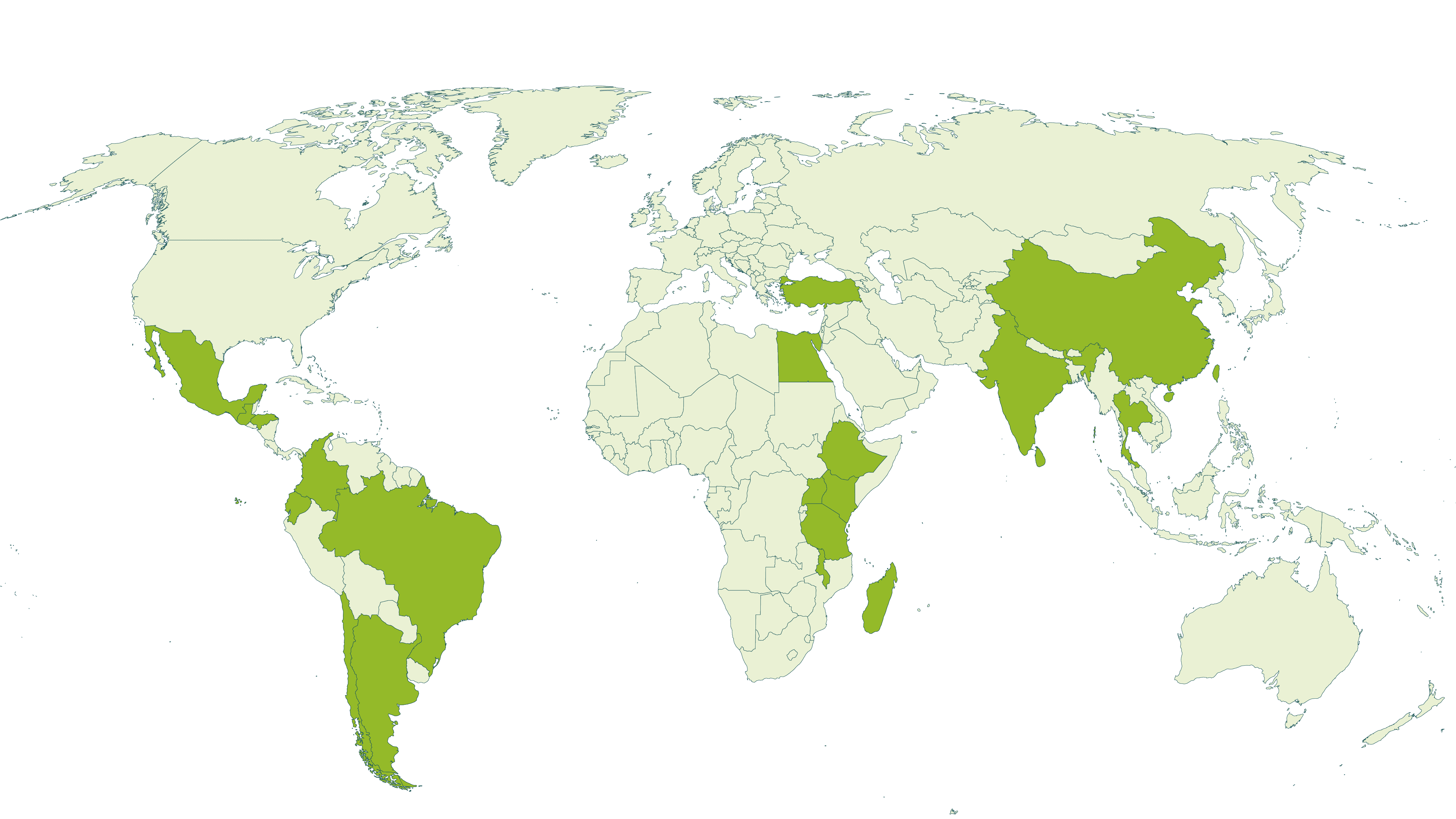 Countries with certified herb and spice farms (see our Crop List for details)
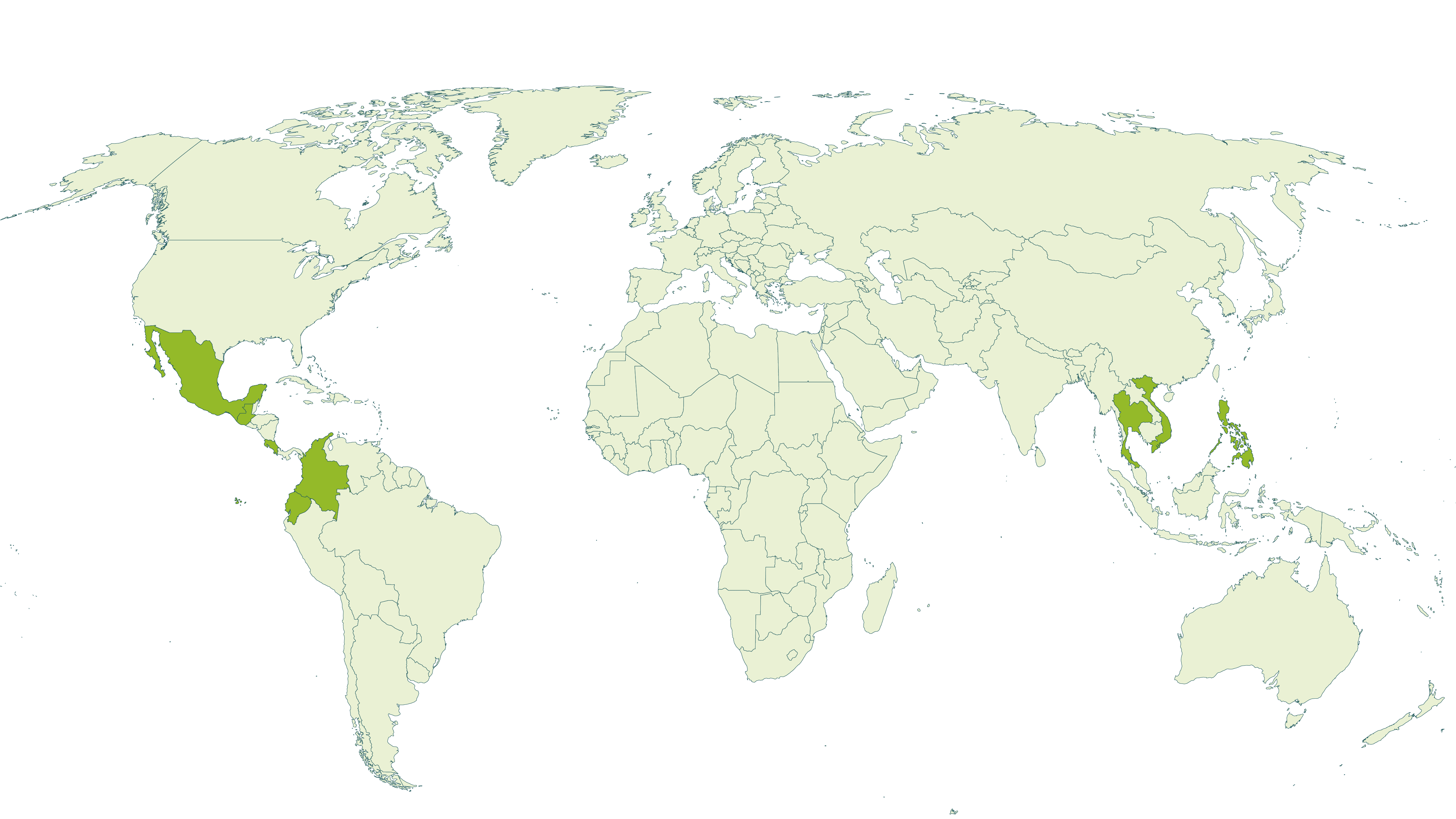 Countries with certified flower and plant farms (see our Crop List for details)
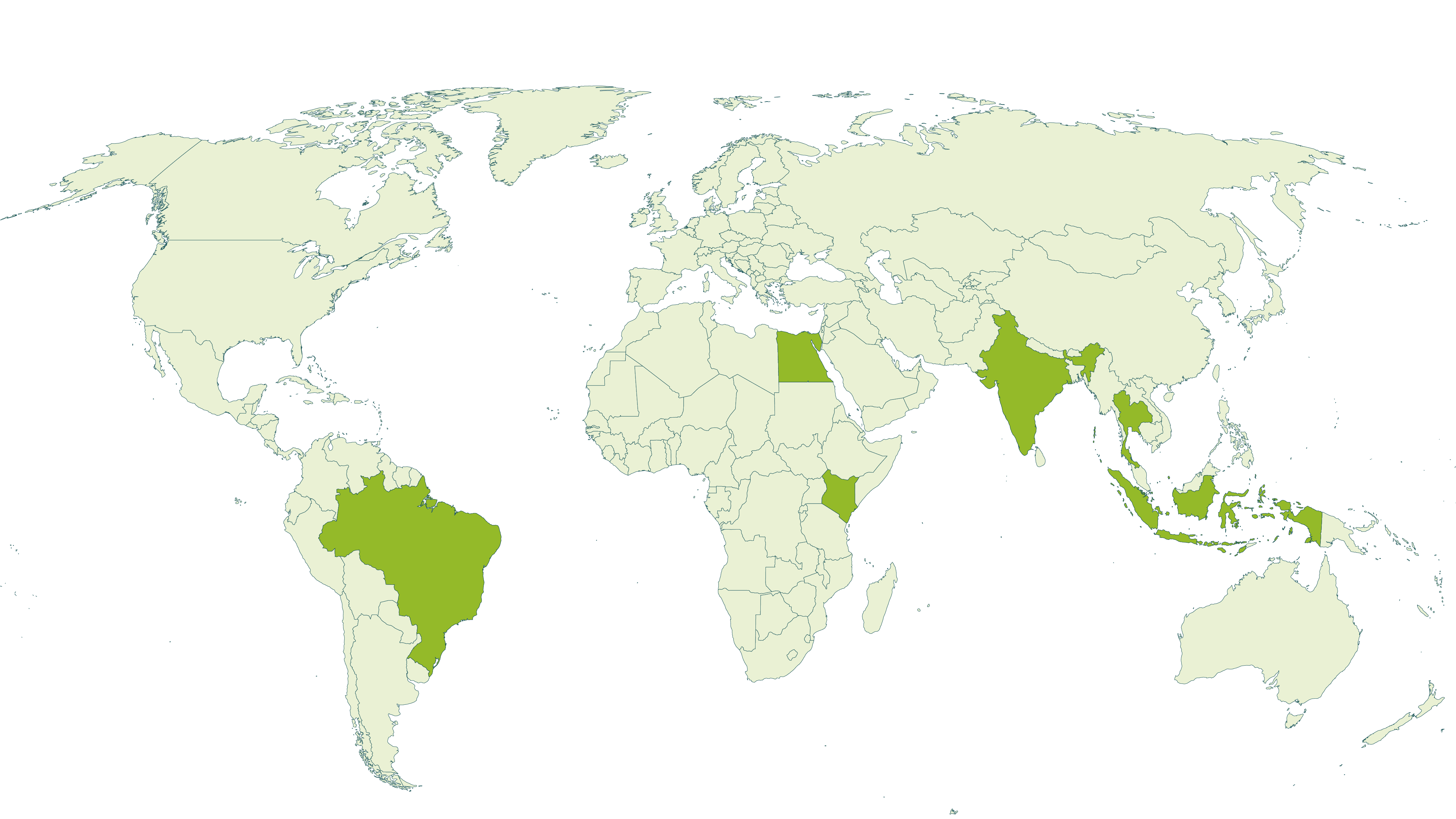 Countries with certified vegetable farms (see our Crop List for details)
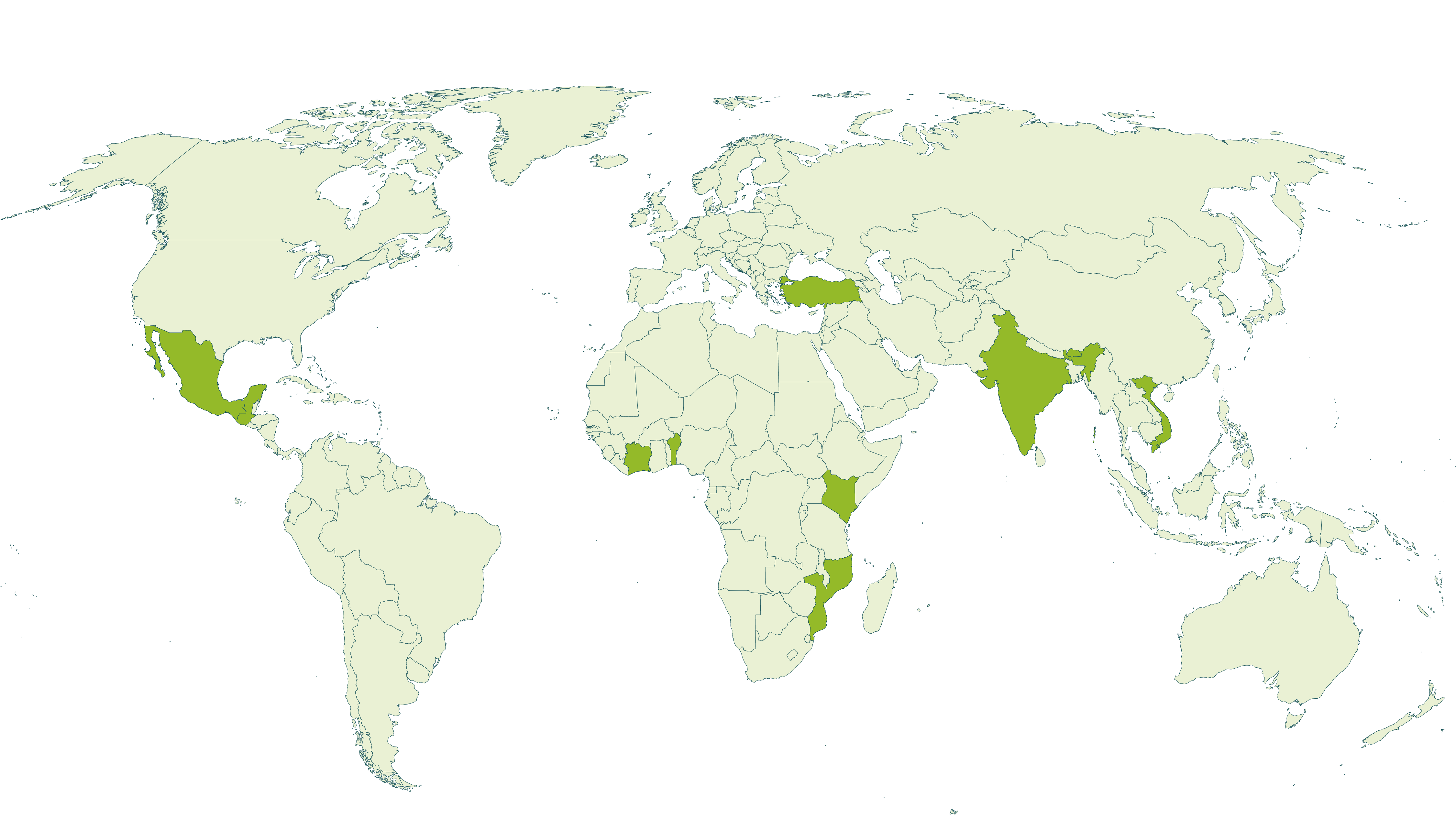 Countries with certified nut farms (see our Crop List for details)
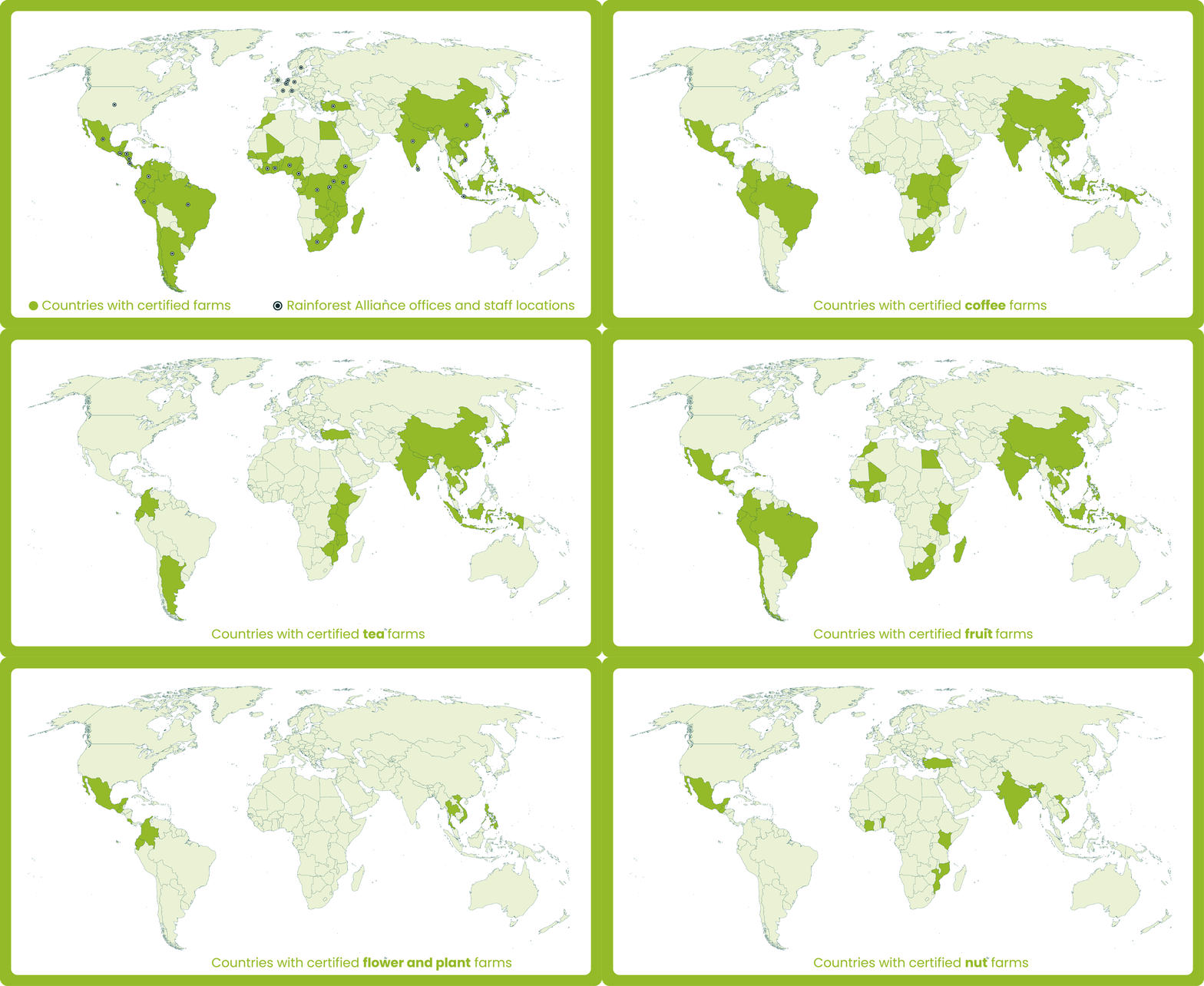
Our areas of impact
Climate impact
As the climate crisis accelerates, how we farm and manage forests matters more than ever. By scaling up regenerative agriculture and forest conservation, we work to reduce emissions and store more carbon.
5.5 m
metric tons of greenhouse emissions avoided or sequestered
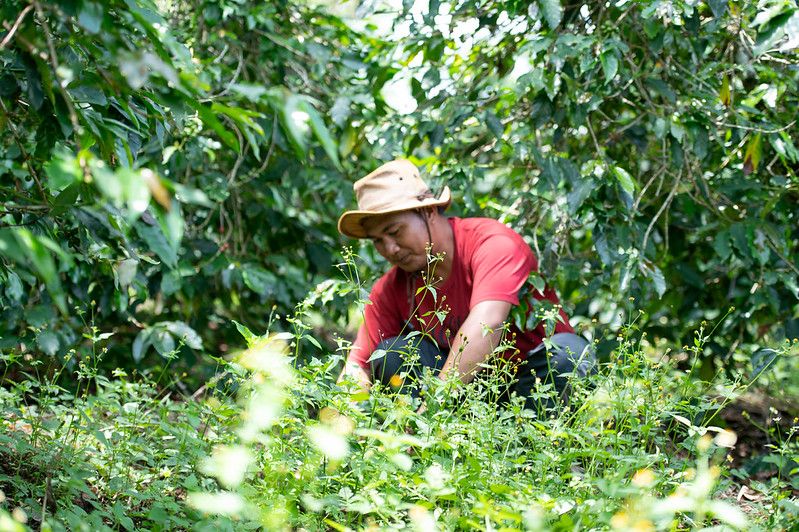
Sustaining ecosystems
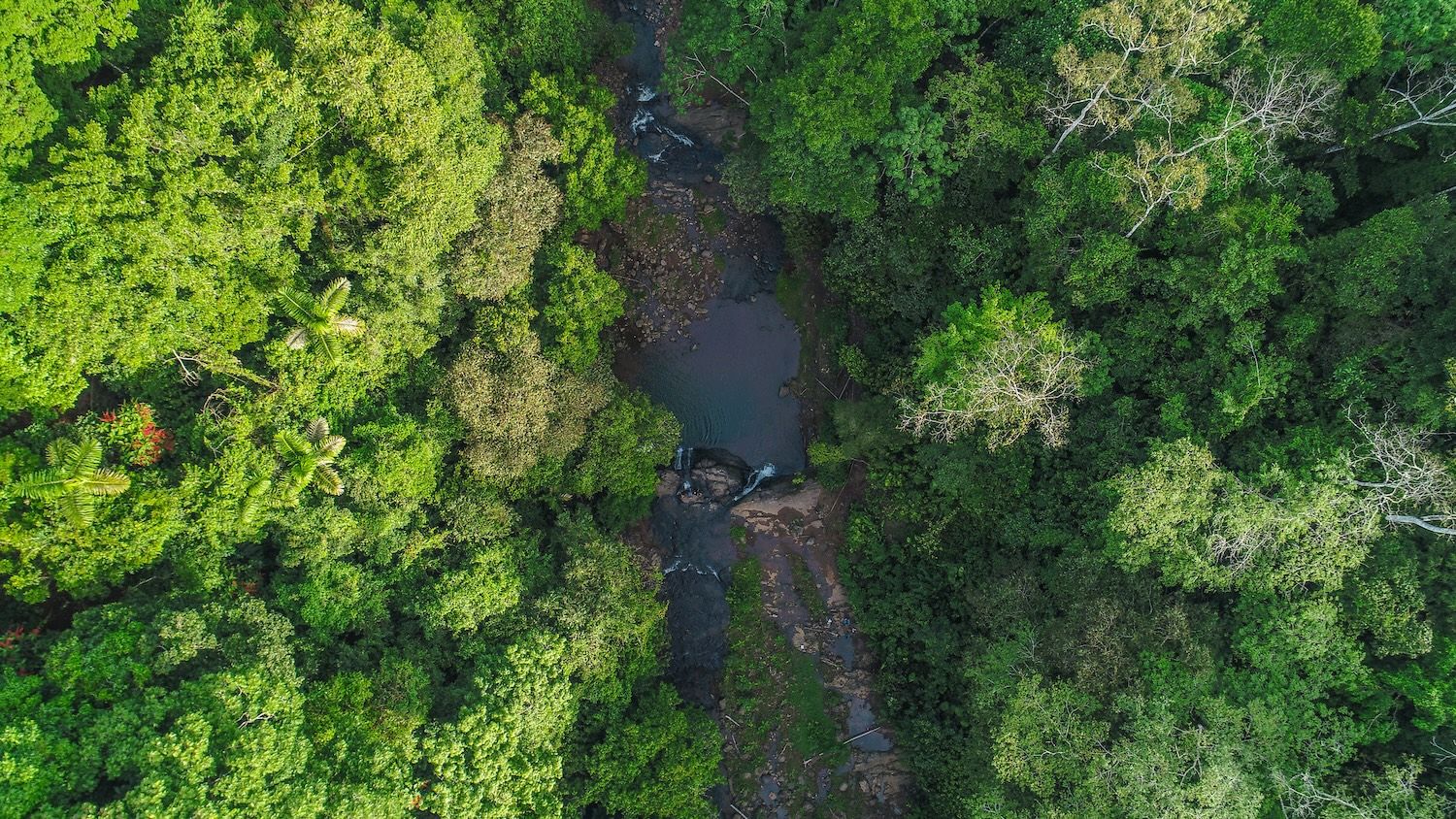
From lush rainforests to soaring mountain landscapes, tropical ecosystems don’t just sustain life, they make it possible. Our goal: to restore what’s been degraded and protect what remains.
11.9 M
hectares of ecosystems protected, better managed, restored, and sustainably cultivated
Conserving biodiversity
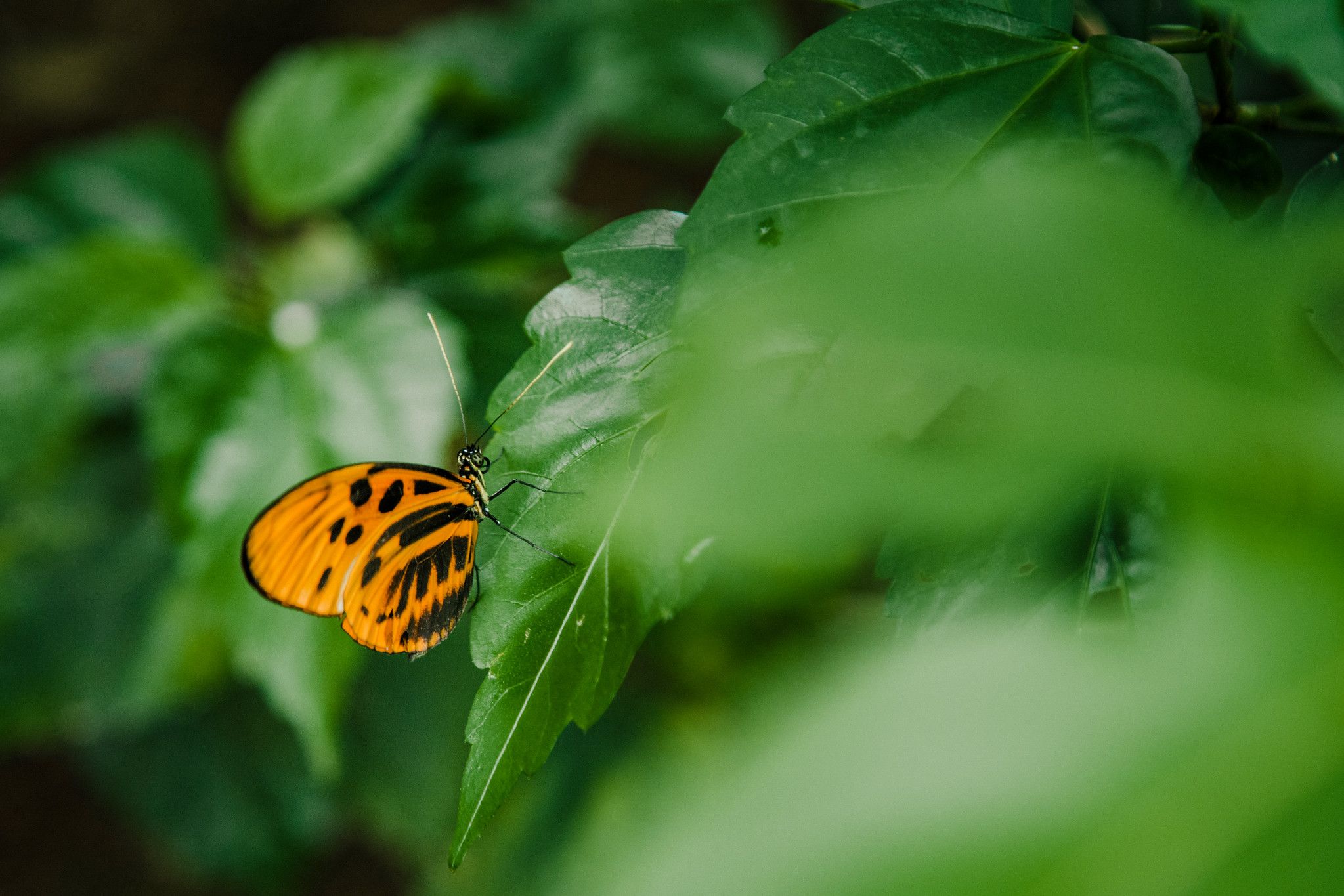
One million species are at risk of extinction, largely due to habitat loss from agricultural expansion. We help protect biodiversity-rich landscapes to bring ecosystems back into balance—within and beyond farms.
937,700
hectares of biodiversity-rich areas supported through ecosystem protection or restoration activities1
Strengthening rights
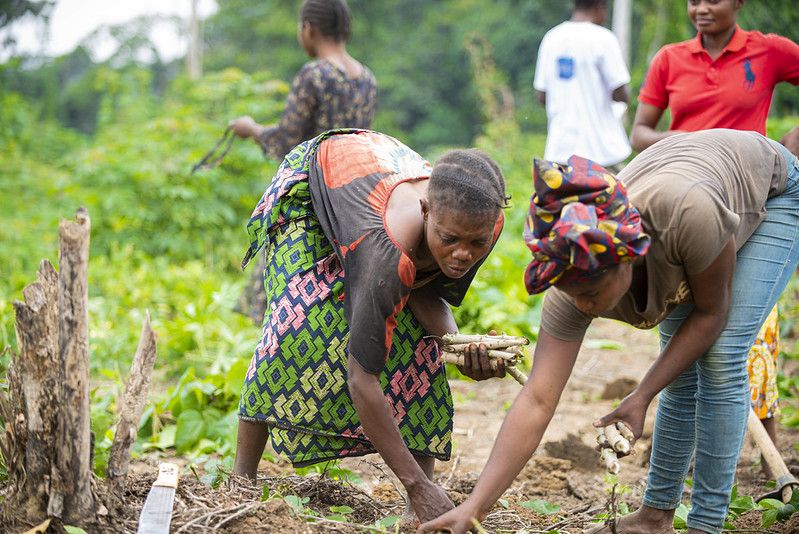
Farmers and farm workers are the backbone of our global food system, yet too many face unsafe conditions and exploitation. Stronger protections and greater awareness are key to making dignity, safety, and opportunity the norm.
10.8 m
farmers and workers informed of their rights and responsibilities
Improving rural livelihoods
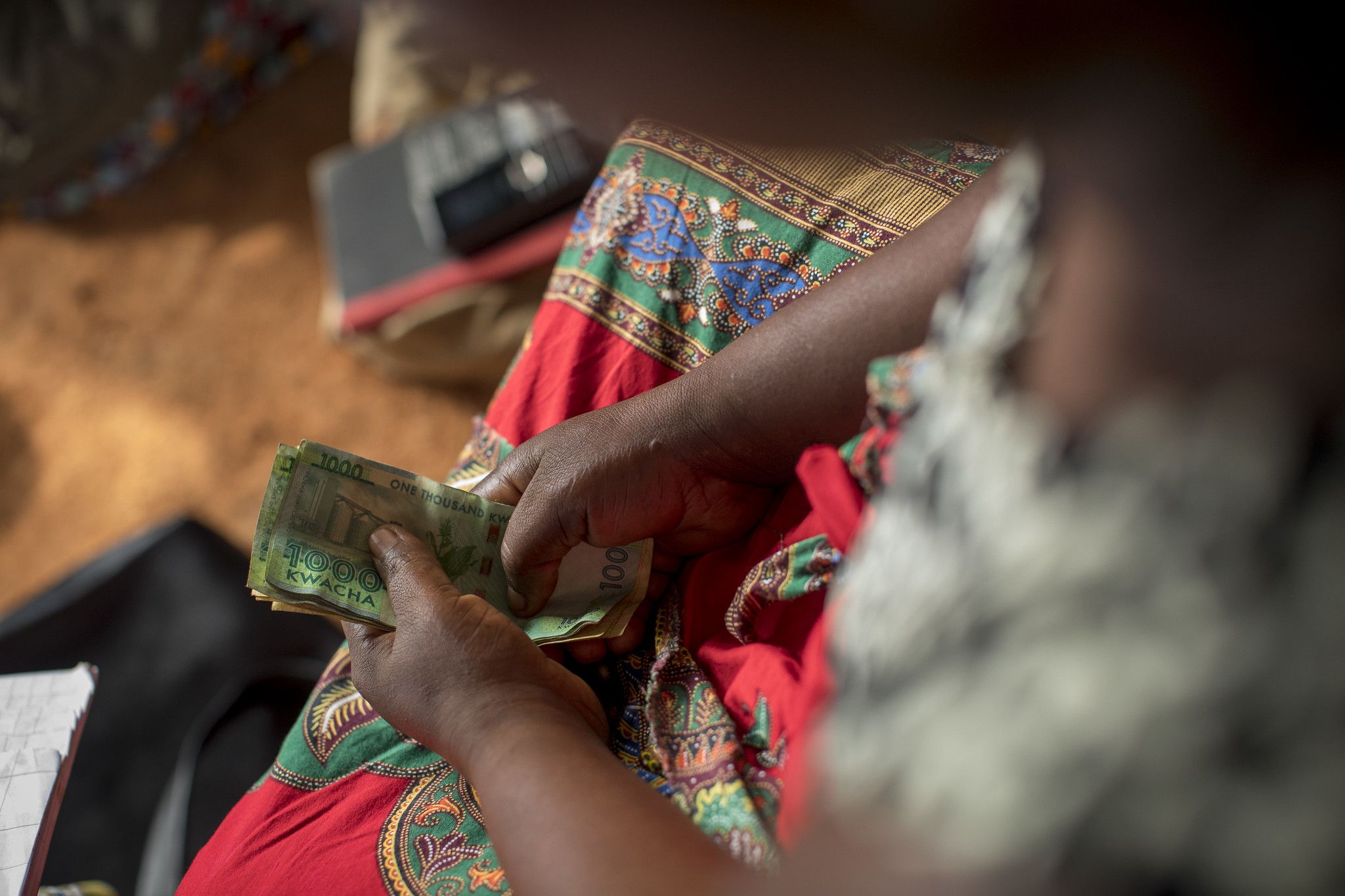
Farming families should thrive, not just survive, but low prices, poor yields, and unequal market access hold many back. By boosting productivity and strengthening market connections, we are supporting pathways to a living income.
$2.3 B
in additional farm income due to sustainability premiums and higher yields
small frog. big Impact.
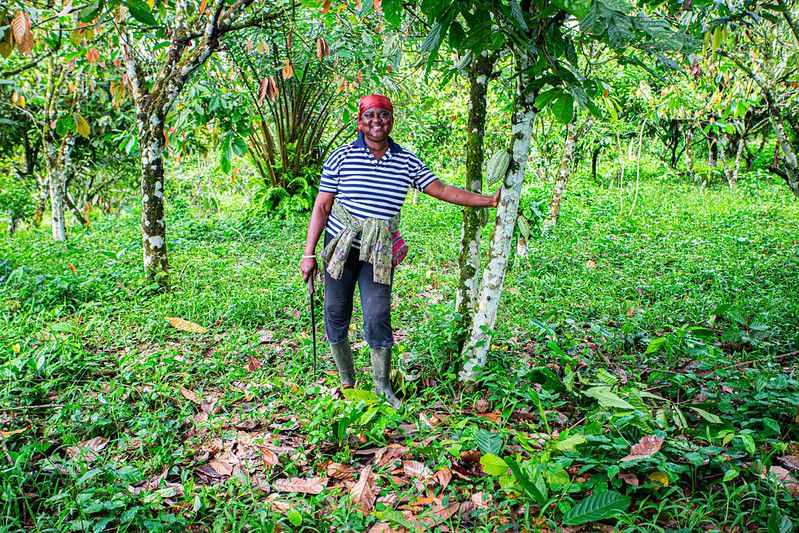
Consumers are a powerful driving force for positive change. Every time someone chooses a product with our little green frog seal it helps drive demand for responsible sourcing—adding up to big impact across global supply chains.
Brand awareness
Trust in our brand is what allows us to translate vision into action. In 2025, brand recognition leapfrogged in key markets and grew steadily globally.
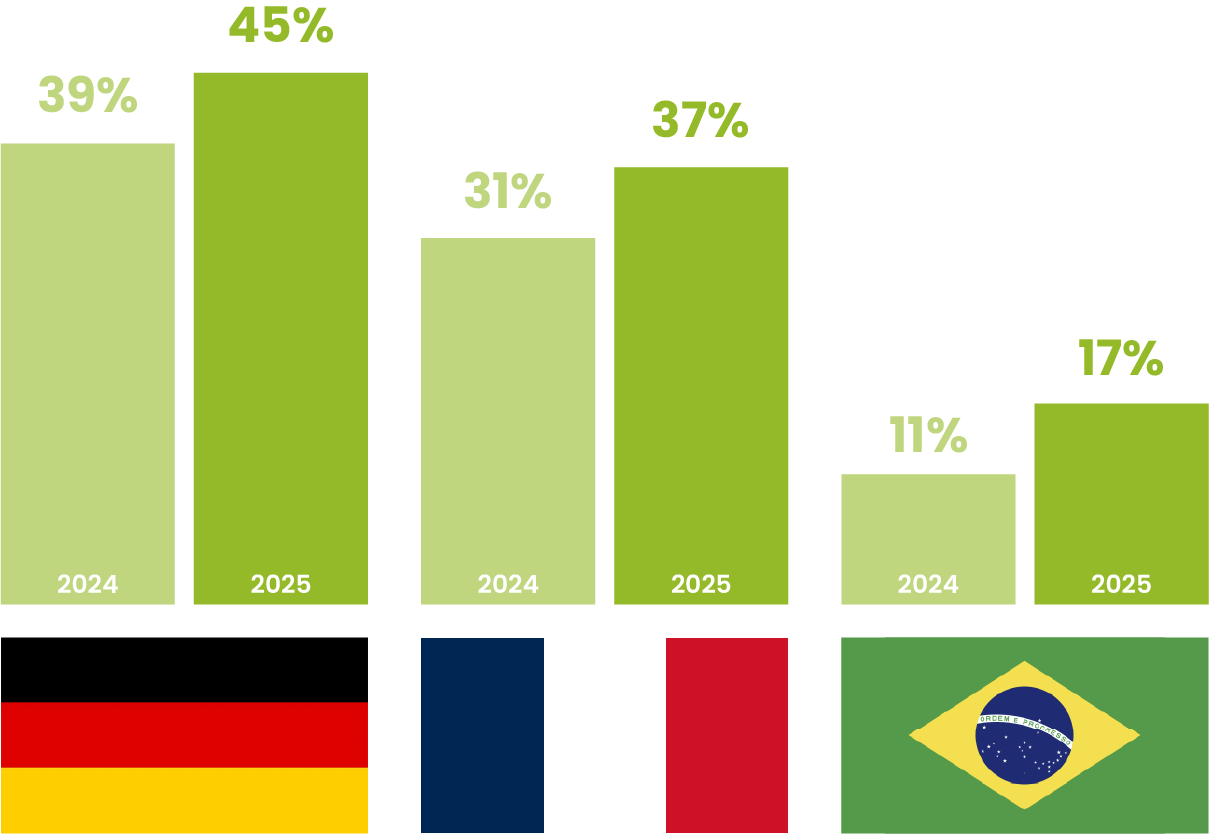
Brand recognition growth in our three fastest growing markets. Source: Ipsos I-Omnibus, October 2025.

A movement gaining ground
Our alliance is growing. In 2025, we welcomed 1.4 million new members across social media and email, hitting the big one million mark on Instagram. This growth represents more than just numbers—it’s a global movement of people calling out for a regenerative future.
In the news





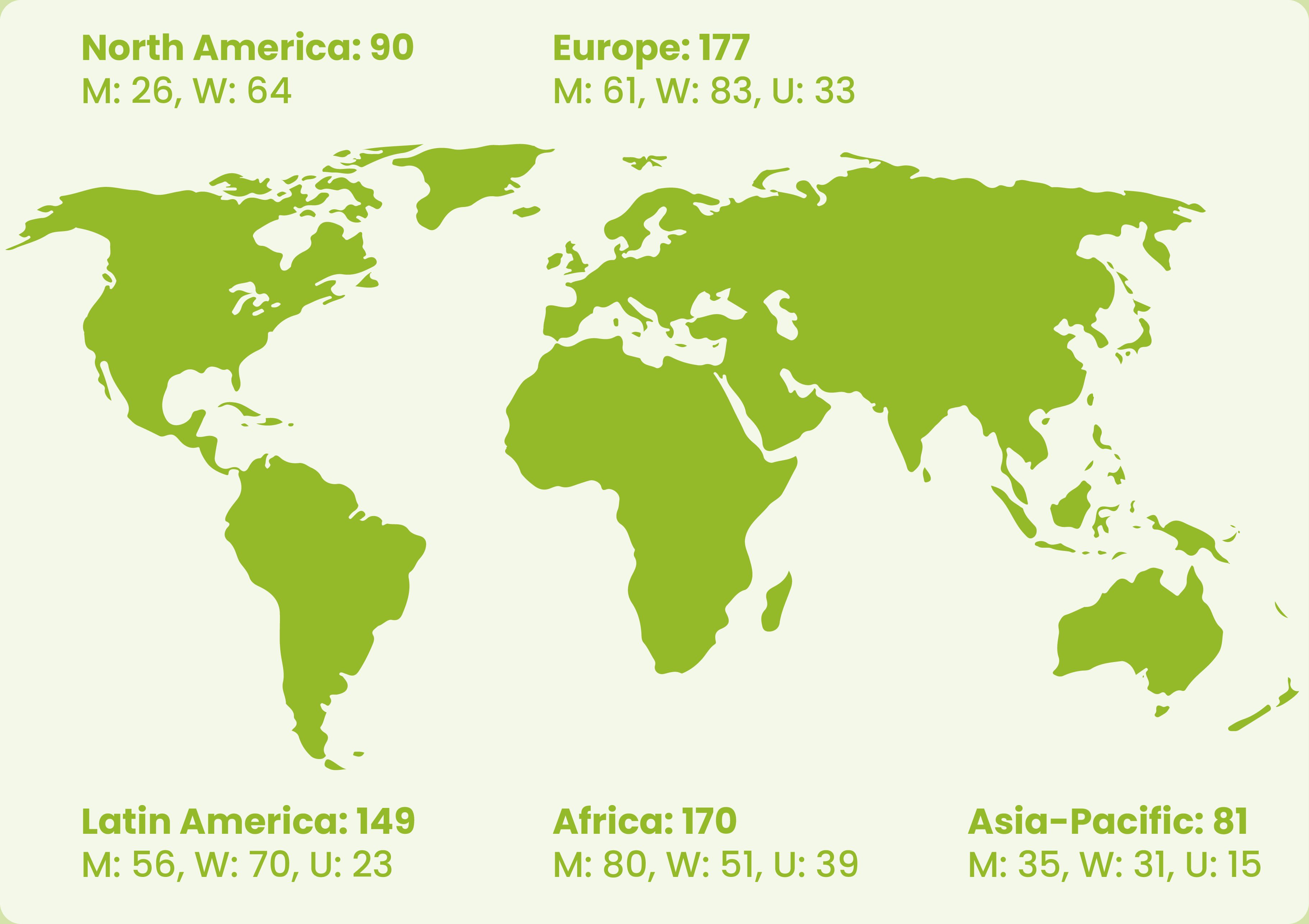
Staff statistics
667
total staff in 36 countries across 5 continents
- Men: 258 (39%)
- Women: 299 (45%)
- Undisclosed: 110 (16%)
Leadership team and directors: 49
- Men: 23 (47%)
- Women: 22 (45%)
- Undisclosed: 4 (8%)
Storiesfrom the Field
Deepening our impact on the ground
The best way to transform landscapes is to put local communities in the driver’s seat. All our work starts with deep listening; after assessing needs and challenges, we co-create solutions with the people who live in these landscapes and know them best. With a focus on five closely connected impact areas—ecosystems, biodiversity, livelihoods, climate resilience, and human rights—we support a local vision of sustainability through our field projects, certification program, and beyond.
Whether it’s promoting coexistence with wildlife or conserving sacred forests, the examples below show how our solutions are rooted in the complex realities of each landscape and every community—designed to amplify local change into global impact.
CLIMATE IMPACT
Around the world, we’re scaling up regenerative agriculture and forest conservation to help reduce emissions and store carbon.
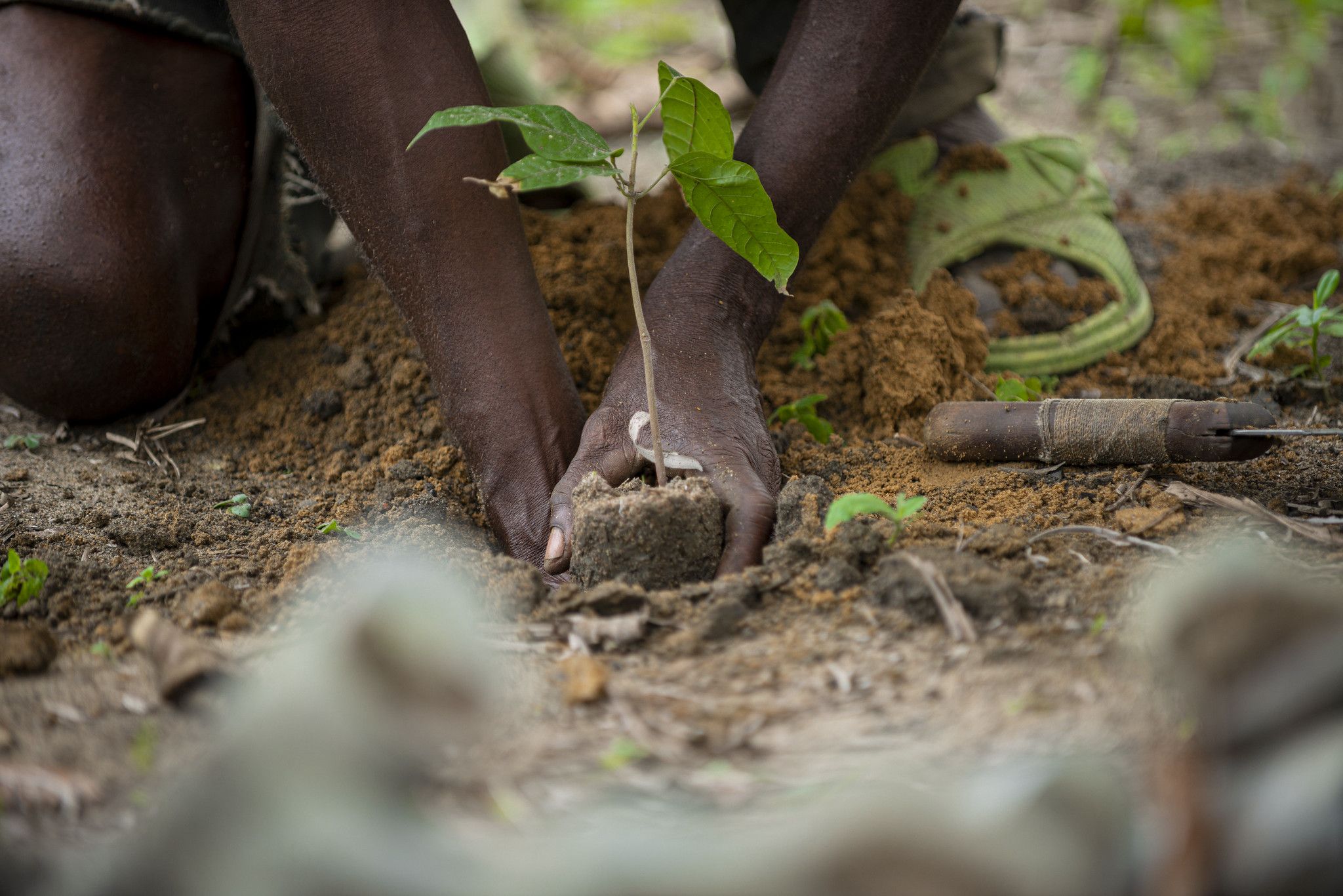
Planting the seeds of resilience in Ghana
Across Ghana, communities face growing climate pressures—from deforestation and land degradation to bushfires and declining soil fertility. While many communities were grappling with the same challenges, they lacked the means to act together.
The EU LEAN project, which wrapped up in 2025, helped change that. Through eight community-led Landscape Management Boards, farmers and forest communities joined forces with government, companies, and other partners to restore landscapes, prevent fires, and build resilience. Today, more than 181,000 hectares are being sustainably managed, and more than 1,100 fire volunteers have been trained—equipping communities with the skills and systems to create thriving economies and ecosystems well into the future.
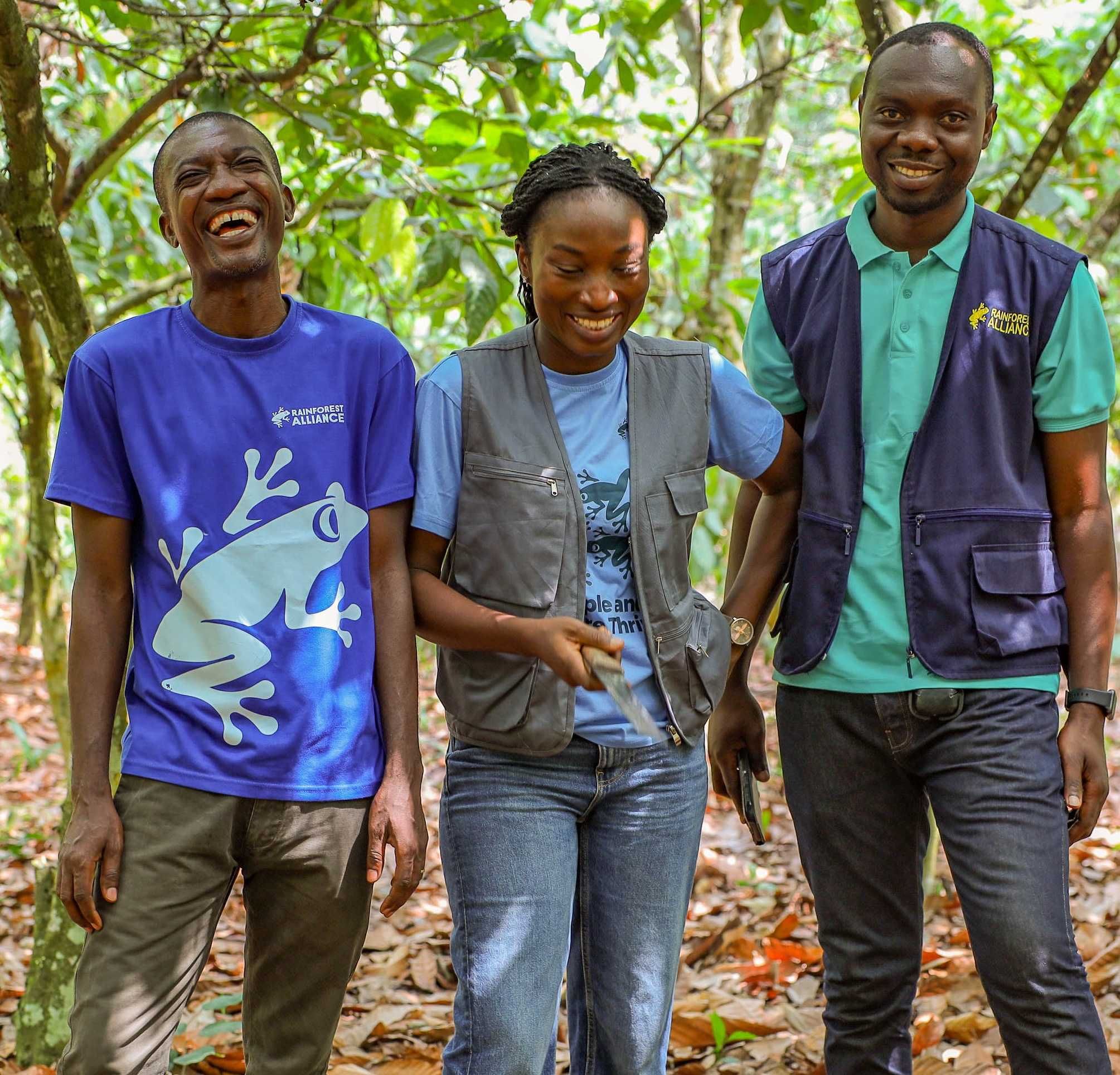
“The harsh weather conditions affected our cocoa farms, and productivity was decreasing. [The Rainforest Alliance] trained me in climate-smart agriculture. I see much improvement after practicing what I learned.”
Rita Agyemang, cocoa farmer
SUSTAINING ECOSYSTEMS
We’re working around the globe to restore what’s been degraded and protect what remains.
Communities rally to restore Cameroon’s sacred forests
Across Cameroon’s Western Highlands, deforestation not only threatens highly vulnerable tropical ecosystems, but also centuries of cultural heritage. The region is home to sacred forests—important spiritual sites for ancestral communication and ritual ceremonies.
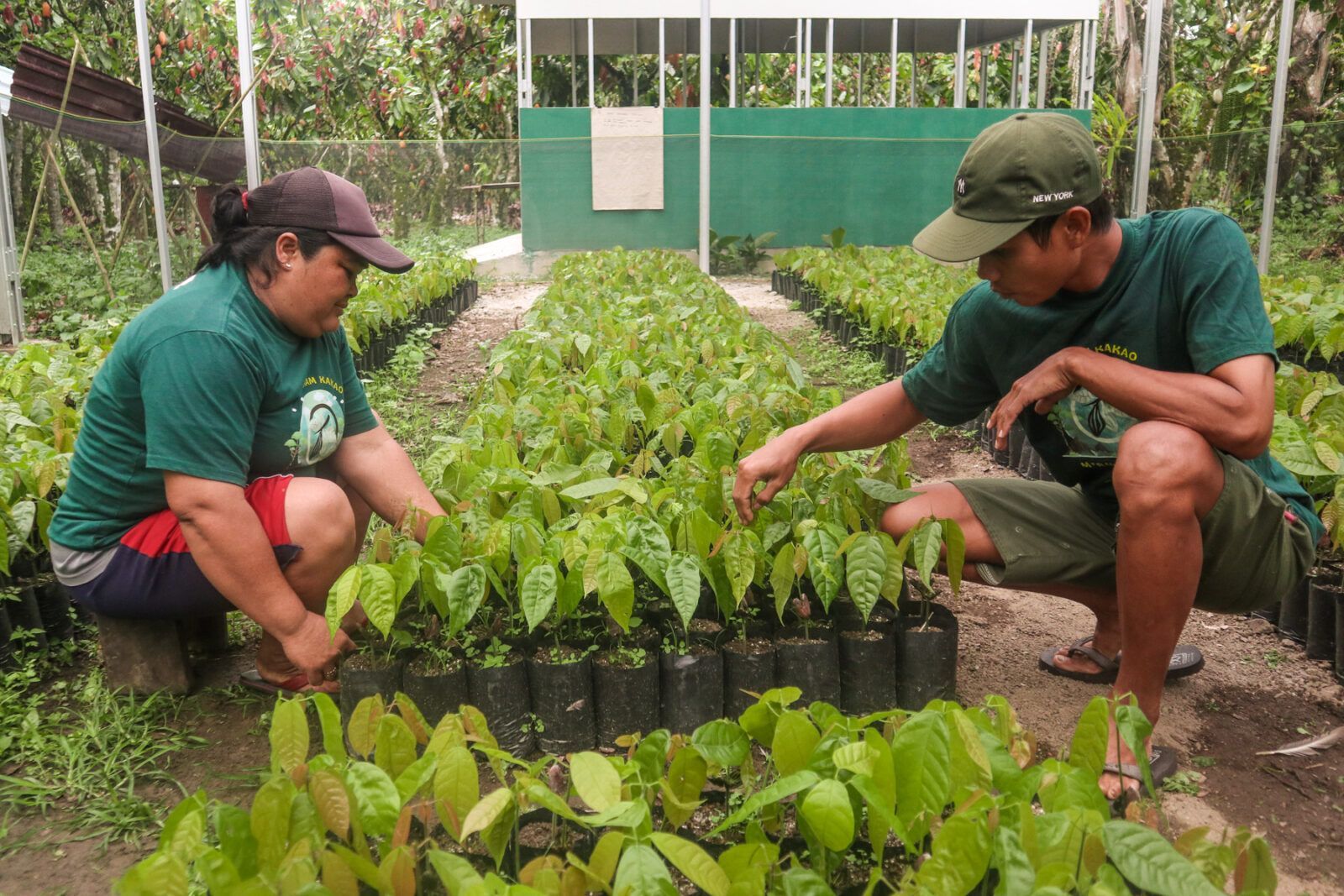
From 2020 to 2025, the Rainforest Alliance worked alongside traditional chiefs to restore and protect these landscapes in ways that respect local customs. As a result, nearly 6,000 farmers have adopted sustainable growing practices, helping reduce pressure on the forests. At the same time, communities set up 12 tree nurseries—planting more than 90,000 native seedlings across more than 250 hectares—to help these sacred forests flourish for generations to come.
“These seedlings were produced right here in Bapa, thanks to the training provided. By distributing them to the custodians of our sacred forests, we are strengthening both our ecological heritage and the knowledge within our community.”
His Majesty Simeu David, King of the Bapa chiefdom

CONSERVING BIODIVERSITY
We are working to protect and restore biodiversity—within and beyond farms—in all parts of the world.
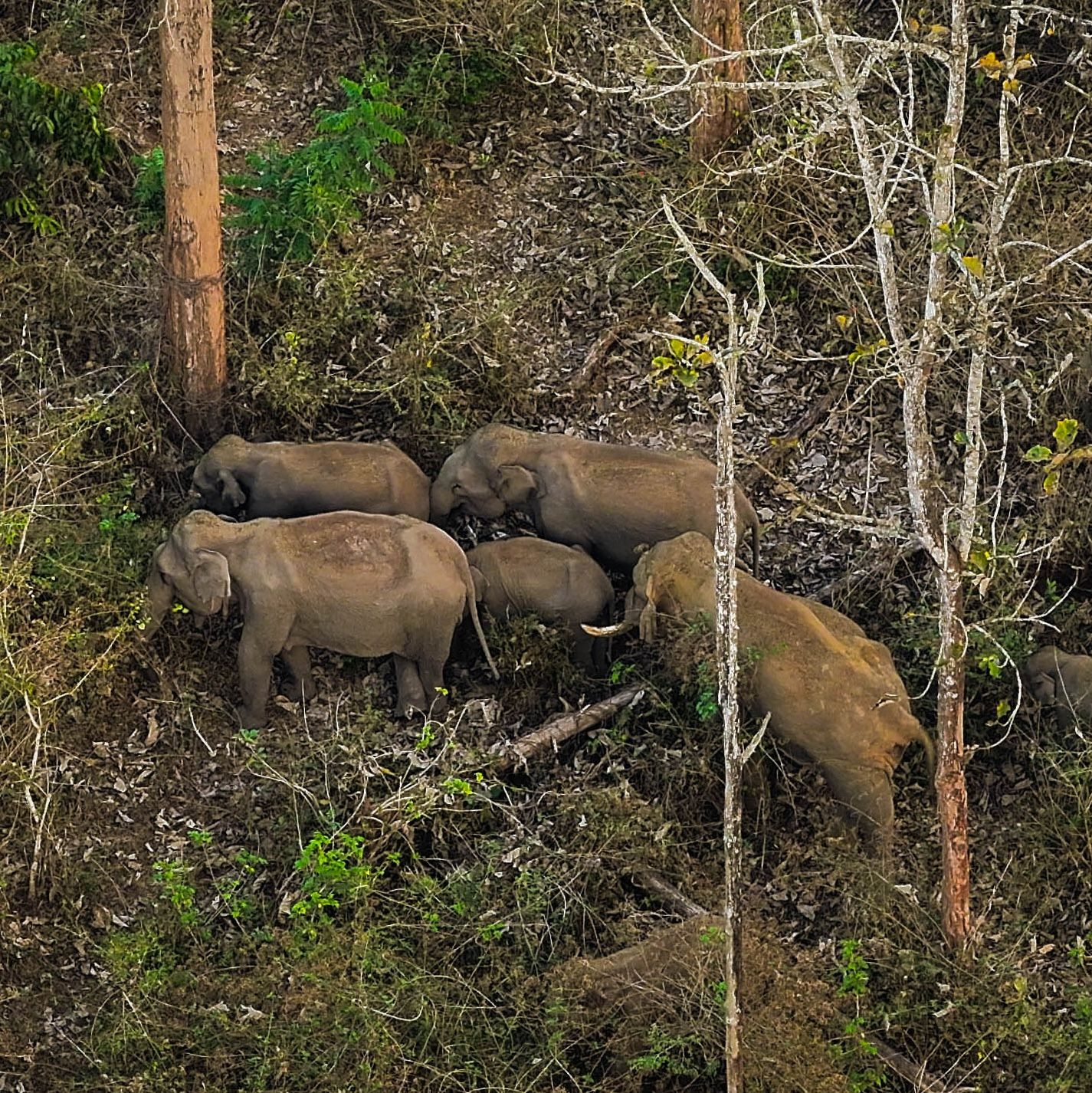
Tackling human-elephant conflict in Karnataka, India
Across India’s Eastern and Western Ghats, we’re helping farmers embrace regenerative growing practices and help biodiversity thrive. In Kodagu, where dense forests and coffee plantations meet, elephants often wander into farmland, destroying crops. Villagers face sleepless nights fearing for their livelihoods and the safety of their families.
In 2025, we supported a wide range of wildlife awareness initiatives in partnership with Humane World for Animals and the Karnataka Forest Department. More than a thousand participants—elephant trackers, rapid response teams, farmers and farm workers learned how to read the signs and safely respond to elephant encounters. One standout approach has been using street theater to explain elephant behavior and encourage peaceful coexistence.
“Children of the village are taught everything about elephants in school, like that elephants are not our enemies. We must learn to live together on our own land.”
Basvanthkumar H.D., Kodagu, Karnataka
STRENGTHENING HUMAN RIGHTS
We’re committed to making dignity, safety, and opportunity the norm in production landscapes around the world.
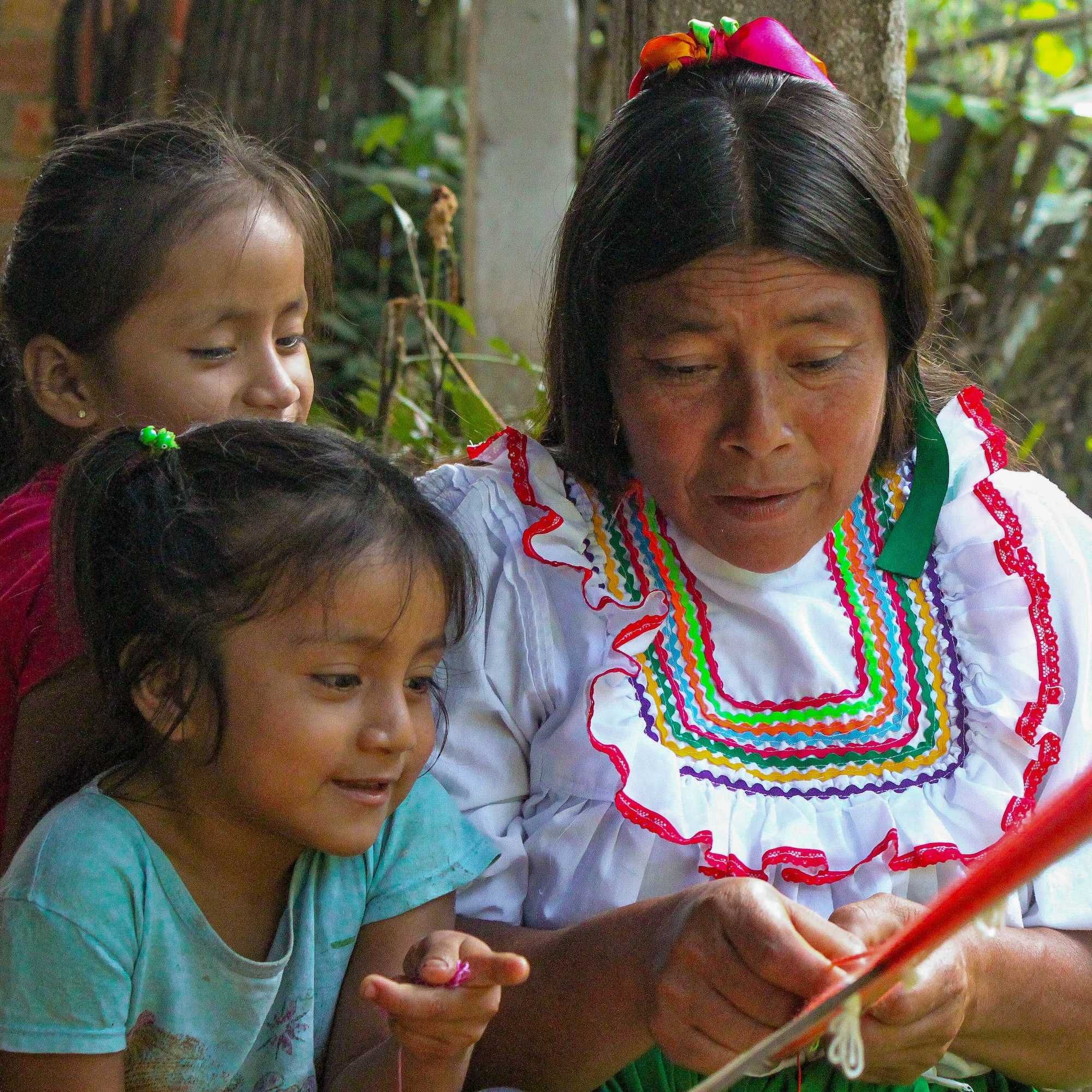
Kichwa women in Peru weave tradition into self-empowerment
In Peru’s San Martín region, Indigenous Kichwa women are proving that promoting gender equality, preserving ancestral knowledge, and creating new sustainability opportunities are all threads of the same fabric. Over the past five years, the Rainforest Alliance has supported Warmi Awadora—a women-led brand of textiles made using traditional techniques and responsibly sourced cotton—by providing training in business management and digital skills.
In 2024 and 2025, the group’s progress was on display in the “Weaving Wisdom” workshop series, where older women passed down their skills to younger generations. The brand also expanded into new markets, securing partnerships with two stores in Lima and opening a dedicated shop at a regional artisan center.
“In the past, only our husbands worked harvesting cocoa. But today, women are strong and hardworking—we work here with our textiles and our ceramics, and we’ve moved beyond that. We’re improving our quality of life.”
Lisida Tapullima, member of the Warmi Awadora Association
Source: Community Listening Program
IMPROVING LIVELIHOODS
By boosting productivity and strengthening market connections, we champion thriving rural livelihoods worldwide.
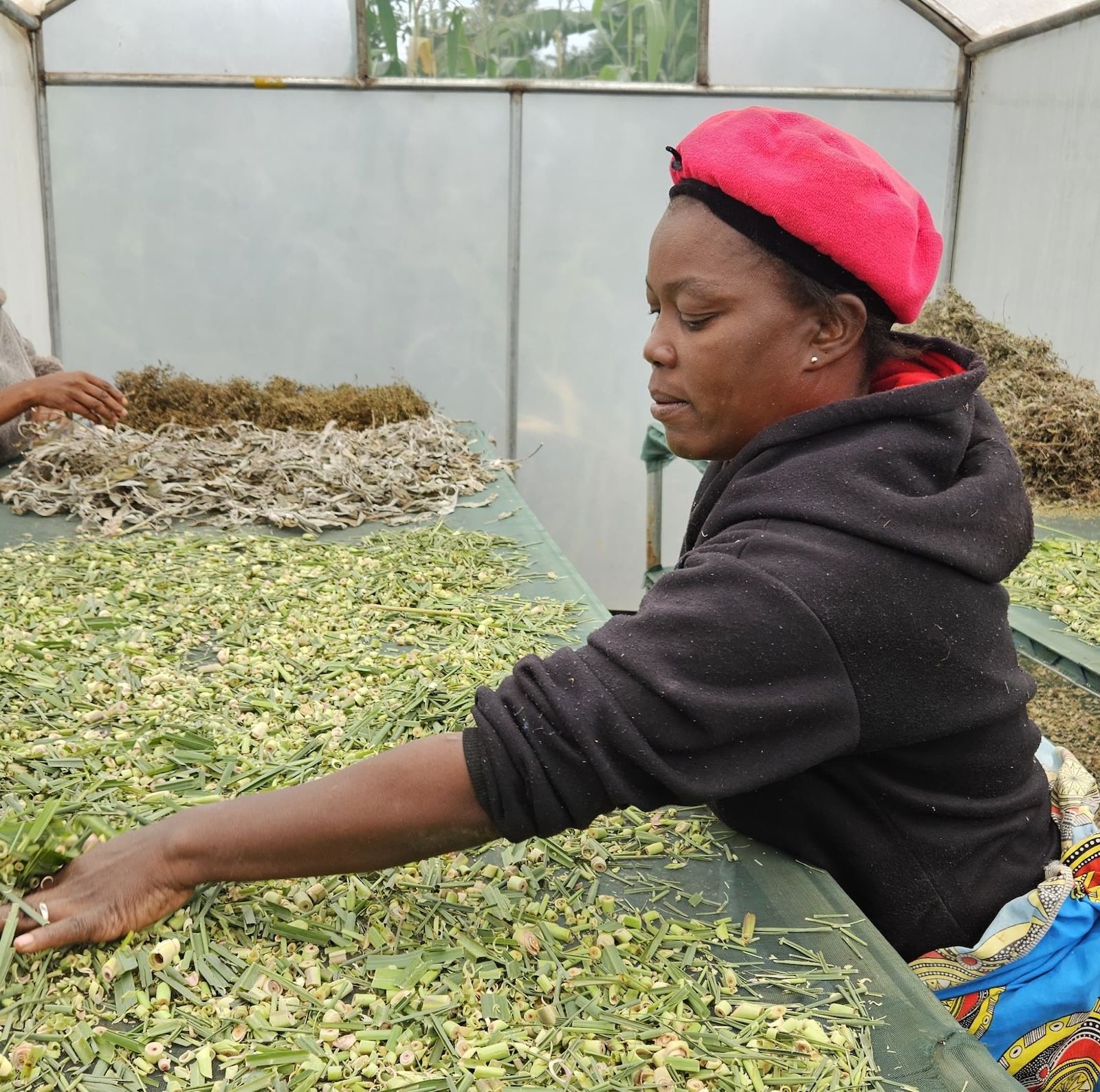
Regenerating hope in Mount Kenya
Farmers on the slopes of Mount Kenya are feeling the strain of climate change. Hotter temperatures, shifting rainfall, and rising costs make it harder to earn a living from crops like tea, coffee, and bananas. Since 2020, our field teams have helped farmers embrace growing practices that help heal the land, boost yields, and uplift entire communities.
More than 55,000 farmers—nearly half of them women—have already taken part. The focus has been on reviving aging fields with climate-resilient crops and diversifying incomes. Many farmers are now growing high-value herbs and spices like lemongrass, chili, and hibiscus—helping create more than 90 new enterprises and 500 jobs to date.
“Our production was low, but we learned how to make manure, natural pest repellents, and microbes from local materials […] In our culture, when the tummy is full, we say we are rich—and that’s how we feel now.”
Milton Watene, banana farmer
Evaluating the impact of farmer field programs: our work with Nescafé
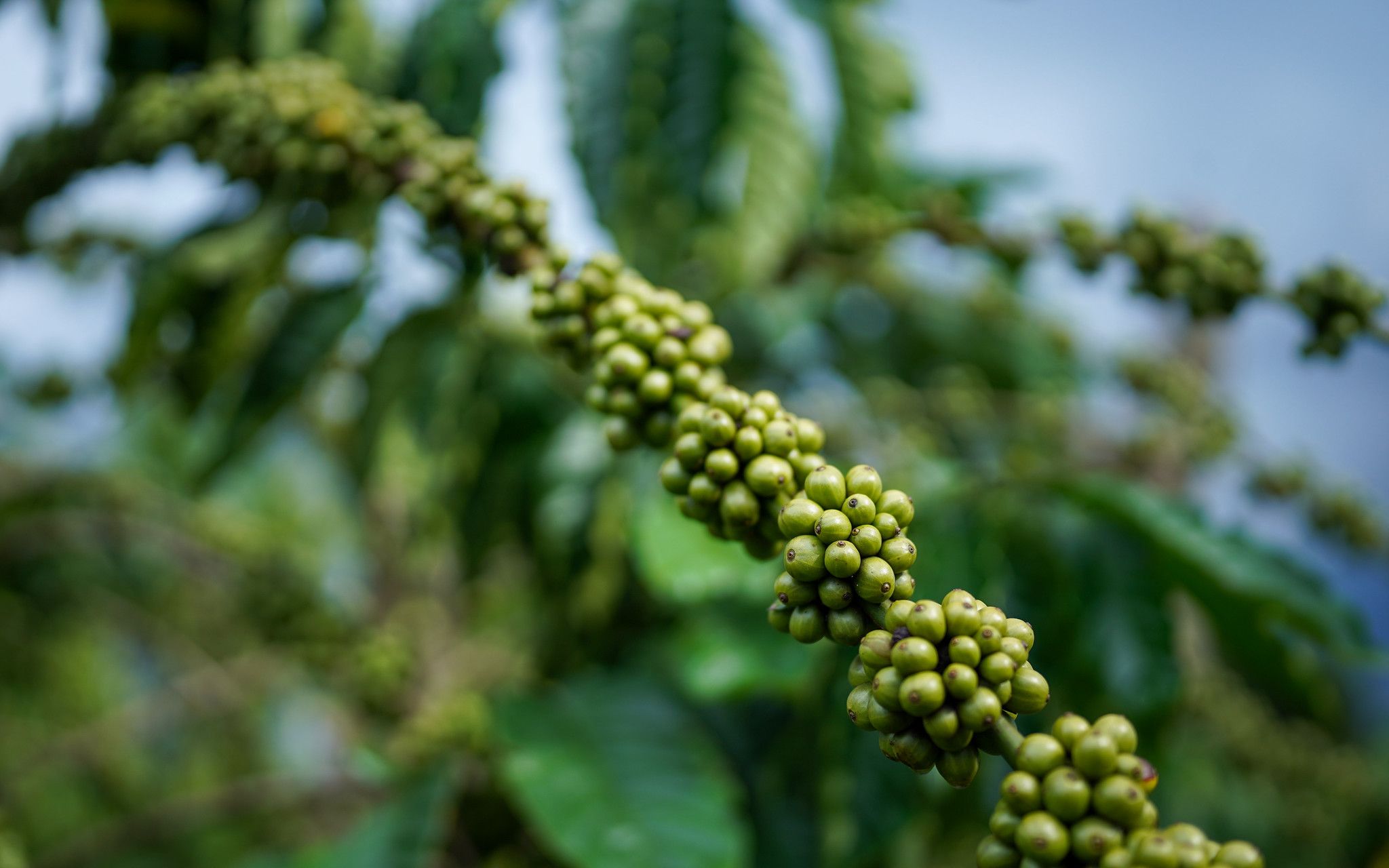
When it comes to driving sustainability initiatives, companies need data that helps them keep moving quickly and efficiently toward their goals. That’s why the Rainforest Alliance offers monitoring and evaluation (M&E) services across 19 countries in both cocoa and coffee.
In 2025, we supported Nescafé, one of the world’s leading coffee brands, with M&E data collection and reporting across 12 countries around the world. More than 3,800 farmers were interviewed, with questions covering the implementation of regenerative farming practices, household income, and their experience with the Nescafé Plan program. We then validated and analyzed this data to distill key insights on topics including the benefits of regenerative agriculture, farm economics, and farmer income. This data also enables the calculation of farm-level carbon emissions.
This wide-ranging M&E work not only helps Nescafé track progress towards its business and sustainability goals—it produces verified third-party data for environmental, social, and governance (ESG) reporting and communications. With such valuable data in hand, Nescafé can target areas for adaptation and achieve even greater impact.
Our longstanding local presence in key growing regions, along with our deep M&E expertise, allows the Rainforest Alliance to capture field-level insights directly from the farmers to support major brand sustainability initiatives. We can also pilot innovations that lie outside our certification program—further helping companies accelerate the transition to a regenerative future.
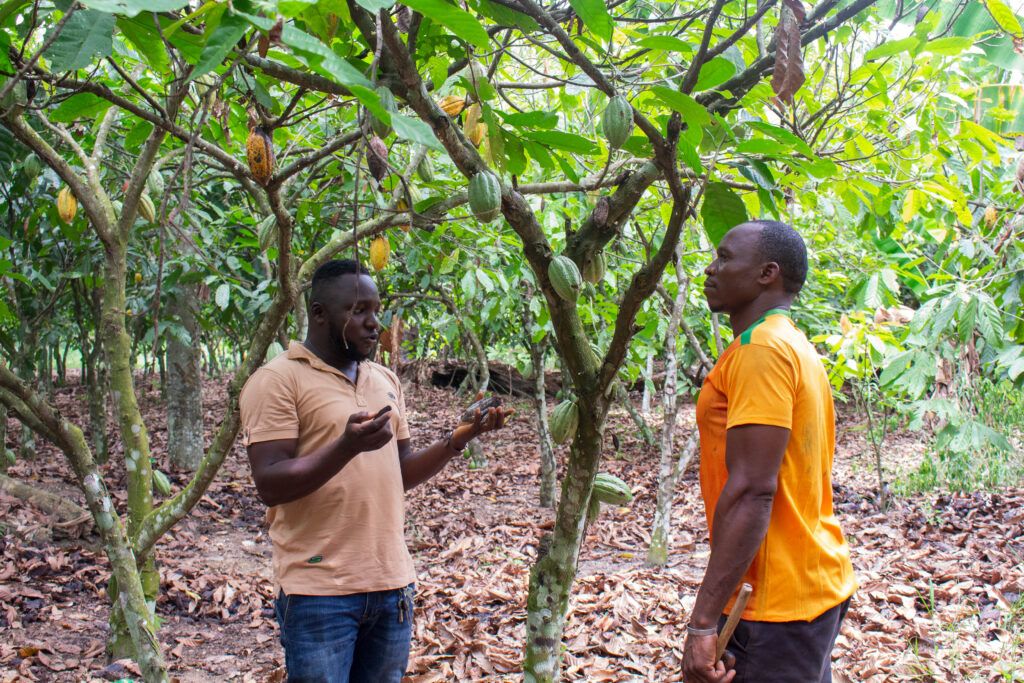
Early results from the Hershey Income Accelerator Program
Cocoa farming is a key income source for millions in Côte d’Ivoire, yet about 87 percent of households remain below living income benchmarks.
That’s why the Rainforest Alliance signed on, along with other expert organizations, to help implement The Hershey Income Accelerator Program (HIAP), a collaboration with the Conseil du Café-Cacao. After three years, early results are promising: In 2025, data showed that 89 percent of farmers had successfully completed their first-year Farm Enterprise Plan actions, and HIAP plots showed about 34 percent more pods per 20 trees than non-HIAP plots. These results indicate strong potential to improve farm productivity and livelihoods.
Certification& New Business Solutions
A year of firsts: Sowing lasting change
2025 was a milestone year for us. We unveiled a bigger, bolder certification program and introduced a range of new tools and services to accelerate sustainability transformation across global supply chains. We’re not just raising the bar for what responsible business looks like, we’re working to embed climate resilience, biodiversity protection, and the rights and well-being of rural producers into a market that fundamentally values people and nature. Our vision: agriculture as a net-positive driver of regeneration.
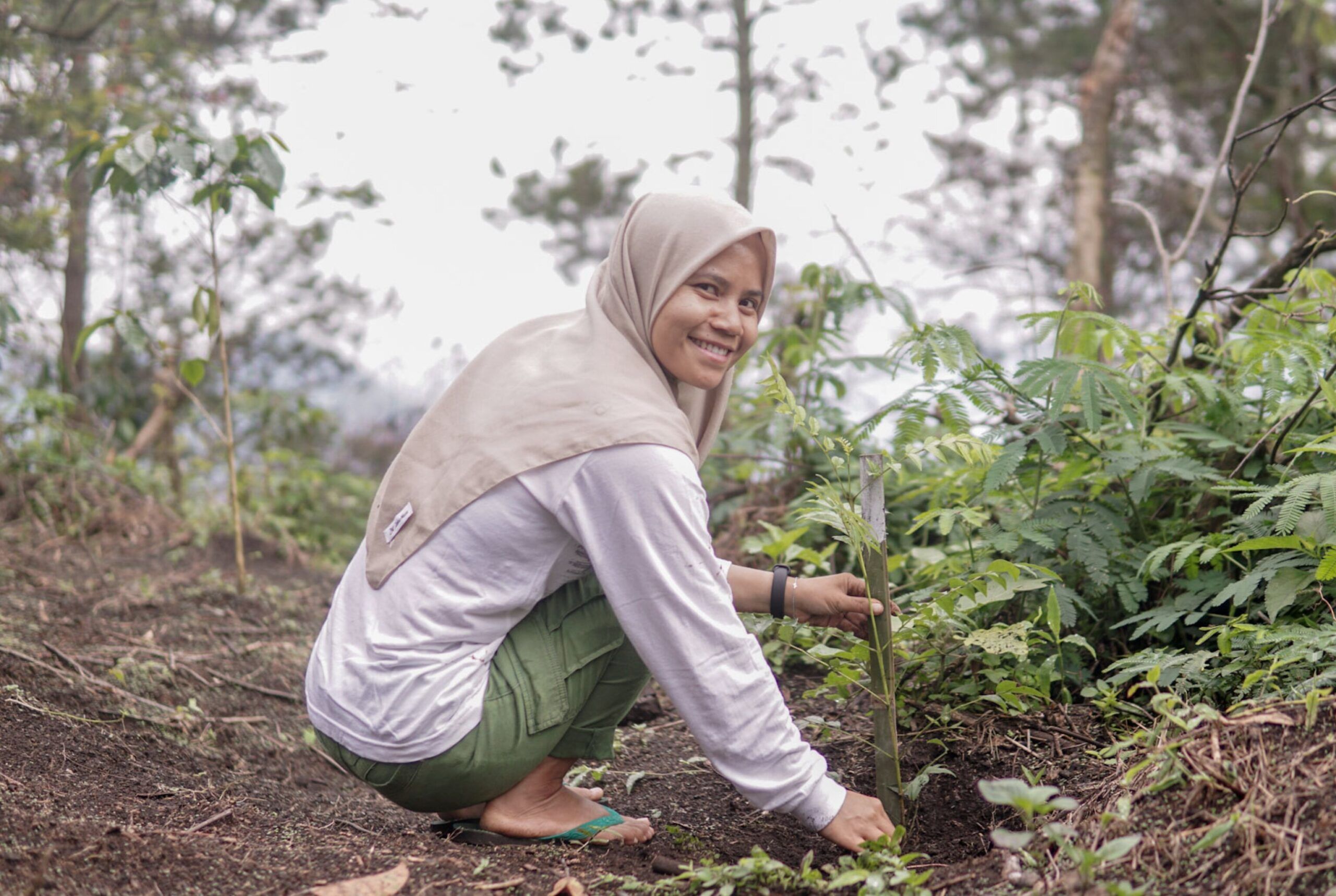
Sustainable Agriculture Certification
Published in March 2025 and made binding in October, version 1.4 of our Sustainable Agriculture Standard reduces administrative complexity while strengthening how certification drives impact in practice—from streamlined certification requirements to more focused data collection and validation. We also enhanced our approach to the European Union Deforestation Regulation (EUDR), updating our EUDR Data Sharing Policy and fully integrating EUDR-aligned requirements into certification audits for coffee and cocoa farms.
Regenerative Agriculture Certification
Following years of research, field testing, and collaboration, we published the Rainforest Alliance Regenerative Agriculture Standard in September 2025. Building on our decades of experience, it offers a specialized path for farmers and companies ready to delve deeper into regenerative practices that restore soil, increase biodiversity, and improve climate resilience. Already in use on coffee farms across Latin America, the first products with the new seal are expected to hit store shelves in 2026.
Regenerative Agriculture Certification: “a commitment to future generations”
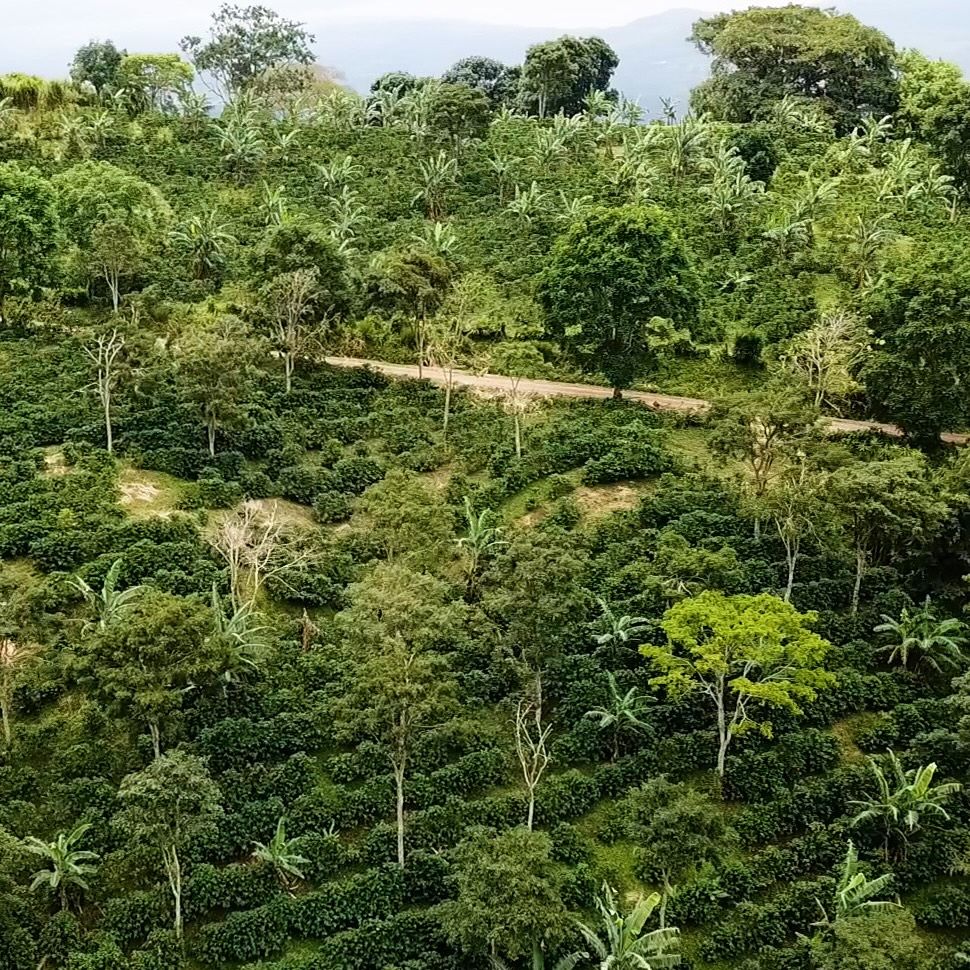
In Nicaragua’s northern highlands, La Cumplida, a 2,200-hectare coffee farm, is leading the way as the world’s first Rainforest Alliance Certified Regenerative farm. Already certified under our Sustainable Agriculture Standard for more than 20 years, the team was well-positioned—and eager—to take on the new certification.
From restoration to regeneration
While La Cumplida had already been reforesting and using other soil-enhancing practices, the requirements of the new standard allowed them to intensify and broaden their approach.
By increasing soil cover and introducing beneficial microbes, alongside other practices, the farm is seeing healthier plants and a resurgence of biodiversity—from bees and spiders to bird species that now help control coffee pests naturally.
These improvements are also strengthening climate resilience, reducing erosion from heavy rains, and helping regulate microclimates. As farm owner Eric Ponçon explains, the new certification introduces a level of detail in farm practices unlike anything they’ve seen before—enabling them to better analyze the impact of their activities and take a more proactive approach to climate change.
“We learned from my father that sustainability is not an end goal. It’s a journey, a spiritual route, and a commitment to future generations.”
Eric Ponçon, farmer and owner of La Cumplida, Nicaragua
What certified farmers are saying
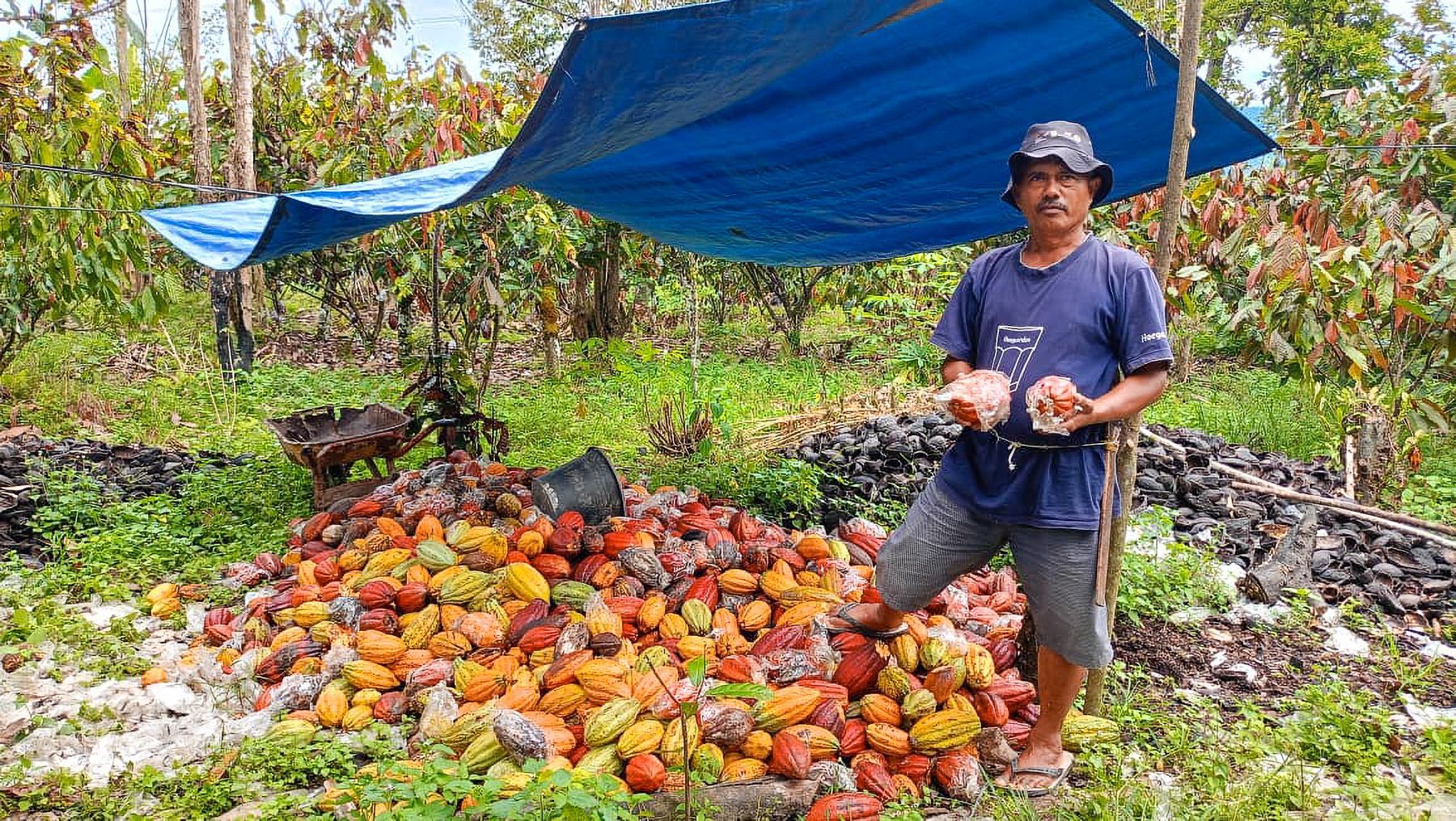
“I gained more knowledge on how to take care of my farms after joining certification, such as pruning, sanitation, fertilization. Previously, I had never thought about rejuvenating my cocoa plants.”
Luther T Bilangi, cocoa farmer with Jebe Cocoa Trading Indonesia, Southeast Indonesia
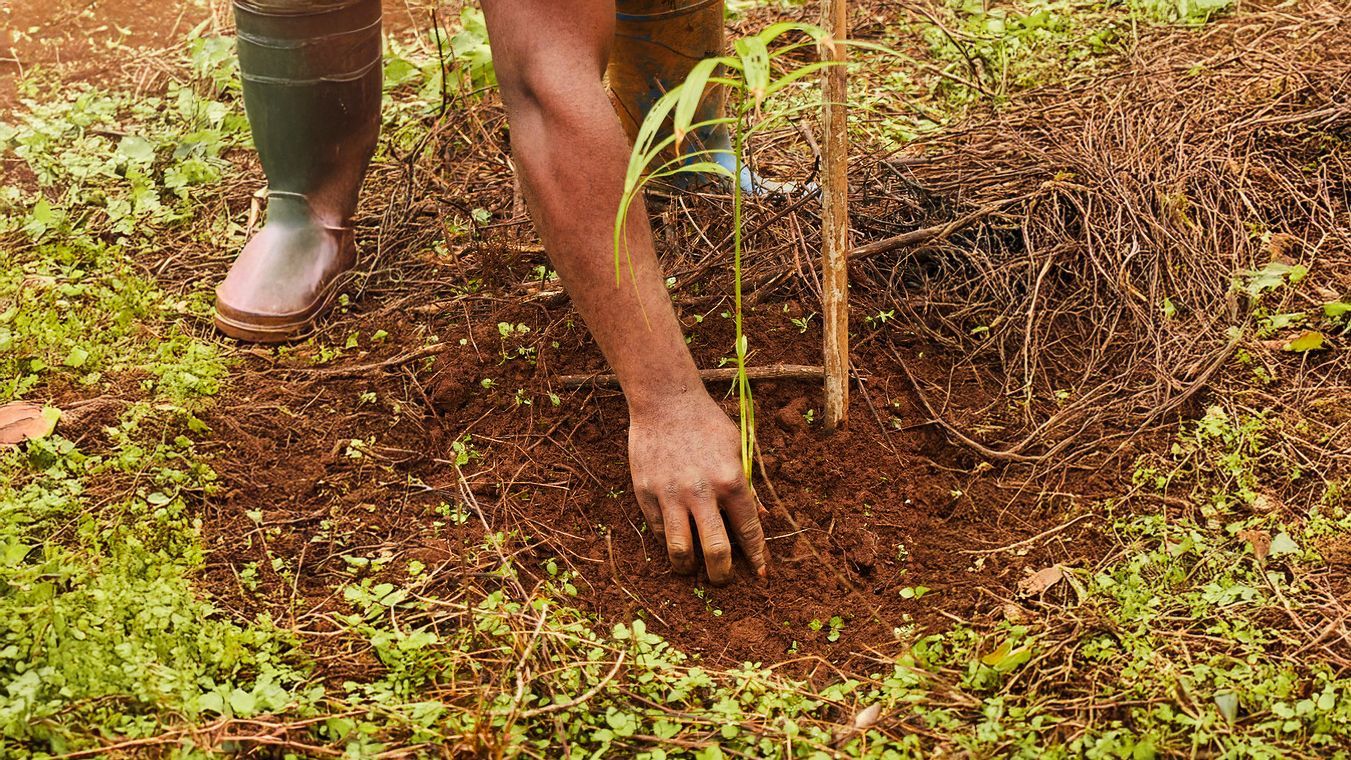
“Climate change is not imaginary, it’s real. We all need to adapt, protect the forest, focus on the land we already have, and apply good practices. That’s how we’ll increase yields, attract partners, and secure our future.”
Jean Louis Mva Ze, cocoa farmer and president of SCOOPS PROCAM cooperative, Cameroon
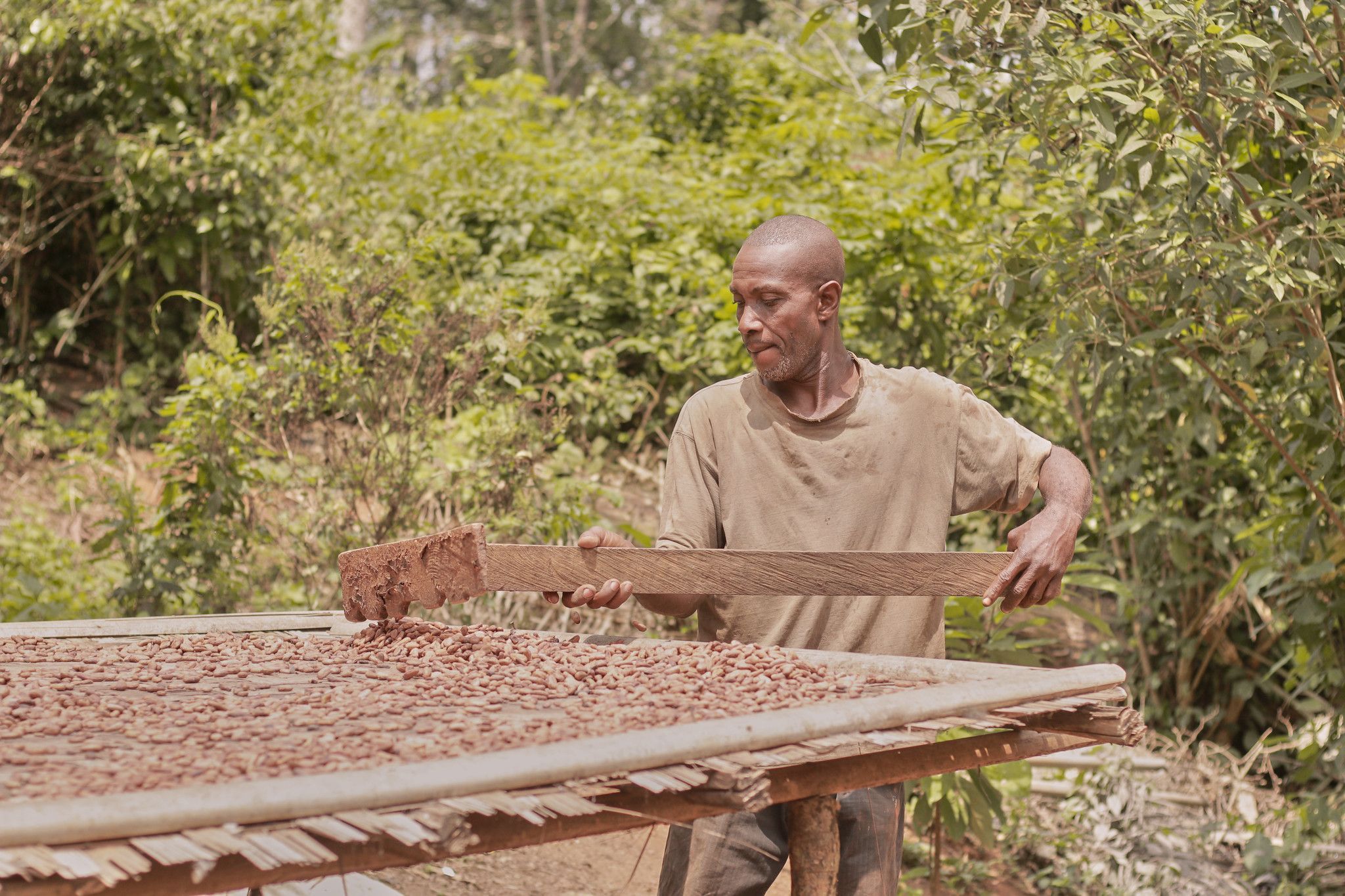
“Yields, yields, yields. In my farm, you’ll see old and young trees. Before the cooperative, I could harvest maybe three bags. But with the farmer field school and cooperative, I’m now reaching 10 to 15 bags. That’s around two tons. All thanks to good agricultural practices.”
Avelin Mintong, cocoa farmer, Cameroon
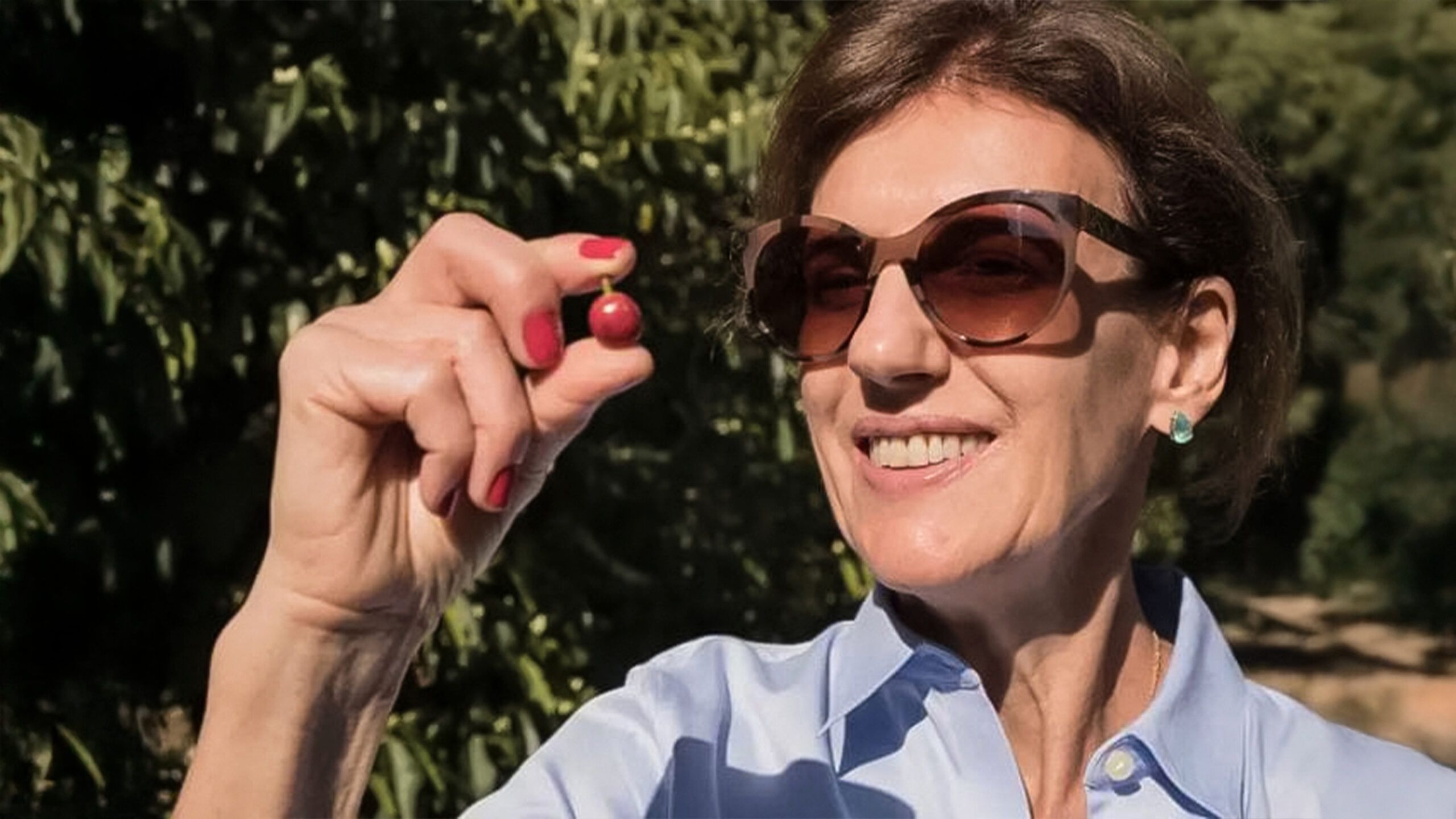
“With the use of biological pesticides for more than four years, we have noticed that the soil has become more balanced due to the action of beneficial microorganisms, such as the use of a bacillus that promotes drought resistance.”
Ana Lucia Barbosa, coffee producer, Fazenda Nova Cintra, Brazil
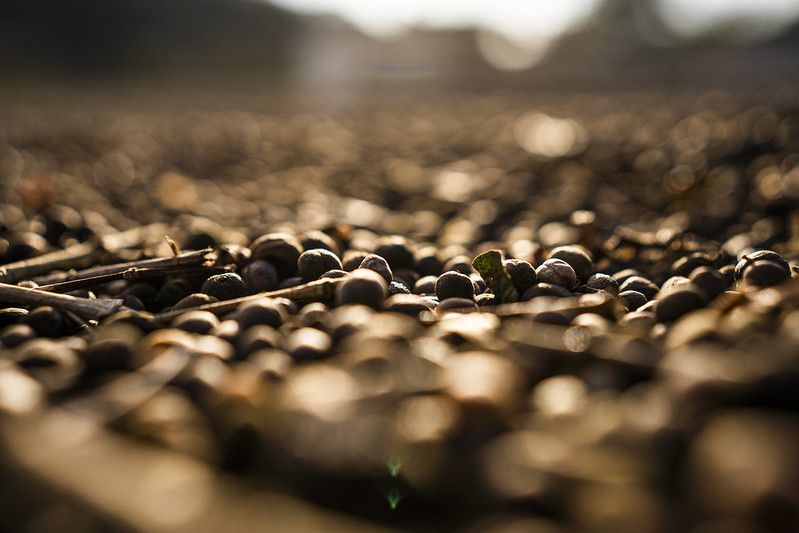
“Everything that this seal has brought to us in relation to sustainability, traceability, respect for the environment, agricultural practices. All this was a major turning point for us.”
Lislane Parro, coffee farmer and member of Expocacer Cooperative, Brazil
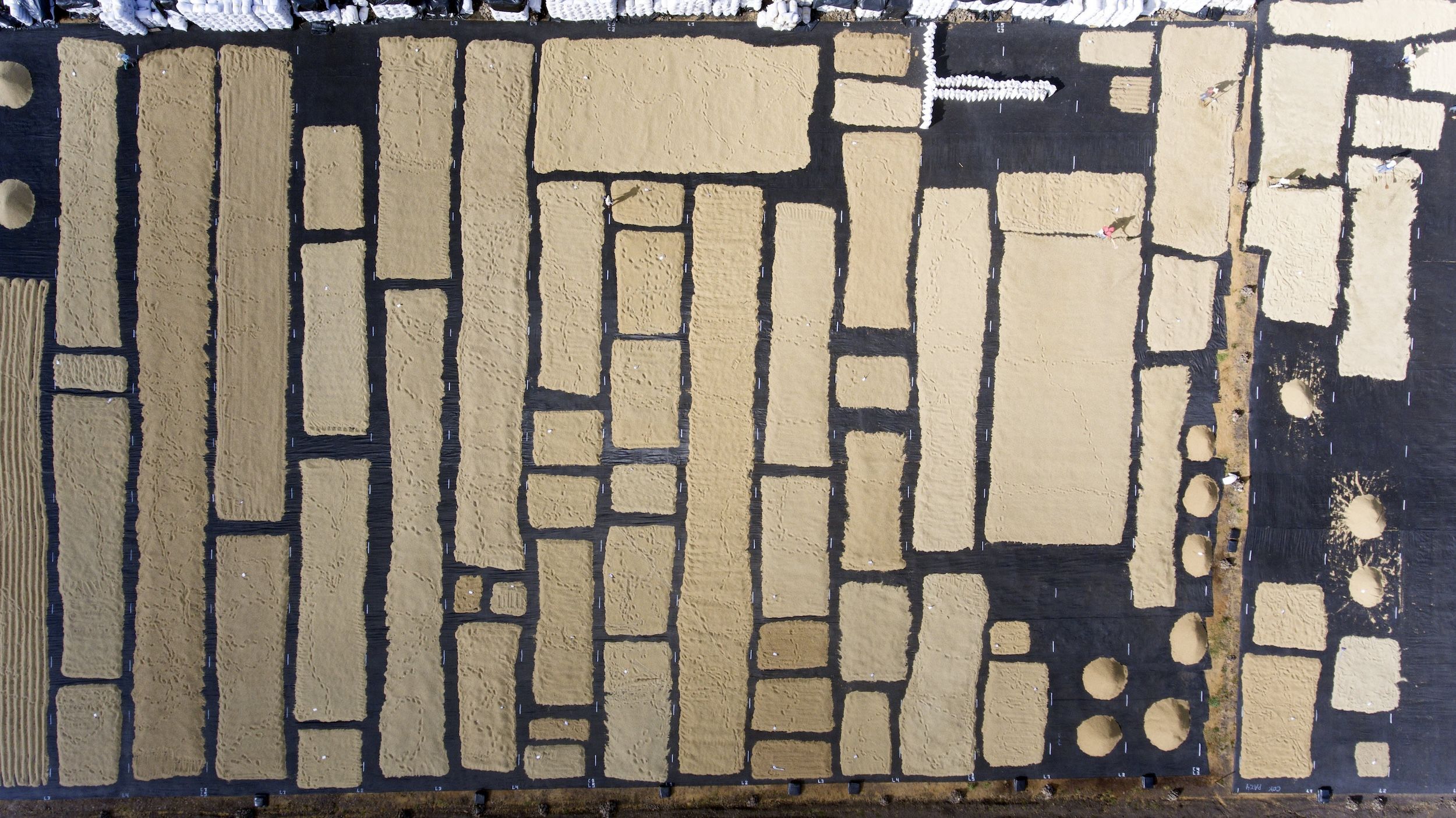
Certified crop data: A global snapshot
Dive into the 2025 data reports for key crops certified against our Sustainable Agriculture Standard.
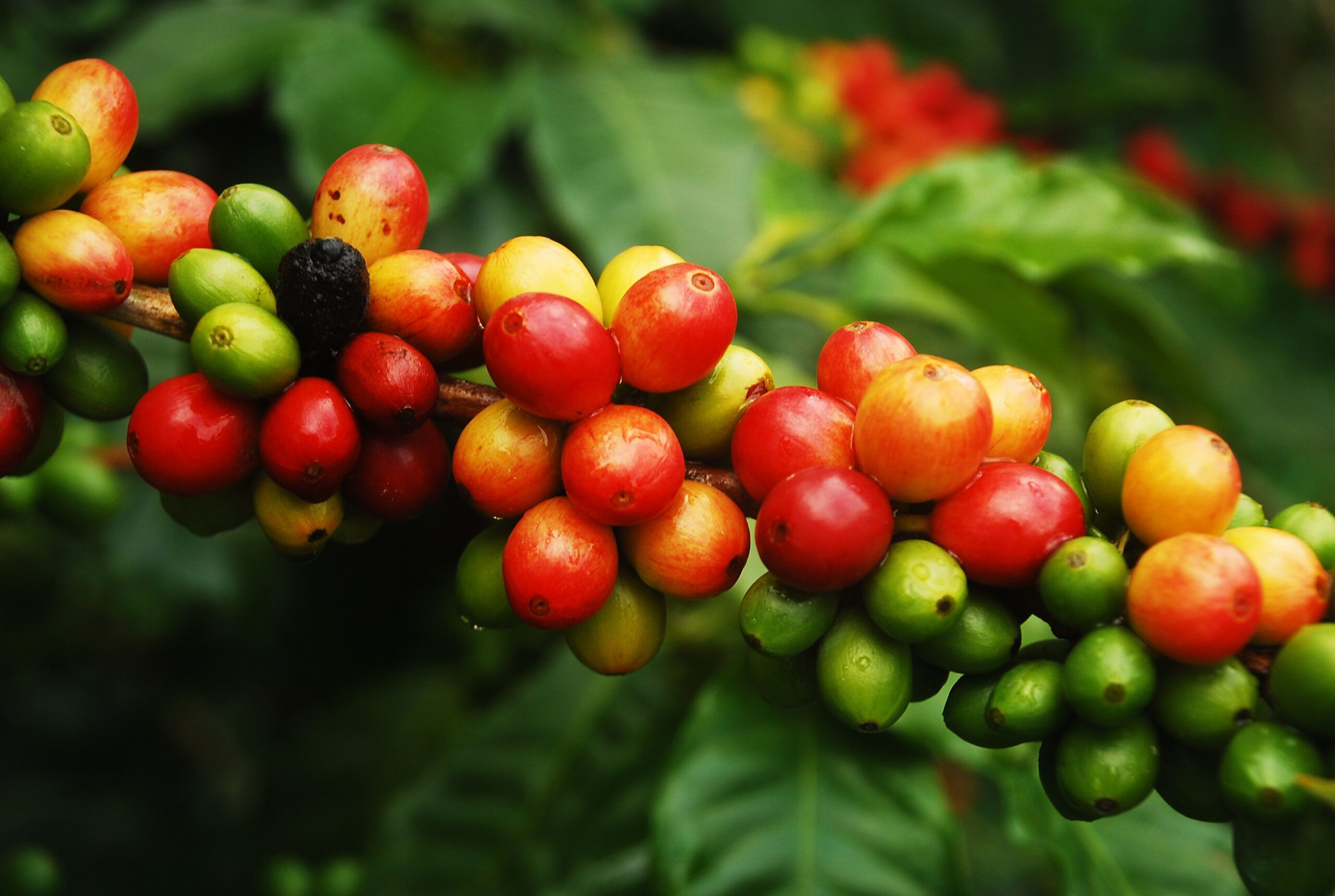
Coffee
2+ million hectares
2+ million farmers and workers
33 countries
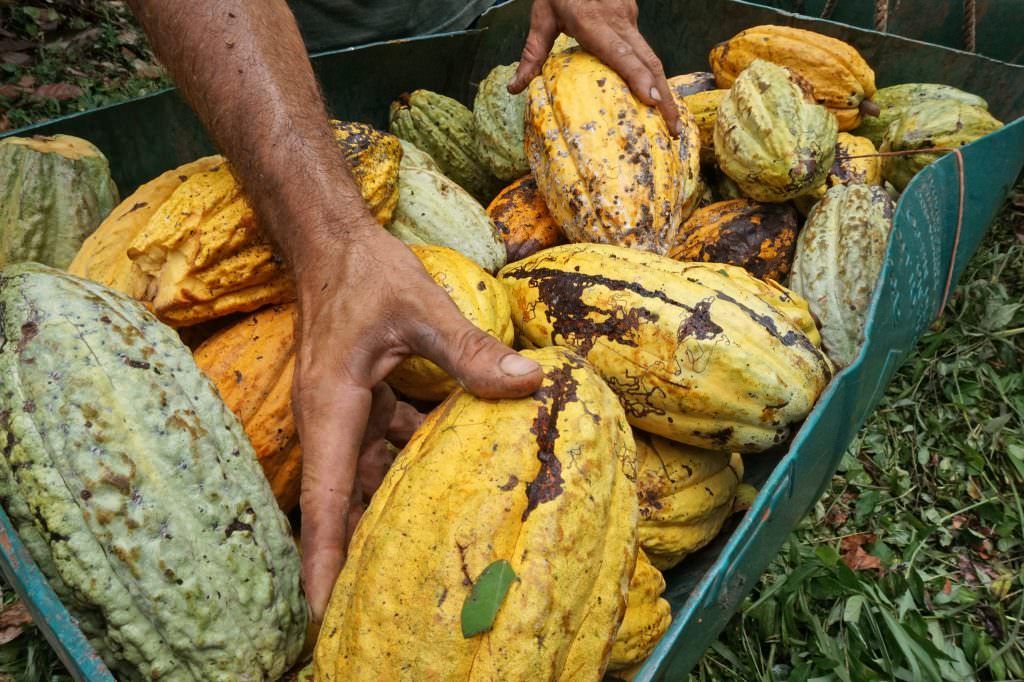
Cocoa
5+ million hectares
4+ million farmers and workers
24 countries
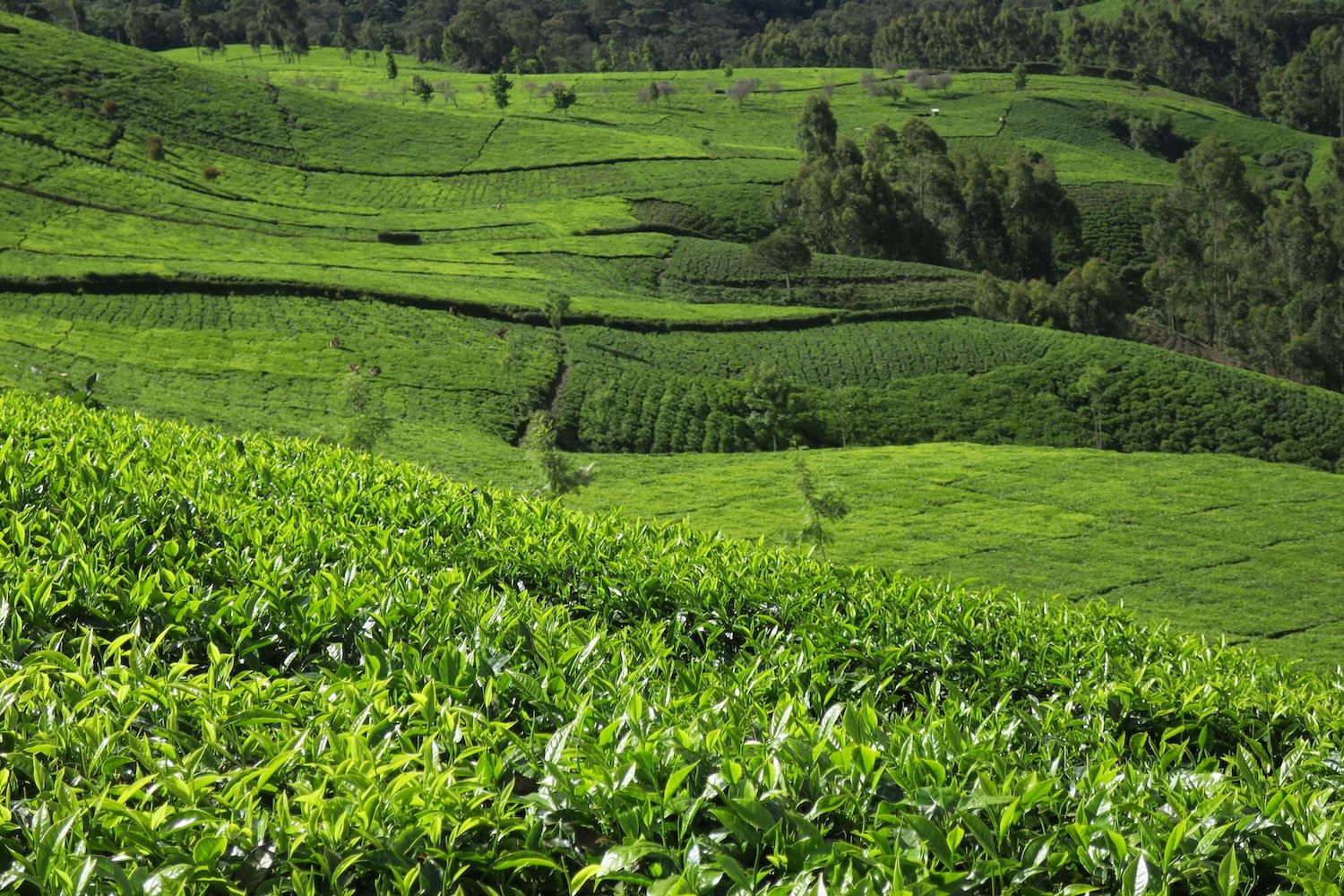
Tea
1.1 million hectares
1 million farmers and workers
22 countries
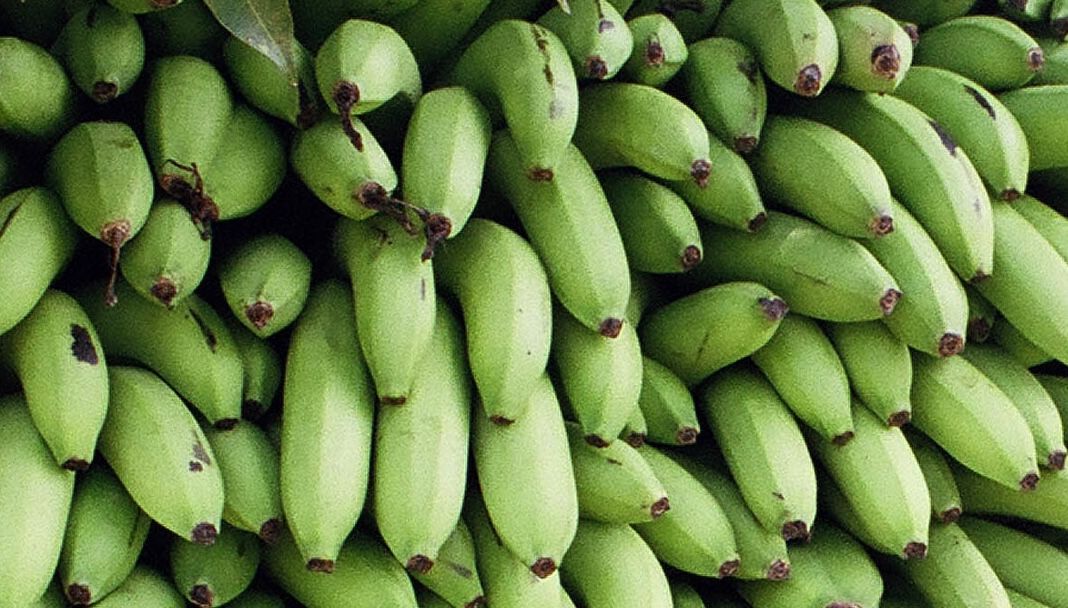
Bananas
209k hectares
169k farmers and workers
15 countries
Beyond certification: New solutions to transform markets
In 2025, we developed and launched three new tools and services designed to help companies manage risk, strengthen sourcing, and tackle complex sustainability challenges.
Together with our field projects and our monitoring and evaluation services, these solutions form a uniquely holistic strategy to build the regenerative future we so urgently need. Farms and companies can enter the journey at any point—whether it’s to assess risks, deepen on-farm practices with our Regenerative Agriculture Standard, or design targeted interventions. No matter the starting place, the Rainforest Alliance is here to help every step of the way.
Sourcing Risk Assessment
Launched in 2025, this assessment leverages all our tools and experience—from supply chain mapping to on-site data collection—to deliver actionable insights. These insights help companies mitigate risk, improve transparency, and support ESG claims. The first assessment was completed for palm oil in Indonesia for a retail partner.
Corporate Advisory Services
The Corporate Advisory team helps companies sourcing high-impact agricultural commodities—from putting sustainability commitments into action to navigating complex regulatory requirements. Combining on-the-ground experience with technical expertise, our support spans strategy development and supply chain mapping to risk mitigation and more.
Project Center
In 2025, we introduced a new modular approach to how we develop field projects for companies: From baseline field assessment and initial design to implementation, evaluation, and beyond. The first initiatives kick off on the ground in 2026.
Acknowledgements
Board of Directors
Daniel R. Katz, Chair • Sonila Cook • Sarah Jane Danchie • Cherrie De Erit Atilano • Wendy Gordon • Nina Haase • Marilu Hernandez de Bosoms • Dan Houser • Peter H. Lehner • Pernille Lind Olsen • Berry Marttin • Jon McCormack • Nalin K. Miglani, Treasurer • Juan Esteban Orduz • Anurag Priyadarshi • Anisha Rajapakse • Eric B. Rothenberg • Paul Rubacha • Peter M. Schulte • Kerri A. Smith • Michael Sudarkasa • Annemieke Wijn, Vice Chair
Leadership Team
Chief Executive Officer – Santiago Gowland • Chief Financial Officer – Daryl Mintz • General Counsel – Molly Stark • Chief Product Officer – Ruth Newsome • Chief Impact & Growth Officer – Harper McConnell • Chief Strategy Officer – Franck Sime • Interim Senior Director for Mesoamerica – Alejandro Santos • Interim Senior Director for South America – Miguel Pacheco • Senior Director for East and Southern Africa – Julius Ng’ang’a • Senior Director for West and Central Africa – Nadège Nzoyem • Senior Director for Asia Pacific – Chandra Panjiwibowo
Ambassadors
Labeeb Abboud • Daniel Couvreur • Ricky Echanique • Jesse Glickstein • David Madden • Richmond Mayo-Smith • Amaury de Poret • Ajinkya Rahane • Alexis Rockman • David Ross • Cameron Russell • Grace Yu
This overview is accurate as of June 2026.
Editors
Hans Kleymann • Gui-Xi Young
Writers
Laura Jamison • Elizabeth Sensky
Designers
Patrick Floyd • Mason Philips • Joost Voets
Web development
Matt Nerger • Erica Rosset
Project management
Marta Fiolhais
Contributors
Beldina Bella Gwada • Kriti Gupta • N’Deye N’Débane Sarr
Creative direction
Michael Gibbons
Photographers
Misper Apawu • Eric Biantuadi • Pedro J. Chavarría • Giuseppe Cipriani • Dòng Truong Kiên • Klasik Beans • Stéphane Kone • Jane Alice Liu / Acorn • Armen Mahungu / Environews • Florence_Neema • Sydelle Willow Smith • Rainforest Alliance staff
1 Key Biodiversity Areas: BirdLife International (2026). The World Database of Key Biodiversity Areas. Developed by the KBA Partnership: BirdLife International, International Union for the Conservation of Nature, Amphibian Survival Alliance, Conservation International, Critical Ecosystem Partnership Fund, Global Environment Facility, Re:wild, NatureServe, Rainforest Trust, Royal Society for the Protection of Birds, Wildlife Conservation Society and World Wildlife Fund. Available at www.keybiodiversityareas.org. [Accessed: 19 May, 2026]. World Database on Protected Areas: UNEP-WCMC and IUCN (2026), Protected Planet: The World Database on Protected Areas (WDPA) [Online], May 2026, Cambridge, UK: UNEP-WCMC and IUCN. Available at: www.protectedplanet.net.