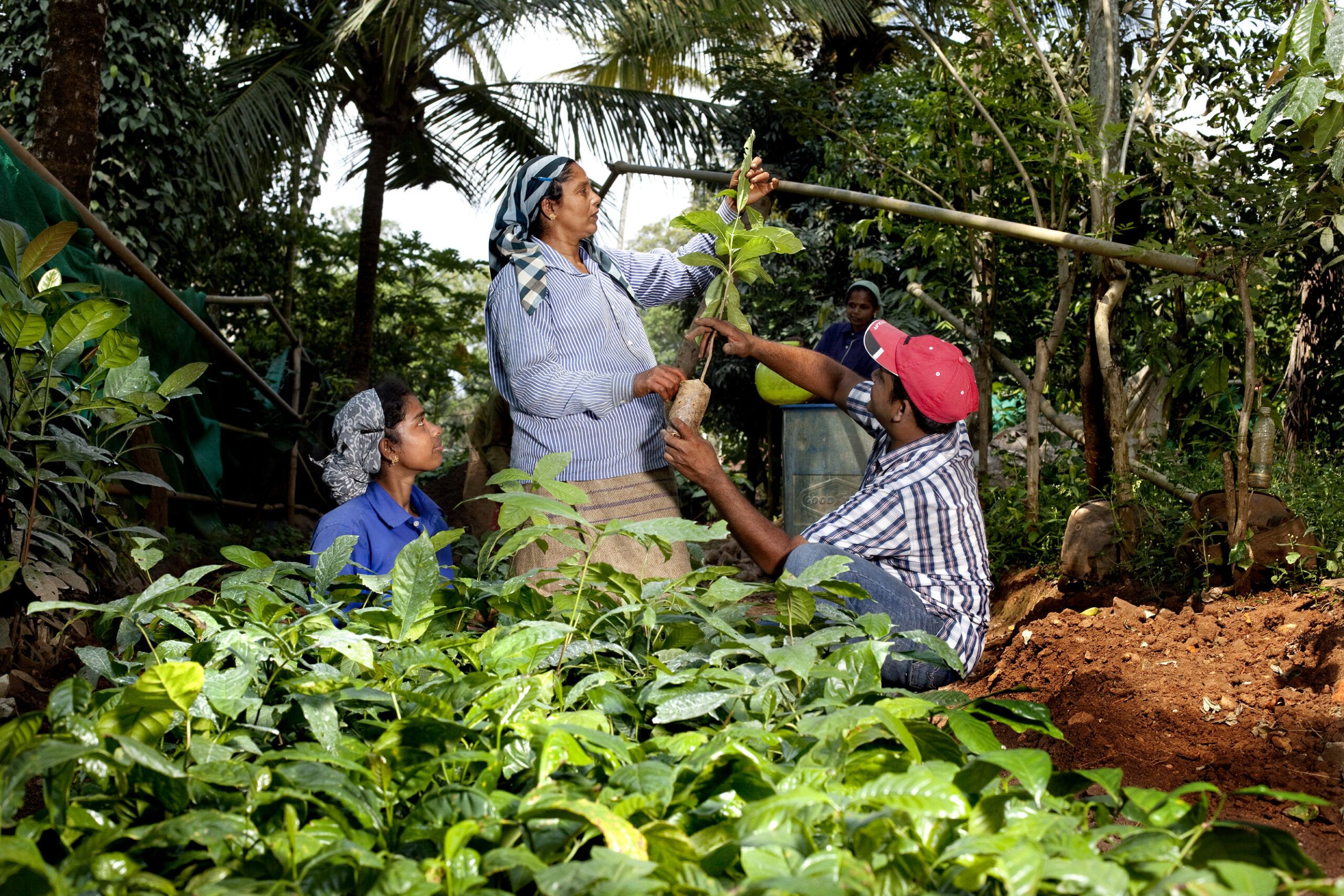

Thriving Communities, Healthy Landscapes
We're helping more than two million farmers embrace more sustainable growing practices that can help build resilience to climate change and boost yields.... Continue Reading
This is a decisive decade for climate action. The world needs to reduce global greenhouse gas emissions while helping people adapt to the climate change that is already occurring. Together with its partners, the Rainforest Alliance is committed to accelerating climate adaptation and mitigation. We do this by focusing on locally led and nature-based solutions, including forest protection, restoration, and improved land management practices to increase carbon storage, avoid greenhouse gas emissions, and build resilience to climate impacts.

We're helping more than two million farmers embrace more sustainable growing practices that can help build resilience to climate change and boost yields.... Continue Reading

Studies show that climate change disproportionately affects women and girls. Yet their intrinsic bond with the natural landscape is what makes women ideal sustainability leaders.... Continue Reading

Our future climate stability depends on achieving net-zero emissions as quickly as possible, and natural climate solutions are essential to reaching that goal. The Rainforest Alliance is positioned for impact in this space—working across 70 countries and global supply chains in many of the most critically important natural landscapes throughout Latin America, Africa, and Asia. […]
The Sui River landscape in the Western North region of Ghana spans 244,000 hectares—including five forest reserves—and is one of West Africa’s most important cocoa-growing areas. However, the practice of clearing local forests to make room for cropland is accelerating deforestation across the region, threatening the very ecosystems that local communities depend upon for their […]
Conserving forests is at the heart of the Rainforest Alliance’s mission. This paper outlines our principles and strategies for stopping forest degradation and supporting forest communities in vulnerable tropical regions. These include our pathway towards integrated community forest management. This approach recognizes the interdependency of local communities’ livelihoods and their natural environment, and helps create […]