Fourth Grade, Lesson 3: How is a Frog Able to Swim in the Trees?

Fourth Grade, Lesson 3; How is a Frog Able to Swim in the Trees?

Concept 

Many plants and animals have developed unique systems of interdependence. These systems are essential for their survival.

Essential Question 

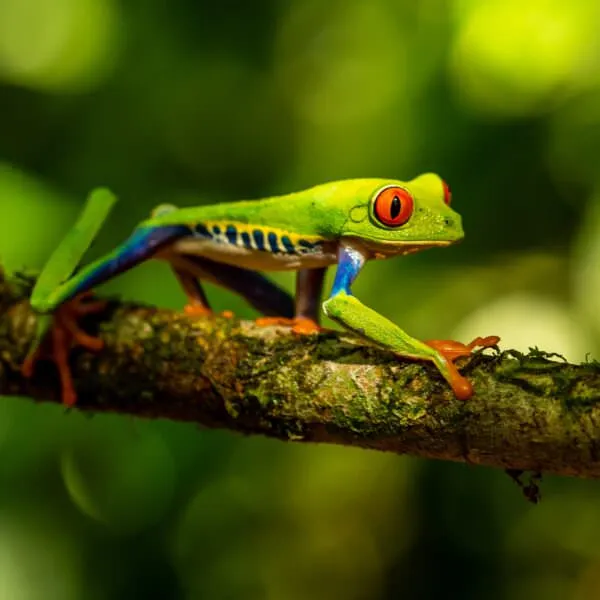
How is a frog able to swim in the trees?

Step 1 -- Connect (The Concept to Prior Knowledge)

Challenge

Students examine the different aspects of their day-to-day survival. For example: How do they adapt to temperature changes? What do they eat? What do they drink? How do they travel from place to place?

Materials

- Ecuador slideshow

Procedure

  1. Each student draws a picture or lists the things that he/she most needs for survival in their particular region of the country. This can include physical conditions like food and types of shelter. It might also include emotional things like friends and safety. It should take into account the regional climate, rainfall, seasons, etc.
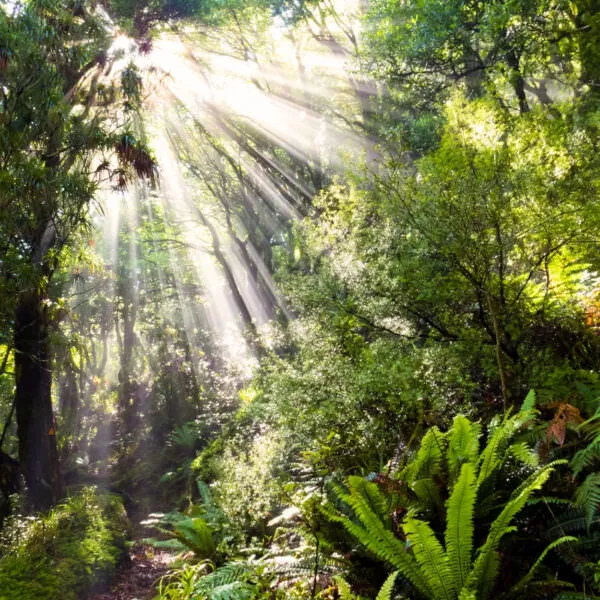
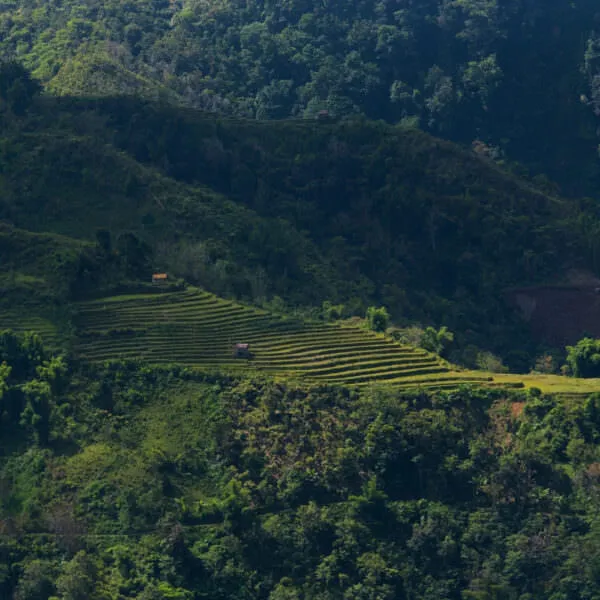
  2. Students watch the Ecuador slideshow from the Rainforest Alliance to get a feel for the bioregional characteristics of the tropical rainforest.
  3. Have students revise the list of their daily survival activities as if they were going to go to the rainforest to live. Would their needs be the same in the rainforest as in their current home?
  4. Additioanl References: The Secrets of Tropical Rainforests: Hot and Humid and Teeming with Life, by Jean Hamilton

Step 2 -- Literature/Discuss (Give Expert Information Book; Ask Questions)

Challenge

Students investigate and analyze the different ways that plants and animals are interdependent in different bioregions.

Materials

- Book: Plants and Planteaters, by Michael Chinery (or another book about bromeliads and tree frogs)
- The Poison-Arrow Frog and the Bromeliad

Procedure

  1. Students select a plant or animal from their local bioregion and do a chart that lists all the things that animal or plant depend on in the environment (bees, water, soil, wind, etc.).
  2. Students learn about bromeliads and discuss the concept of interdependence and survival needs for the bromeliad in the tropical biome and particular bioregion of the plant's location.
  3. Teachers bring in different examples of bromeliads (purchased at a local nursery) or photographs of bromeliads if plants not available. Students examine examples of bromeliads from a nursery. Students discuss the similarities and differences between the bromeliad and the plant species selected for observation from their own bioregion.
  4. Read aloud: Plants and Planteaters, by Michael Chinery (or another book with information about bromeliads and tree frogs)

Step 3A -- Practice (Math and Learning Centers)

Challenge

Students decide what is necessary to their survival and what could be removed from their systems of survival without causing any harm.

Materials

- Paper, pencils
- The Poison-Arrow Frog and the Bromeliad

Procedure

  1. To better understand their level of dependence on certain systems in their home, students "take apart" their homes and identify the major systems it involves.
  2. Students analyze where the energy comes from that is used to power these systems (hot water, air conditioning, heat, refrigeration, lighting, etc.).
  3. Students discuss which 'survival' systems they might do without and the reasons why.
  4. Connect the concept to species survival.  Refer to the example of the bromeliad and tree frog in Step 2.  Ask students to consider if any part of the bromeliad/tree frog system can be removed without harming one of the organisms.

Step 3B -- Create (Performance Tasks Related to Standard Indicators)

Challenge

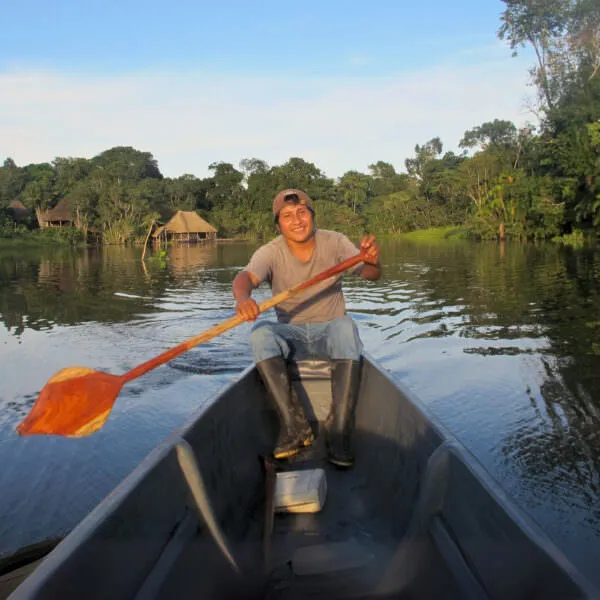
Students consider the phrase: "Chachi people consider the rainforest a living being."

Materials

- Ecuador slideshow, species profiles, and story: Romel's Rainforest Home (all available on the Resource Index)
- Internet access to the Adopt-A-Rainforest pages for Ecuador (These pages can be printed out for the class as well.)

Procedure

  1. Students research the Rainforest Alliance resources related to the Ecuador rainforest. Students discuss the different ways groups of people might think about land and its resources and consider different approaches to land use.
  2. Students write an essay that explores the way they think about the place where they live. Students should address the way they think about aspects of the land. For example: What places do they consider 'useable'? Which places would they consider special? What are consumable resources in the place where you live? What aspects of the land would you consider off limits to development?

Step 4 -- Present (Edit Work/Students Present Projects)

Challenge

Students consider the effects of removing certain plants or animals from their bioregion on their survival or quality of life.

Materials

- Profiles in Sustainability

Procedure

  1. Students write a story that traces the effect of removing bees from their landscape. Or what would happen if all the trees were removed?
  2. From Romel's point of view, students think about and discuss what might happen in the rainforest if the tall trees were removed? What if the land was cleared near a river?
  3. Discuss with the class the idea of sustainable management of land, in which wood and other forest products can be harvested in a way that keeps the entire forest intact.
  4. Have students consider managing the land so that essential characteristics are left intact while others are used for resources.
  5. For more information and case studies of companies which are involved in sustainable land management, visit the Profiles in Sustainability.

The Rainforest Alliance curriculum is unique in that it teaches science, math, language arts and social studies essentials while addressing the United States National Standards for Learning. These are the standards addressed in the fourth grade lessons.

Language Arts Writing

Standard 4 Level 2 Grade 3 - 5
2. 3. 4. Gathers and uses information for research purposes (encyclopedias, dictionaries, electronic media).
Uses multiple representations of information (maps, charts, diagrams, tables) to find information for research topics.
7. Uses strategies to compile information into written reports or summaries.

Reading

Standard 6 Level 2 Grade 3 - 5
Uses reading skills and strategies to understand and interpret a variety of literacy texts.
9. Makes connections between characters or simple events in a literary work and people or events in his or her own life.

Standard 7 Level 2 Grade 3 - 5
Uses reading skills and strategies to understand a variety of informational texts.
5. Summarizes and paraphrases information in texts.
6. Uses prior knowledge and experience to understand and respond to new information.

Listening and Speaking

Standard 8 Level 2 Grade 3 - 5
Contributes to group discussions.
Asks questions in class.
Responds to questions and comments.
1. Listens to classmates and adults.
7. Makes basic oral presentations to class.
10. Organizes ideas for oral presentations.

Thinking and Reasoning

Standard 3 Level 2 Grade 3 - 5
4. Makes comparisons between countries in terms of relatively concrete characteristics (size, population, products).

Standard 1 Level 2 Grade 3 - 5
Uses facts from books, articles and databases to support an argument.
7. Recognizes when a comparison is not fair because important characteristics are not the same.

Standard 5 Level 2 Grade 3 - 5
Identifies issues and problems in the school or community that one might help solve.

Mathematics

Standard 1 Level 2 Grade 3 - 5
Uses a variety of strategies to understand problem situations.
Represents problems situations in a variety of forms.

Standard 3 Level 2 Grade 3 - 5
7. Solves real world problems involving number operations.

Standard 4 Level 2 Grade 3 - 5
Understands the basic measures perimeter, area, volume circumference.
Selects and uses appropriate tools for given measurement situations.
4. Understands relationships between measures.
Uses specific strategies to estimate quantities and measurements.

Standard 9 Level 2 Grade 3 - 5
2. Understands that mathematical ideas and concepts can be represented concretely, graphically, and symbolically.

Life Sciences

Standard 6 Level 2 Grade 3 - 5
Knows the organization of simple food chains and food webs.
Knows the transfer of energy.
Knows that changes in the environment can have different effects on different organisms.
Knows that all organisms (including humans) cause changes in their environments and these changes can be beneficial or detrimental.

Standard 1 Level 2 Grade 3 - 5
Understands atmospheric processes and the water cycle.

Standard 4 Level 2 Grade 3 - 5
5. Knows that the characteristics of an organism can be described in terms of a combination of traits; some traits are inherited and others result from interactions with the environment.

Standard 5 Level 2 Grade 3 - 5
Knows that living organisms have distinct structures and body systems that serve specific functions in growth, survival, and reproduction (body structures for walking, flying, or swimming).

Standard 7 Level 2 Grade 3 - 5
3. Understands the concept of extinction and its importance in biological evolution.
Knows ways in which living things can be classified.

Standard 9 Level 2 Grade 3 - 5
Understands the sources and properties of energy.

Standard 11 Level 2 Grade 3 - 5
Knows that good scientific explanations are based on evidence (observations) and scientific knowledge.
Knows that scientists make the results of their investigations public.

Standard 13 Level 2 Grade 3 - 5
Knows that people of all ages, backgrounds, and groups have made contributions to science and technology throughout history.

Standard 12 Level 2 Grade 3 - 5
Plans and conducts simple investigations.
4. Uses appropriate tools and simple equipment.

Fourth Grade Resources

Species Profiles

Additional Resources