Third Grade, Lesson 1: Dependence and Interdependence

Concept
In every environment plants and animals depend on each other for food and shelter, protection and community. The survival of different species depends on the health of ecological systems that may be near or far away. The complex relationships within one ecosystem can be hurt when one of the components is threatened or one of the species becomes extinct.
Essential Question
Why can't one live without the other?
Step 1 -- Connect (The Concept to Prior Knowledge)
Challenge
Students begin to explore what happens when one of the essential players in a dynamic ecological process disappears.
Materials
- Paper, pencils
Procedure
- Have students list all the different species referred to as pets that they interact with or observe each day.
- Talk about the relationship that each of these animals has with the human counterpart, paying close attention to reciprocal relationships and dependency. (A dog, cat, bird or fish usually depends on a human for their food, water, shelter, health care and companionship.)
- Discuss what might happen to those pets if your family didn't come home for a week. Where would they find food? Water? Would they be lonely?
-
Discuss how we have created these "ecosystems" for our pets and if not maintained, the pet would lack the necessary things needed for survival.
Note: An ecosystem is made up of living organisms and their habitats (it includes plants, animals, microorganisms, soil, rocks, minerals, water sources and the atmosphere).
- Ask the students to list the things they need to survive each day.
-
In small groups have students create a diagram (concept map) that describes where each of the things they need for survival comes from. This is called developing a concept map. Put the key word (food) in the middle of a sheet of paper. The kinds of food they commonly eat would make up the second concentric circle around the key word, 'food.' Then have students brainstorm a list of the places the foods come from by extending outward as new ideas emerge. For example, apples might be the first word on the second level out. Extending out from the word apple, the children might list the different stores they go to for apples. Then in a concentric circle, list where the in the store originates.
Example: Apple -- Hannaford -- Fruit Section -- California.
- When students have exhausted their lists ask them to imagine trucks disappearing from the scene. What would change? Would their favorite food still be available in the store?
- Imagine that apple trees do not produce fruit one year. What might disappear from the stores? What if all the cows went on strike? What might not be in the store if cows refused to cooperate with humans? Have students read the labels on their food for one night and list all the food that is dependent on cows.
Step 2 -- Literature/Discuss (Give Expert Information Book; Ask Questions)
Challenge
Students consider how a missing part in an ecological system might upset the balance that is necessary for elements of that system to live.
Materials
- Art supplies (crayons, stickers/labels)
- Book: The Great Kapok Tree, by Lynne Cherry
- Kapok Tree species profile
- Large world map
- Smaller map of Brazil
Procedure
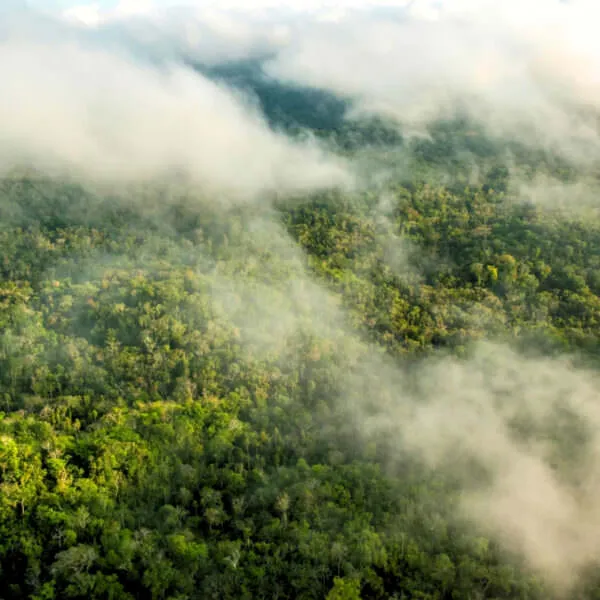
- Using a large map, locate the Brazilian rainforest. Move from a large global map to show where the children live to a smaller map of Brazil.
- Explain that a story called The Great Kapok Tree takes place in the Brazilian Amazon. Relay facts about the kapok tree that are listed in the Kapok Tree species profile.
- Read Lynne Cherry's The Great Kapok Tree aloud and discuss the story with the children.
- On chart paper, list all the rainforest inhabitants that are mentioned in the book.
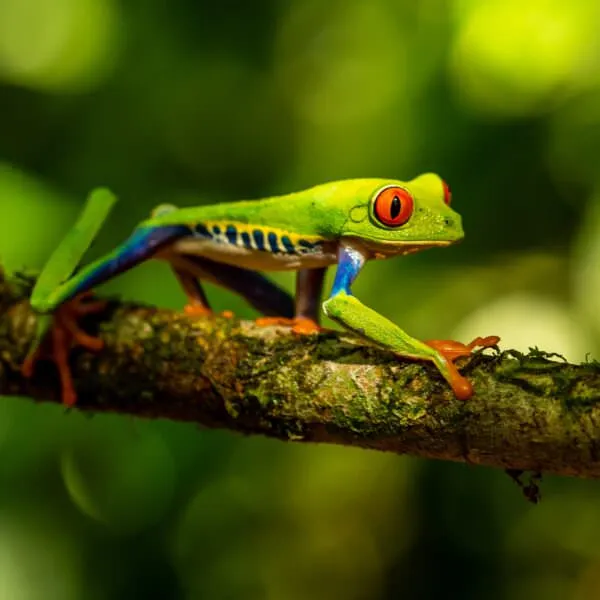
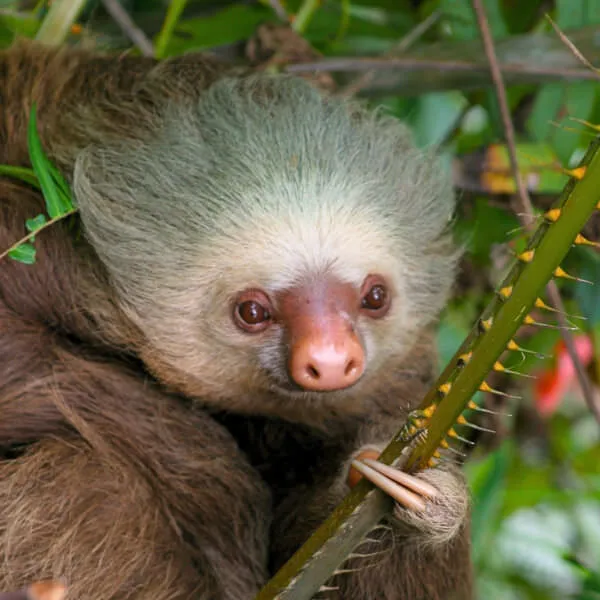
- Discuss how the survival of rainforest plants and animals are interdependent. Identify each inhabitant from the story on a separate sticker/label, so that each student in the class can wear a sticker to eventually act out a part. Inhabitants mentioned in the story include the following: boa constrictor, bee, flower, tree, monkey, soil, toucan, macaw, cock-of-the-rock, tree frog, jaguar, birds, four tree porcupines, several anteaters, three-toed sloth and a Yanomami child.
- The child who is acting out the role of the kapok tree will stand in the middle of a circle holding one piece of yarn for each child in class. Each piece should be about 6 feet long.
- Reread the story aloud. Whenever a species in the book's name is mentioned, have the kapok tree toss one end of a length of yarn to the animal mentioned, while the kapok tree continues to hold onto the other end of each piece of yarn. (The yarn symbolizes the tie that these two inhabitants have and how they depend on each other for survival.)
- At the end of the story, take time to look at the web of interdependence that was created. Have the kapok tree lightly tug on his collection of yarn. Ask the other children to give a thumbs-up if they feel a tug on the yarn. Those that did (which would be everyone) can say thank you to the kapok tree for helping them to survive.
- Now, explain that not all people respect the importance of trees. Pretend to chop down the kapok tree. The kapok tree falls to the ground. Ask all the other characters to also drop to the ground if their yarn was pulled when the kapok tree fell.
- Discuss the impact cutting down the kapok tree would have on other plants and animals of the rainforest.
Step 3A -- Practice (Math and Learning Centers)
Challenge
Students will isolate one factor in an ecosystem and determine how much the loss of that one factor will impact the full ecological system and, as a result, the different species in that ecosystem.
Materials
- Instructions for making a terrarium
- Large soda bottles (one per group of three or four)
- Scissors
- Potting soil or soil from outside
- Plant seeds or seedlings
- Water
Procedure
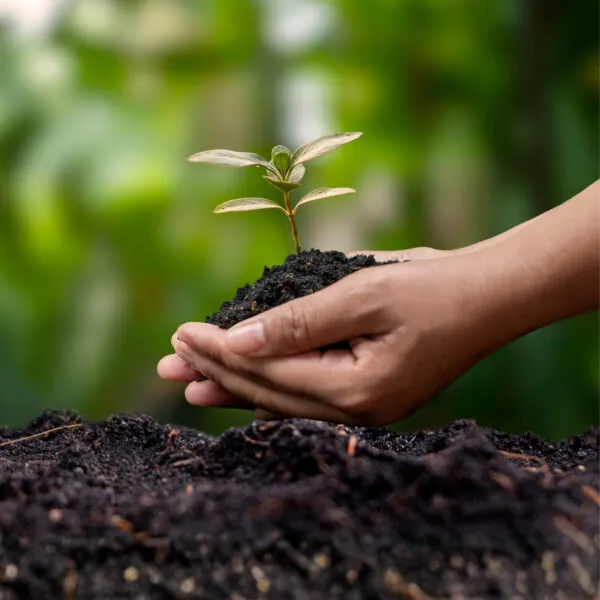
- In groups of three or four, students will design terrariums that represent local ecosystems. (Use soil and plants from the local area to build them.) Each terrarium will have the same amount of soil and the same plants. The closed terrarium will have plants and soil and water.
- Students are directed to use water as the determining factor for survival of the plants in their terrarium.
- Each group will give their terrarium different amounts of water over a two-week period. Some will receive only a teaspoon full of water each, some five teaspoons of water each day, some a cup of water and some none at all.
-
After two weeks, students will report on the conditions in their different terrariums. Discussion:
- How did rainfall affect the health of the ecosystem?
- What would be affected in your local neighborhood if no rain fell for a year?
- What if it rained everyday for a month, would things change in your area?
-
Math Task: Using an encyclopedia or the Internet, look up the average rainfall in your local area.
- List the rainfall for different seasons of the year.
- Look up the average rainfall for different seasons in the Ghanaian rainforest and compare them.
- How much more rain falls in the rainforest than in your local area.
- What do you think would happen to your local area if the rainfall was like the Ghanaian rainforest?
Step 3B -- Create (Performance Tasks Related to Standard Indicators)
Challenge
Students will be able to identify all the components that are necessary for their survival in their current location.
Materials
- Poster-sized paper
- Colored markers
Procedure
- Students will create a poster that puts their silhouette in the center of a piece of paper. In spokes that surround the silhouette, students name all the things that they NEED to survive.
- In a different color marker have students list all the things they WANT to make their lives comfortable.
- Putting the posters up in a gallery around the room, students review all the posters and list questions that address the difference between needs and wants.
- Students will ask questions that address the difference between what people NEED and what they WANT to be comfortable. Have students outline the needs in green and their wants in red after the discussion if they change in classification after the discussion.
-
In a discussion led by the teacher, students will address what could be crossed off the list and what is necessary to keep for their individual survival on each of the posters. Discussion
- What might happen if one of the basic needs is threatened or disappears?
- How might students react?
- Would they be able to stay in the place where they live if this component disappeared?
- How might they adapt?
Step 4 -- Present (Edit Work/Students Present Projects)
Challenge
Students will present the difference between necessary components of their lives and the ones that are wanted but not necessary for survival.
Materials
- Needs/Wants posters from Step 3B
- Magic markers
Procedure
- Students stand in front of their posters of survival needs and cross off the WANTS explaining why these are not necessary and expressing the NEED for certain components and why.
- Students might do this activity in a short written paragraph instead of a public announcement.
The Rainforest Alliance curriculum is unique in that it teaches science, math, language arts and social studies essentials while addressing the United States National Standards for Learning. These are the standards addressed in the third grade lessons.
Language Arts Writing
Standard 4 Level 2 Grade 3 - 5
2. 3. 4. Gathers and uses information for research purposes (encyclopedias, dictionaries, electronic media).
Uses multiple representations of information (maps, charts, diagrams, tables) to find information for research topics.
7. Uses strategies to compile information into written reports or summaries.
Reading
Standard 7 Level 2 Grade 3 - 5
Uses reading skills and strategies to understand a variety of informational texts.
5. Summarizes and paraphrases information in texts.
6. Uses prior knowledge and experience to understand and respond to new information.
Standard 6 Level 2 Grade 3 - 5
Uses reading skills and strategies to understand and interpret a variety of literacy texts.
9. Makes connections between characters or simple events in a literary work and people or events in his or her own life.
Listening and Speaking
Standard 8 Level 2 Grade 3 - 5
Contributes to group discussions.
Asks questions in class.
Responds to questions and comments.
1. Listens to classmates and adults.
7. Makes basic oral presentations to class.
10. Organizes ideas for oral presentations.
Thinking and Reasoning
Standard 3 Level 2 Grade 3 - 5
4. Makes comparisons between countries in terms of relatively concrete characteristics (size, population and products).
Standard 1 Level 2 Grade 3 - 5
1. Uses facts from books, articles and databases to support an argument.
7. Recognizes when a comparison is not fair because important characteristics are not the same.
Standard 5 Level 2 Grade 3 - 5
1. Identifies issues and problems in the school or community that one might help solve.
Mathematics
Standard 1 Level 2 Grade 3 - 5
1. Uses a variety of strategies to understand problem situations.
2. Represents problems situations in a variety of forms.
Standard 3 Level 2 Grade 3 - 5
7. Solves real world problems involving number operations.
Standard 4 Level 2 Grade 3 - 5
1. Understands the basic measures perimeter, area, volume circumference.
2. Selects and uses appropriate tools for given measurement situations.
4. Understands relationships between measures.
1. Uses specific strategies to estimate quantities and measurements.
Standard 9 Level 2 Grade 3 - 5
2. Understands that mathematical ideas and concepts can be represented concretely, graphically, and symbolically.
Life Sciences
Standard 6 Level 2 Grade 3 - 5
1. Knows the organization of simple food chains and food webs.
2. Knows the transfer of energy.
3. Knows that changes in the environment can have different effects on different organisms.
4. Knows that all organisms (including humans) cause changes in their environments and these changes can be beneficial or detrimental.
Standard 1 Level 2 Grade 3 - 5
Understands atmospheric processes and the water cycle.
Standard 4 Level 2 Grade 3 - 5
5. Knows that the characteristics of an organism can be described in terms of a combination of traits; some traits are inherited and others result from interactions with the environment.
Standard 5 Level 2 Grade 3 - 5
3. Knows that living organisms have distinct structures and body systems that serve specific functions in growth, survival and reproduction. (body structures for walking, flying, or swimming).
Standard 7 Level 2 Grade 3 - 5
3. Understands the concept of extinction and its importance in biological evolution.
4. Knows ways in which living things can be classified.
Standard 9 Level 2 Grade 3 - 5
Understands the sources and properties of energy.
Standard 11 Level 2 Grade 3 - 5
5. Knows that good scientific explanations are based on evidence (observations) and scientific knowledge.
6. Knows that scientists make the results of their investigations public.
Standard 13 Level 2 Grade 3 - 5
1. Knows that people of all ages, backgrounds and groups have made contributions to science and technology throughout history.
Standard 12 Level 2 Grade 3 - 5
3. Plans and conducts simple investigations.
4. Uses appropriate tools and simple equipment.
Third Grade Resources
- Third Grade Curriculum
- Ghana Slideshow [PDF]
- Ghana Slideshow script [PDF]
- Chocolate Slideshow [PDF]
- Romel's Rainforest Home [PDF]
- El Hogar de Romel en el Bosque Tropical [PDF]
- Romel e seu Lar na Floresta [PDF]
Species Profiles
- African Elephant [PDF]
- African Grey Parrot [PDF]
- Black-headed Paradise Flycatcher [PDF]
- Cacao Tree
- Western Red Colobus [PDF]
Rainforest Posters
- Inside the Canopy [PDF] – Structure and species of the rainforest
- Status Report [PDF] – What is happening to the rainforest
Terrarium Instructions [PDF]
Teacher summary [PDF] – The Rainforest Alliance Learning Site provides a downloadable overview of cocoa farmers in Ghana with useful information to introduce you to the lesson topic.
Certificate of Accomplishment [PDF]