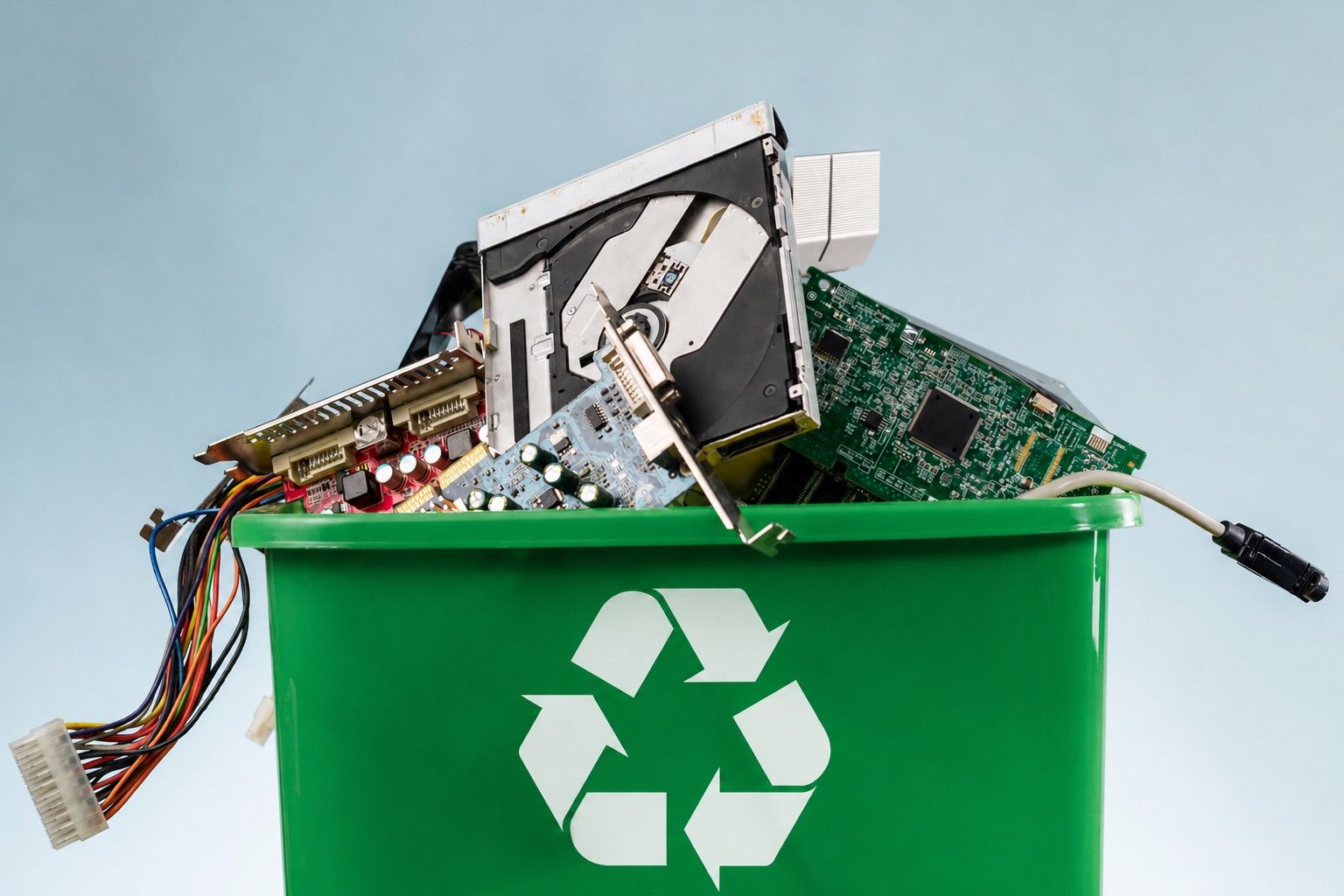
There’s a gadget for everything these days, but convenience has a cost—and not just the price tag. Electronics and electrical goods impact the health of people and our planet at every stage of their existence, from mining to manufacturing. Humanity is on track to produce 82 million tons of e-waste annually by 2030. The rise of e-waste is a far-reaching issue—but it’s one that all of us can help with today, just by learning to recycle e-waste responsibly.
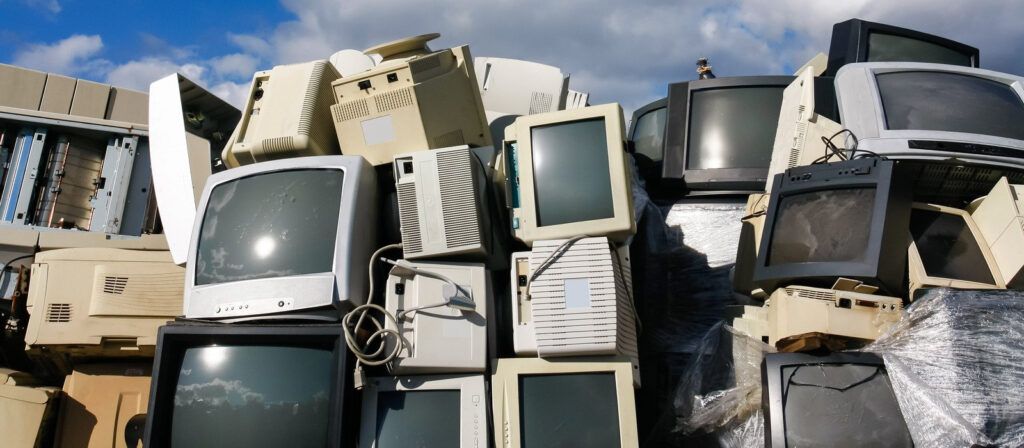
What is e-waste? E-waste is anything with a plug or battery that is discarded. It might be broken, at the end of its life, or just unwanted. Examples include cellphones, computers, TVs, household appliances like refrigerators, electronic toys, and LED lamps. Even suitcases can be e-waste nowadays!
Why recycle e-waste?
Electrical goods are full of materials that pose risks to people and nature if not handled correctly, from lithium and lead to mercury and cadmium. Improper disposal of e-trash leaches toxins into the environment that can seriously damage public health for decades to come. E-waste might also end up being shipped to a country halfway around the world for “disposal.” In practice, it’s often carelessly dumped, left to be picked over by informal recyclers for valuable materials like gold, copper, and cobalt. The ILO and WHO estimate that millions of women and children work in this sector worldwide and may be exposed to toxic substances.
At the moment, the electronics industry relies heavily on freshly mined materials (along with the associated pollution and human rights concerns) to meet the growing demand for electrical goods. In fact, only around 8.6 percent of extracted materials is currently being recycled. By stepping up responsible e-waste recycling efforts, we could reduce the need for destructive mining projects, cut back on pollution, and create thousands of jobs.
How to recycle e-waste safely
But how can you make sure you’re recycling your electronic trash safely? You’ve got some good options:
- E-waste recycling centers: These are official e-waste processing centers, certified to safely handle e-waste and, vitally, your data. Search online for “e-waste recycling near me” for your closest options.
- Manufacturer takebacks: Some electronics manufacturers are working to make e-waste recycling easier for their customers. Many provide free shipping, easy drop-off, and even rewards programs for returning your old devices to them.
- Retail recycling: Lots of big box electronic stores accept e-waste for recycling. This could be an easy and convenient option for you.
- Municipal programs: Check your local area for a permanent municipal e-waste drop-off facility or scheduled e-waste collection days.
- Donation: Old phone still working? Electric kettle still boiling? Donate them! Look for local charities or thrift stores who could put them to good use.
Protect your data before recycling or donating
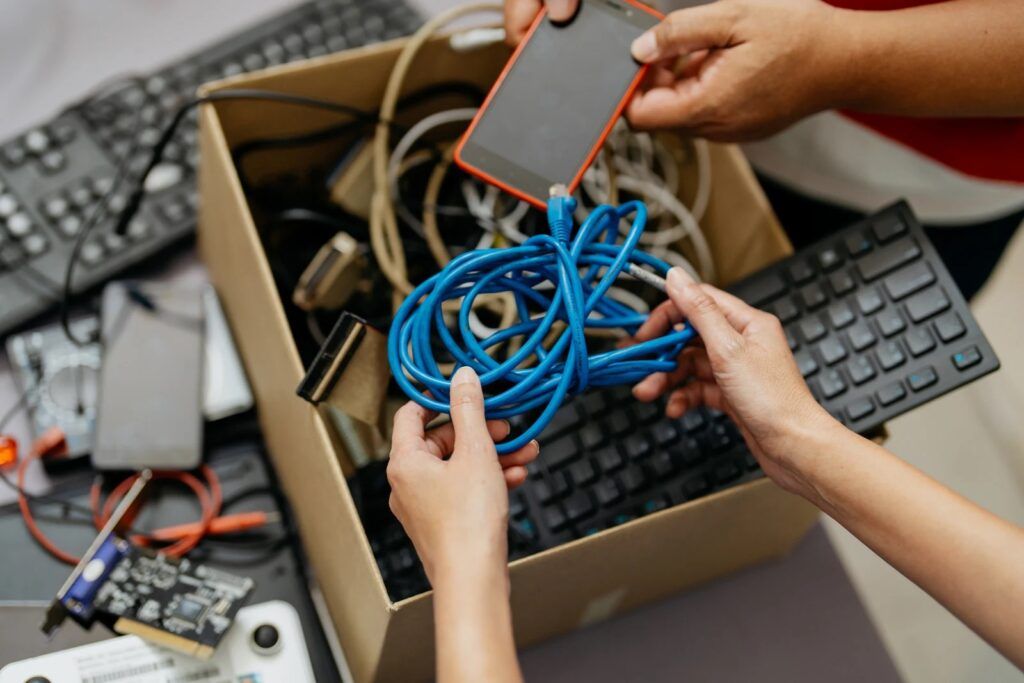
“But what about my personal data?!” you’re wondering. Before parting with any e-waste like a phone or computer, it’s always wise to back up your data, and then wipe it clean with a system reset or trusted third-party software. If you prefer an analogue approach, physically remove a computer’s hard drive and smash it with a hammer. Just make sure you research the best option for you and your device first!
Be part of the e-waste solution
E-waste may be a growing problem, but the solutions are growing too! Be one of the problem-solvers by researching your options and recycling your electronic trash responsibly.
You can join our mailing list for more sustainability tips, and we’re always sharing easy, everyday actions you can take for a greener life.
Together, we’re building a future where people and nature thrive. Sign up today and join our movement.
"*" indicates required fields