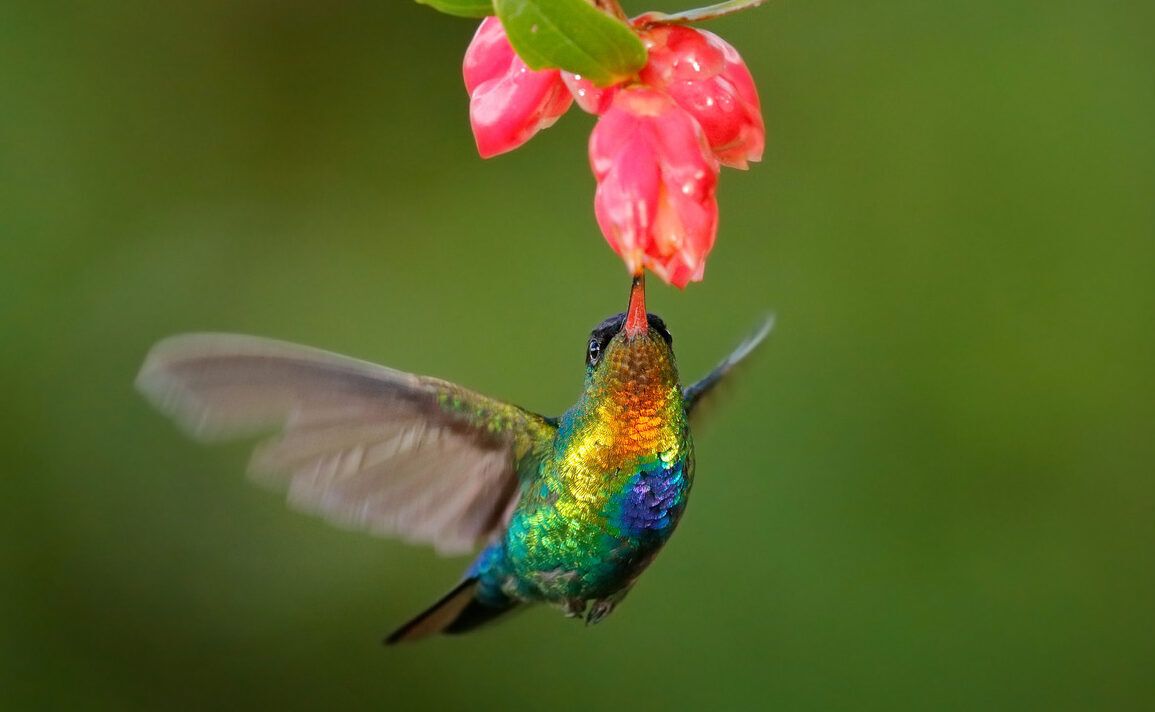
Resurrected warriors, rain-bringers, and favorites of the Mayan gods; Throughout history, hummingbirds have enchanted humanity and inspired many myths. These tiny, shimmering birds are a symbol of water, life, and love to many Indigenous peoples of the Americas, where most hummingbirds are found. In fact, all 366 species of hummingbird are only found in the Western Hemisphere. As well as quickening the heart and sparking the imagination, these birds are also highly specialized pollinators, helping ecosystems to thrive.
By making your garden a welcoming space for hummingbirds, you’re not just inviting beauty and magic into your life–you’re also putting some of the Rainforest Alliance’s guiding principles into practice in your own yard by supporting biodiversity.
Get the timing right: Migration and range
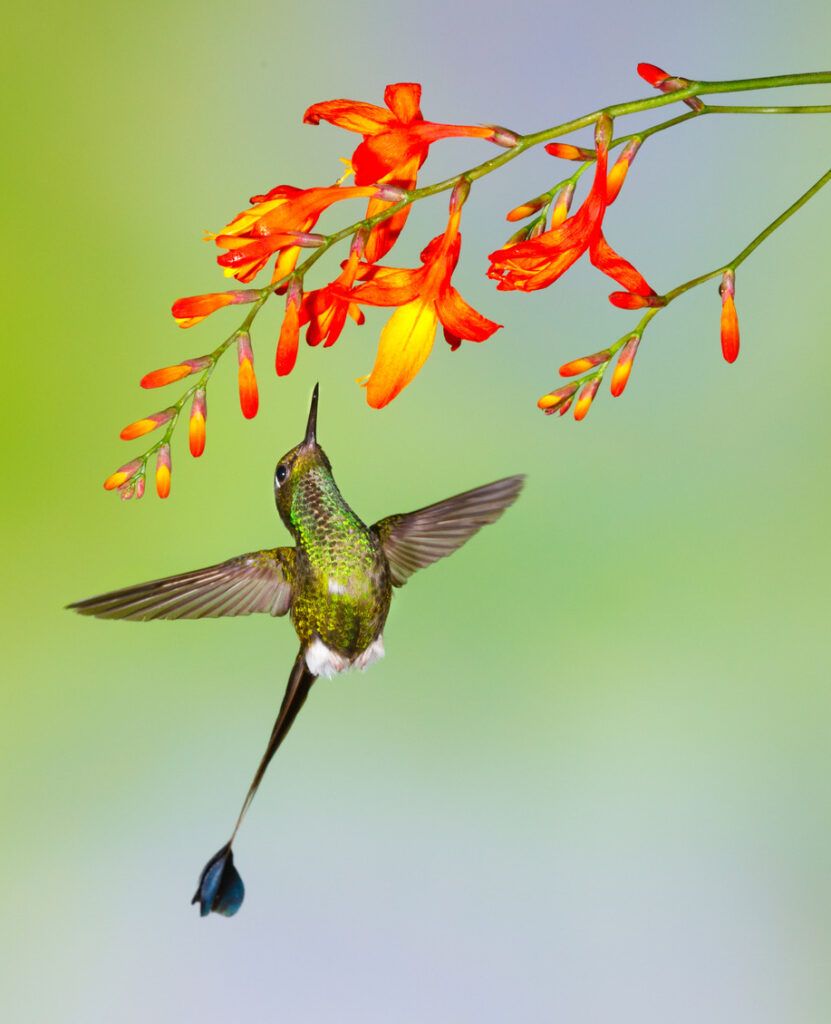
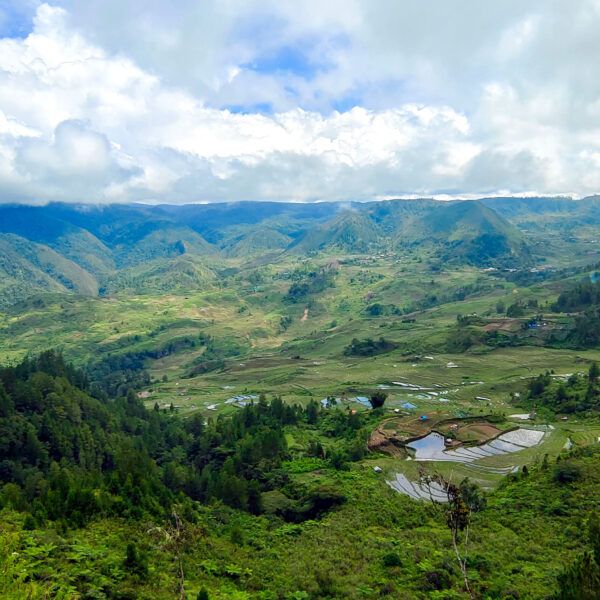
Hummingbirds, though small, fly mighty distances over the course of their lives. Breeding season for North American hummingbirds is usually from spring through summer. After their annual Summer of Love, most species begin heading south in late summer or early autumn, returning to Central and South America to enjoy their warm winters. Ruby-throated and Rufous hummingbirds, for example, can make epic journeys from Canada to Mexico during migration season–where they often visit shade-grown coffee farms. The Rainforest Alliance works to promote such coffee agroforestry systems, supporting farmers in growing coffee under the shade of taller, biodiversity-boosting trees. So maybe that hummingbird you spot sipping nectar in your garden has flitted between the very coffee plants that grew your morning brew! Learn more about migratory birds and sustainable coffee.
The basics of attracting hummingbirds to your yard
Whether you’re trying to attract hummingbirds to a big garden or a small balcony, here are some basic tips to get you started:
- Observe your outdoor area. What’s already growing? Who’s visiting? Is your soil sandy or clay-like? Does the space get full sun or stay damp and shady? These observations will help you choose the best plants to attract hummingbirds and other pollinators.
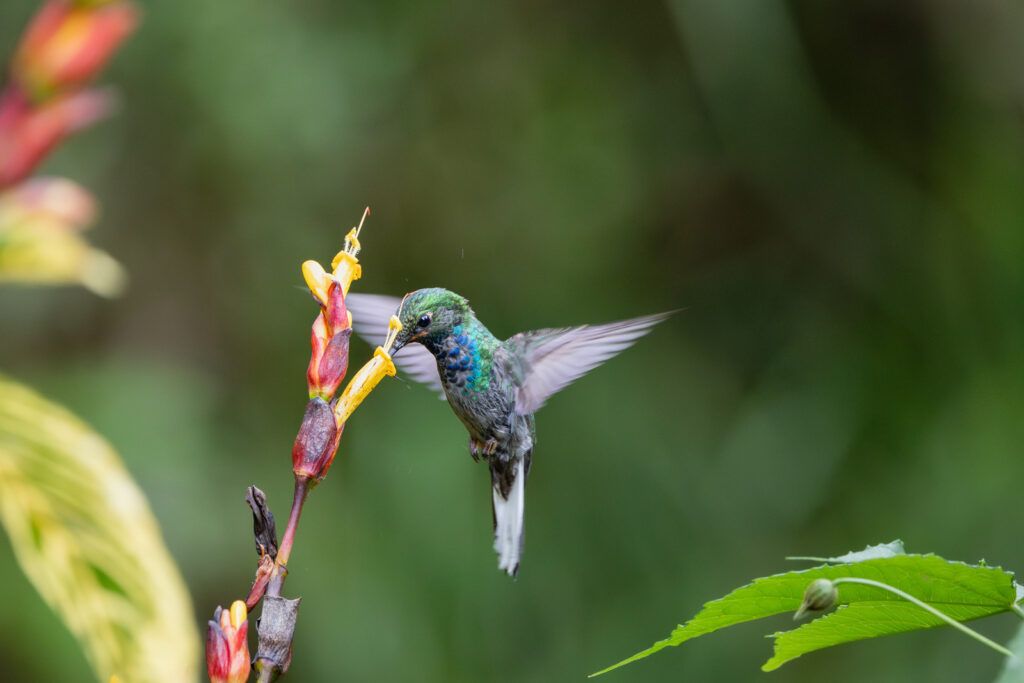
- Plant colorful, nectar-rich flowers. Bright, native flowers in red, orange, and pink are especially attractive to hummingbirds. In North America, plants like bee balm, cardinal flower, columbine, and trumpet honeysuckle are great options. In South America, salvia, fuchsia, agastache (also called hummingbird mint) and cremocarpus are also good choices.
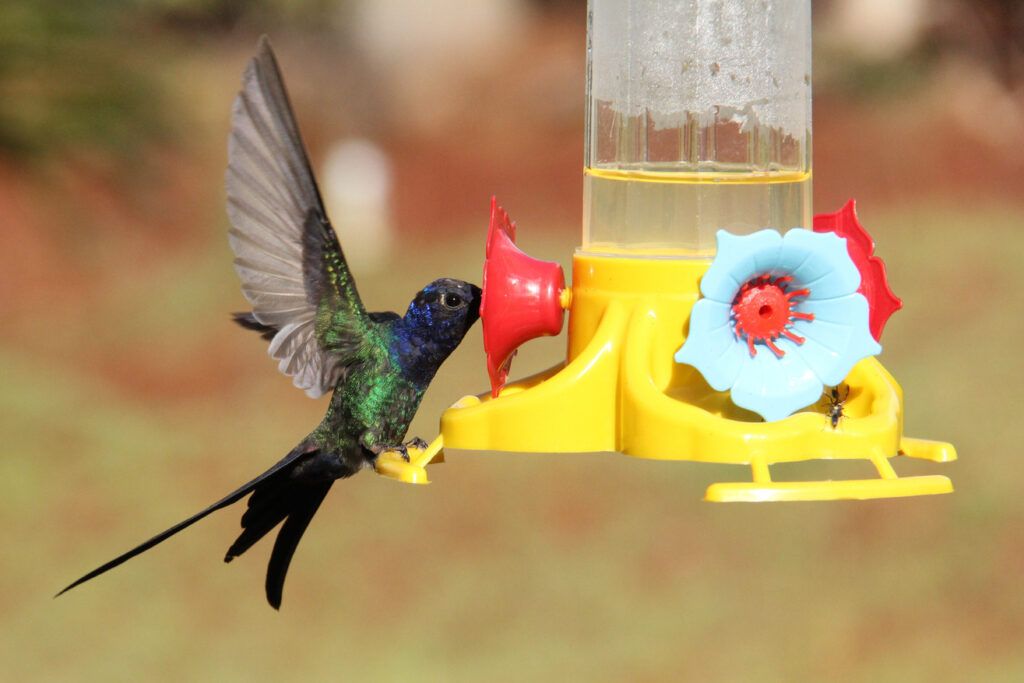
- Hang a hummingbird feeder. Our former colleague, and forever friend of the Rainforest Alliance, Melissa Norman offered this advice from personal experience: along with planting native flowers, you can hang a hummingbird feeder filled with homemade nectar (1 part sugar to 4 parts water—no red dye needed!) Here’s a simple nectar recipe. Choose shady spots to prevent mold growth, clean your feeder every few days, and consider multiple feeders to reduce territorial squabbles. Feeders with bee guards can also help prevent competition from stinging insects.
- Add a water source. Rain catchers or shallow birdbaths are perfect for hummingbirds to preen and quench their thirst. Plus, watching a hummingbird hover and dip into the water is one of the most delightful sights in any outdoor space!
- Keep it chemical-free. Just like the farms following the Rainforest Alliance’s regenerative agriculture principles, you should nurture the entire ecosystem. Pesticides and other garden chemicals harm not just hummingbirds, but also the tiny insects they eat. A truly hummingbird-friendly garden is one that welcomes nature in all its splendour!
From outdoor space to hummingbird haven
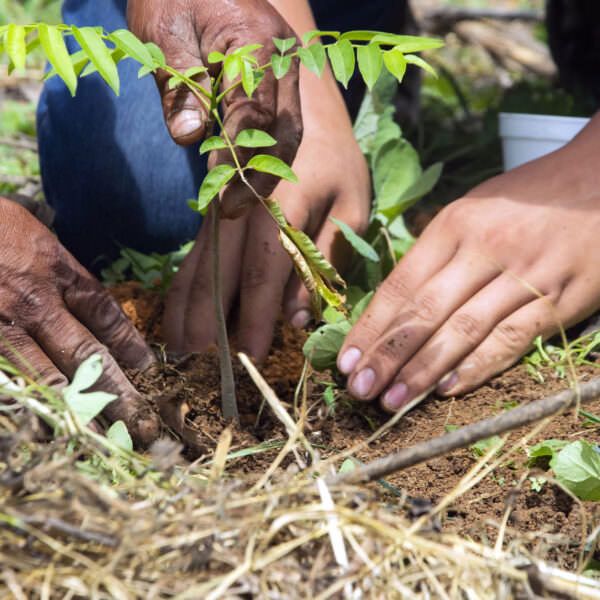
Now you’re well on your way to creating a hummingbird haven. By inviting hummingbirds into your outdoor space, you’re cultivating more than just a beautiful garden; You’re stewarding the nature around you, contributing to wildlife corridors, and participating in a wider, regenerative movement.
Want more everyday actions that support people and the planet? Sign up for our emails to get regular tips and stories straight to your inbox.
Together, we’re building a future where people and nature thrive. Sign up today and join our movement.
"*" indicates required fields