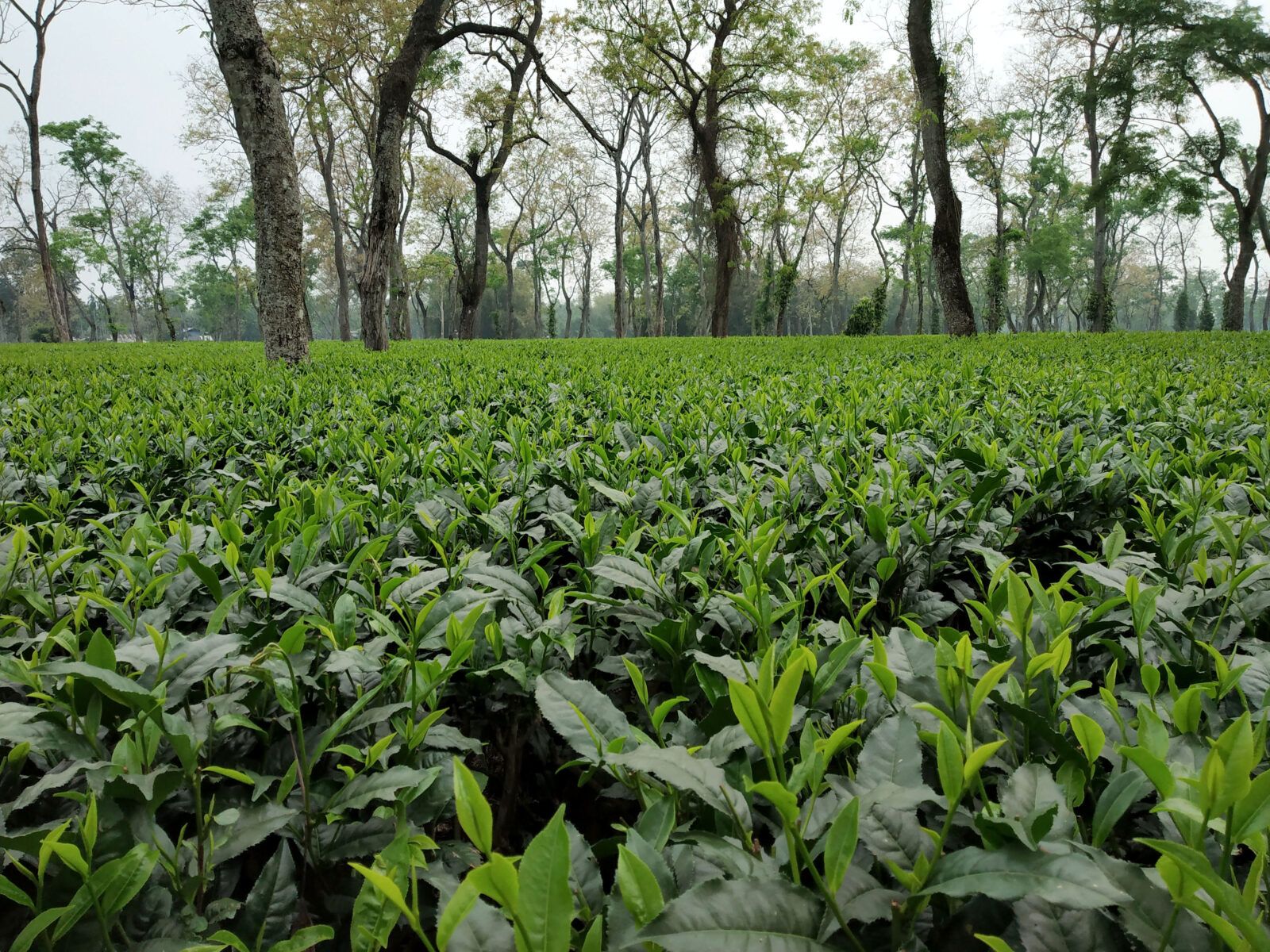
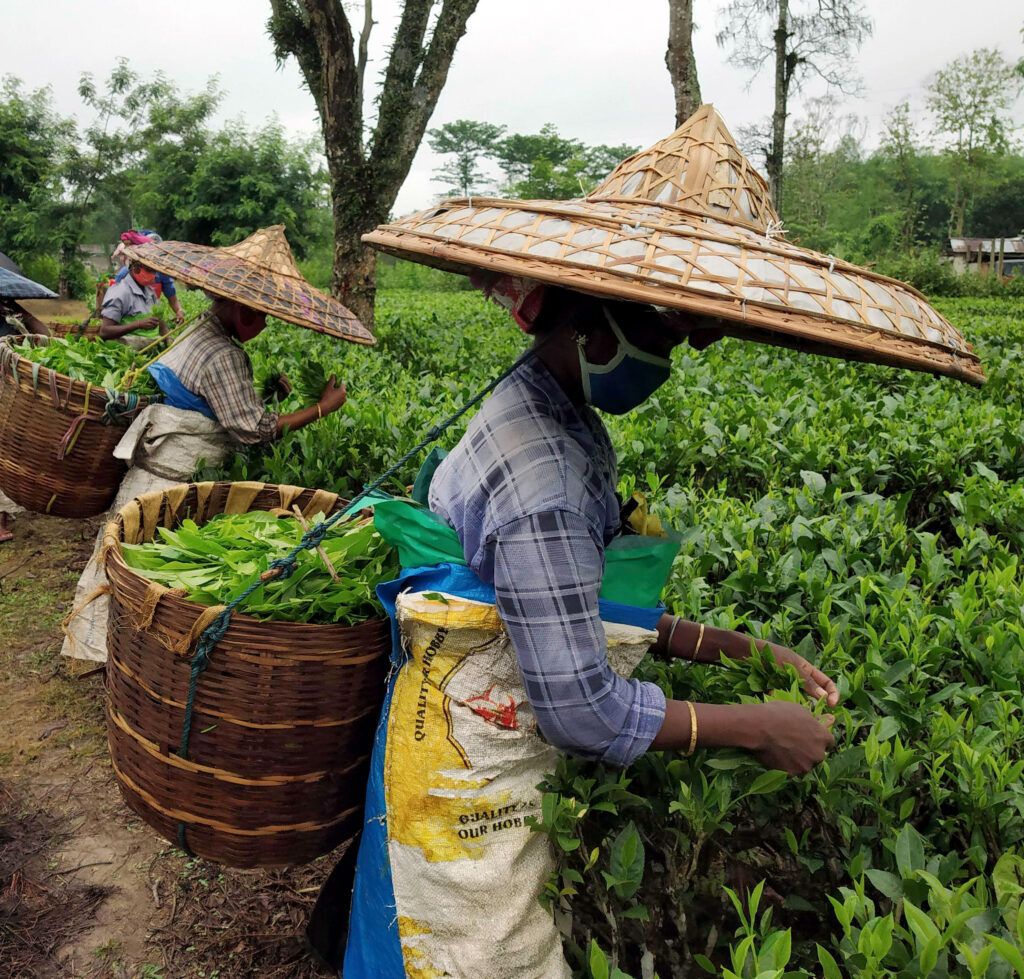
In the northeast of India, the state of Assam is renowned for its incredible flora and fauna—like the greater one-horned rhino—and its strong and flavorful teas. Around 6 million people (20 percent of Assam’s population) rely on the tea sector for their livelihoods, while millions more around the world enjoy the fruits of their labor.
Climate change, however, has led to a surge in agricultural pest and disease outbreaks, causing significant crop losses of up to 50 percent at some Assam tea estates. Farmers often feel they have no choice but to spray their crops with agrochemicals. This challenge is compounded by stagnant tea prices and strict regulations on chemical residues. There is a clear need for tea farming practices that not only support soil health, but also enhance microbial activity, and promote floral biodiversity.
Integrated Pest Management (IPM) is a holistic ecosystem approach to crop production and protection. An integral part of a broader regenerative agriculture approach, IPM combines multiple strategies and practices to grow healthy crops while minimizing the use of pesticides. In an exciting initiative to address climate related threats, key stakeholders within the sector have joined with the Rainforest Alliance to create a taskforce that will develop and implement IPM guidelines contextualized for Assam. The project aims to establish a more sustainable, climate-resilient model of tea production, reducing crop loses, lowering input costs, and strengthening Assam’s global competitiveness.
Location
Assam state, India
Period
2025 – 2028
Key commodity
Tea
Priority issues
Climate resilience and IPM adoption
Project Objectives
The ultimate goal of this project is to build a climate-resilient tea sector through the adoption of IPM practices that promote both micro- and macro-biodiversity, improve the soil’s organic content, and reduce pest infestations. The project aims to build this resilience through the following objectives.
- Setting up the task force and pilot plots
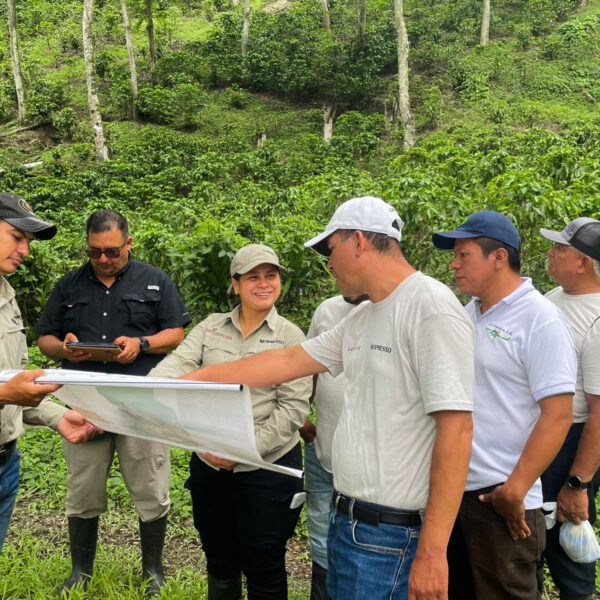
The task force brings together the Rainforest Alliance, technical partners (TRA, CABI and RYSS), tea companies (Amalgamated Plantations, Jorehaut Tea Company, and McLeod Russel), as well as the UK Tea and Infusions Association and the Tea and Herbal Association of Canada. The Tea Smallholder Development Authority participates as an observer to ensure inclusivity.
All three tea companies are each dedicating 10-hectare plots of their overall estates to this pilot (directly supporting a workforce of 5,000 workers and their dependents). The task force will collect, analyze, and share the pilot’s data with the wider tea industry. - Developing localized IPM guidelines
To meet the specific needs of Assam’s tea farmers, this project is taking a localized approach, which will be key to restore the region’s ecological balance and improve long-term productivity. The task force is therefore working to implement IPM practices rooted in natural farming principles and cultural practices.
The pilot is collecting key data points for the Assam region, such as yield, pest and predator ratios, soil organic carbon, and agrochemicals sprayed. Key interventions include enhancing soil health, promoting biodiversity buffers through border crops, and using natural methods of pest control. To ensure robust data, the task force will also conduct baseline assessments, standardized monitoring protocols, and regular field visits and surveys. - Analyzing root causes
The IPM task force is conducting a root-cause analysis of the rising incidence of pest attacks, while documenting evidence-based success stories that can be readily replicated. The project brings together sectoral experts who can offer informed guidance and technical support to manage local pests and diseases. Some of the targeted pests and diseases currently include Helopeltis theivora (tea mosquito bug), loopers, thrips, greenflies, and Fusarium dieback. - Knowledge sharing across the tea sector
By developing strong proof-of-concept models, the project taskforce also seeks to mobilize resources effectively, paving the way for scaling up sustainable pest management practices across the tea sector. The pilot’s findings will be shared with the entire tea industry, including smallholder tea farmers. Our goal is to encourage sector-level adoption of the IPM guidelines, which in turn has the potential to positively impact more than a million tea workers and their dependents.
Funders
Bettys & Taylors of Harrogate, Ahmad Tea, and the Rainforest Alliance
Implementing partners
Tea Research Association (TRA), Rythu Sadhikara Samstha (RySS), Centre for Agriculture and Bioscience International (CABI), McLeod Russel, Amalgamated Plantations, and Jorehaut Tea Company.
Rainforest Alliance contact
Madhuri Nanda, Director, South Asia, mnanda@ra.org