Teachers

Get Involved
Support Our Work
Programs
Research & Resources
Email This Page
Contact Us
Site Map

Learning Site

Kindergarten

Kindergarten

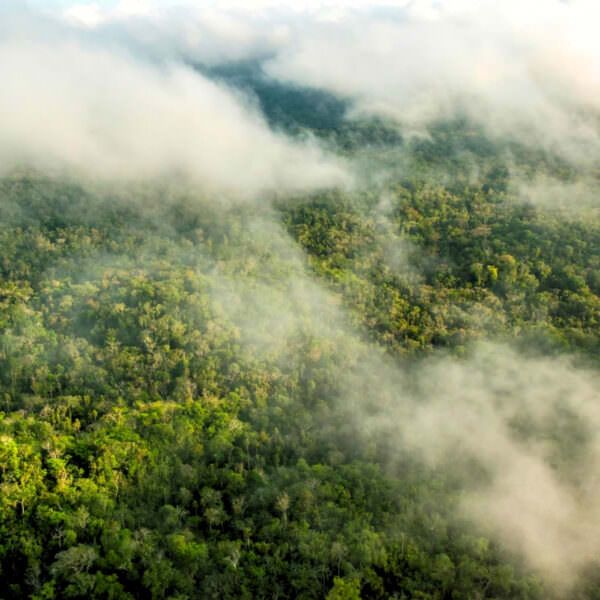
Cachalú Biological Reserve, Colombia

Lesson 1 -- My Forest or the Rainforest?

Sign up here for our free monthly

e-newsletter.

Concept

There are many differences and similarities between the flora and

fauna of temperate forests and rainforests. Certain environmental conditions allow particular plants and animals to live in the rainforest.


Essential Question

How can something so far away and different be so similar?

Total Time: 85 minutes

View Lesson Plan


Additional Resources

Slideshow – Click below for a slideshow and script about the Cachalú reserve

  that includes background information about the animals, people and landscape

  of this region. The slideshow can be downloaded for viewing in the classroom, or

  printed out and read as a story, or viewed online with the students.

                    Download as PDF [~5.5M]             View On-Screen

                    Download script as PDF [~17K]

Chayo’s Andean HomeA Rainforest Alliance original story that teaches   

  children about the animals that Chayo sees on the farms and what her family is

  doing to help protect the forest.

            English:   View on Screen          Download [PDF ~2.3M]
            Spanish:   View on Screen         
Download [PDF ~664K]
            Portuguese:  View on Screen          Download [PDF ~664K]

Species Profiles – Profiles include: photos, habitat, foraging behavior, group

  relationships, threats, etc.

− Spectacled Bear             View on Screen      Download [PDF ~71K]

− Nine-Banded Armadillo      View on Screen      Download [PDF ~64K]

− Cock of the Rock             View on Screen      Download [PDF ~40K]

Leaf-Cutter Ant              View on Screen      Download [PDF ~36K]

Andean Condor              View on Screen      Download [PDF ~43K]

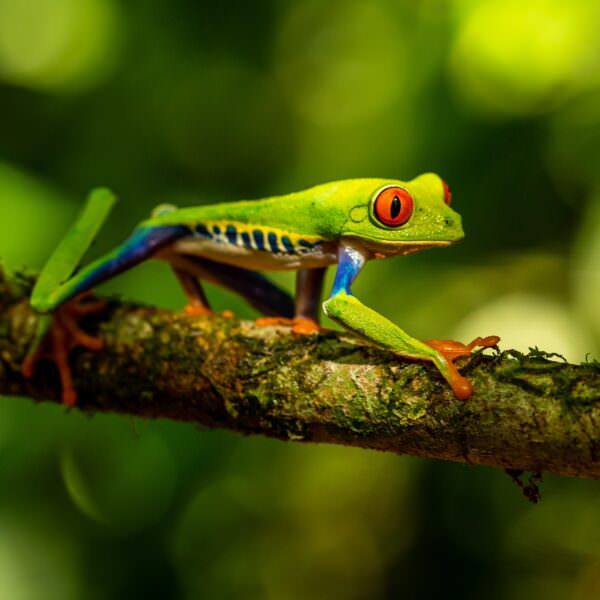
− Red-eyed tree frog         View on Screen      Download [PDF ~47K]

Coloring Pages

         - Spectacled bear           Download [PDF ~217 K]
        - Red-eyed tree frog        Download [PDF ~217 K]

Rainforest Products – Click here for a summary of products that we use in our

  everyday lives that originate in rainforests. Both teachers and students will find

  information on the products found in their homes and supermarkets that either

  originated in tropical forests or are currently produced there.


Conservation Coffee Summary – This summary includes the environmental,

  social and cultural impact that coffee has had on the Americas, the connection

  between coffee farms and wildlife and a glossary of relevant terms. 

  Download [PDF ~92K]

Rick and the Gang Find Out Why Some Coffee is Bad for BirdsThis article

  from Ranger Rick Magazine describes the impact some coffee harvesting

  techniques have on bird habitat.  Download [PDF ~5.7M]

Profiles in Sustainability – Click here for case studies on companies who work  

  closely with the Rainforest Alliance to ensure that their practices protect wildlife,

  workers and communities.

Sample Parent Letter – Download a sample parent letter to be used as part of

  Unit.   Download [PDF ~18K]

Certificate of Accomplishment – Print out colorful rainforest certificates for

   your students to commemorate their completion of these units. 

   Download [PDF ~594K]

Great Resources – Check out this page for easy access to additional    

   supplemental materials that complement these dynamic units.


STEP 1 - CONNECT (The Concept to Prior Knowledge)        20 minutes

Challenge 

Challenge students to work with a partner to sort pictures, sounds and objects

according to whether they think each item can be found in a rainforest or temperate

forest.

Materials

(per 3-4 students/group. If you can make more sets of these materials, divide the class into pairs.)

-3, 12”x15” presentation cardboards or white boards. Label one board “Rainforest,” one board “My Forest” (Temperate Forest) and the other, “Both.” On the front of each board stick small pieces of Velcro at random locations.

-A mixed set of pictures, objects and sounds representative of flora, fauna and

landscapes from temperate forest and rainforest. Pictures and objects should have

masking tape stuck on back. 

-Masking tape.


Temperate Forest


Actual objects

-Ferns* (bracken fern, interrupted fern)

-Fruit (apple, blueberry, pumpkins)

-Leaves: deciduous & coniferous (American beech, eastern white pine needles, red maple, red oak, red pine needles, sugar maple, white ash, etc.)

-Lichens and mosses* (Species may be limited geographically, but these organisms thrive in both forests)

-Maple syrup samples– taste it!

-Mushrooms*

-Seeds (acorns, apple seeds, maple seeds, pine cones)

-Snow, Ice

-Soil*

Pictures

-Amphibians (bullfrog, spring peeper, tree frog)

-Birds (American crow, American kestrel*, black-capped chickadee, blue jay, hummingbird*, northern cardinal, northern parula*, red-tailed hawk*, rock dove, veery*, wood thrush*,)

-Insects* (carpenter ants, mosquitoes*)

-Landscapes (winter, fall, early spring)

-Mammals (black bear, badger, beaver, deer mouse*, gray squirrel, little brown myotis bat, lynx, moose, muskrat, weasel, white-tailed deer)

-Rain and lightning*

-Reptiles (garter snake, rattlesnake)

-Tall trees* (American beech, paper birch, red maple, red oak, sugar maple, etc.)

Sounds

-Animals: (see examples from “Pictures” above)

-4:30am sounds from your area.

Rainforest


Actual objects

-Coffee beans  

-Fruit (avocado, banana, fig, mango, orange)

-Lichens and mosses*(Species may be limited geographically, but these organisms thrive in both forests)

-Mushrooms*

-Plants (w/ large leaves* (i.e., elephant ear Fern, orchid flowers)

-Soil*

Pictures

-Amphibians (poison arrow frog, red-eyed tree frog)

-Birds (American kestrel*, cattle egret, cockatoo, hummingbird*, toucan, parrot, pelican, quetzal, scarlet macaw, rainbow lorikeet, red-tailed hawk*, veery*, wood thrush*)

-Ferns* (tree fern, calla lily, elephant ear fern)

-Insects* (leaf cutter ants*, bees*, large stag beetle, colorful katydids)

-Landscapes (ridgelines dominated by green vegetation*, dense canopy with emergent layer of trees)

-Mammals (anteater, chimpanzee, deer mouse*, flying foxes*(bats limited to rainforests), howler monkey, jaguar, kinkajou, ocelot, spectacled bear, tamarin monkey)

-Rain and lightning*

-Reptiles (anaconda, boa constrictor, chameleon, gecko)

-Trees (w/ very large trunks, tall trees* cacao tree, cecropia tree, kapok tree, teak tree, strangler fig tree)

Sounds**

-Animals: (see examples from “Pictures” above)

Landscape photos can be 81/2” x 11”. Plant and animal photos should be no larger than 3”x5” so that 10 or

so of these images can later be displayed as a collage on the presentation board. **Tip: A computer can be set up at one station with various sounds posted for students to click and hear with headphones.  The Web site www.christiananswers.net/kids/sounds.html#amphib has a large collection of rainforest sounds. To save these items, open each sound file using Windows Media Player. Click “File”, then “Export Playlist to File”. Save the file on your computer’s desktop and give it a name such as “Sound 1” or  “Bird 2”. Temperate forest sounds can be found on many Web sites. Audiotaping early morning

sounds is also an option.


Procedure

1. Set up 4-6 stations, each containing the same set of objects, pictures and

    sounds listed above. These items should be in a random pile.

2. Challenge students working in groups of 3-4 to sort the items into 3 piles

    consisting of plants, animals, weather and scenery from: (a) a temperate forest

    (presumably their own); (b) a rainforest; and (c) items that belong in both

    places.

    Rather than say “rainforest” say, “A forest where it rains almost every day of

    the year- often more than 100 inches per year. There is only one season, and

    the temperatures are typically between 70 and 90 degrees.”

    Rather than say “temperate forest” say, “the forest around here” if you live   

    near or in a temperate forest. Or say, “A forest where it rains about 35  

    inches per year, there are 4 seasons and the temperatures range from 0 to 100

    degrees.”

3. Tell students to tape each picture onto the appropriate presentation board   

    and to place each object in front of the corresponding board as well. If they

     are able to listen to sounds, tell them to tape the sound number on the board

    they think it belongs. 

4. Explain that they will return to their boards in a little while.


STEP 2 - LITERATURE/DISCUSS (Give Expert Information Book; Ask Questions)                                                                                                                                                  

Challenge

After reading aloud The Umbrella by Jan Brett, challenge students to verbalize how rainforests and temperate forests are similar and different. Then ask students to return to their presentation boards and make any changes based on what they just learned. 


Materials
-Book: The Umbrella by Jan Brett

Procedure

1. While reading The Umbrella ask questions like:

  • Describe at least 5 ways a rainforest is different from the forest closest to    

       where we live.

  • What is the difference between the seasons where we live and the seasons of

       the rainforest we read about?

  • Why do you think moose don’t live in the rainforest? Why do you think monkeys

      don’t live in a temperate forest?

  • What kinds of animals and/or plants live in both rainforests and temperate

      forests?

2. Ask students to work with a partner to describe 3 ways they think rainforests

    and temperate forests are different. Elicit students’ ideas and ask which ideas, 

    if any, they don’t agree with and why.


STEP 3A - PRACTICE (Math and Learning Centers)                          15 minutes

Challenge

Challenge students to work in their original groups to reorganize their forest boards

based on what they learned from the previous reading and discussion.

Materials

-Same as Step 1


Procedure

1. After presenting the challenge and giving the students a few minutes to make

    any changes, pick a few of the items from each board and ask them to explain

    what makes them think it belongs where they placed it. Then tell each group

    how many of the items on each board do not reflect what we know in real life.

2. When all the groups think they are done, have them rotate around to each of

    the other groups’ presentations and ask them to note of any items that are

    organized differently from their own.

3. Elicit from the whole group those items on which they do not agree. Ask

    students to explain their thinking and inform them of the correct answer.


STEP 3B - CREATE (Performance Tasks Related to Standard Indicators)


Challenge                                                                             20 minutes

Students create collages that depict the rainforest and the local forest, displaying their understanding of the two types.

Materials

-Objects and pictures from Step 1

-Large posterboard or butcher paper on which to tape elements and paint

-An assortment of crayons, paints, markers, colored pencils, etc.

-Masking tape

Procedure

1. Ask students to disassemble and mix up their entire set of objects and pictures

    and then make a final collage using the pictures and objects from the exercise.

    Invite them to paint and draw other items that they think belong in each forest.

    You could facilitate the creation of two larger murals on which all the items from

    all the groups are displayed. In either scenario, use their final work to help them

    verbalize the similarities and differences between a temperate forest and a

    rainforest. 


STEP 4 - PRESENT (Edit Work/Students Orally Present Projects)                                                                                                                                                                                                                                 10 minutes

Challenge

Students present their newly created landscape collages, explaining what lives in their forest and why it belongs there.

Materials

-Same as Step 1

Procedure

1.  Ask students to describe their collages to the class. Challenge them to describe

     the plants and animals that live in the forest they chose. Ask them to explain

     why some plants and animals live in one forest and not the other, and how

     some animals can live in both the local, or temperate, forest as well as the

     rainforest.  Challenge students to verbalize the similarities and differences

     between a temperate forest and a rainforest.


LESSON 1 ASSESSMENT RUBRIC: 

Teacher observations of tasks with rubrics as listed below, as well as collected

work samples.

Assessment Guidelines
3 = P (Proficient)

2 = S

(Satisfactory)

1 = NW

(Needs Work)

1. Student uses prior knowledge of local forest to organize elements of the forest.  Student is actively engaged in working with partner(s) to make cooperative decisions.      
2. Student makes appropriate changes to sorted forest elements.  Changes are accurate and incorporate new information from literature and/or class discussion.      
3. Student verbalizes why elements are matched with the appropriate forest. Explanations are accurate and incorporate new understandings of each forest. Student explains why new choices are correct.      
4. Student verbalizes why elements are matched with the appropriate forest. Explanations are accurate and incorporate new understandings of each forest. Student explains why new choices are correct.      


Top of Page