Teachers

Get Involved
Support Our Work
Programs
Research & Resources
Email This Page
Contact Us
Site Map

Learning Site

Kindergarten

Kindergarten

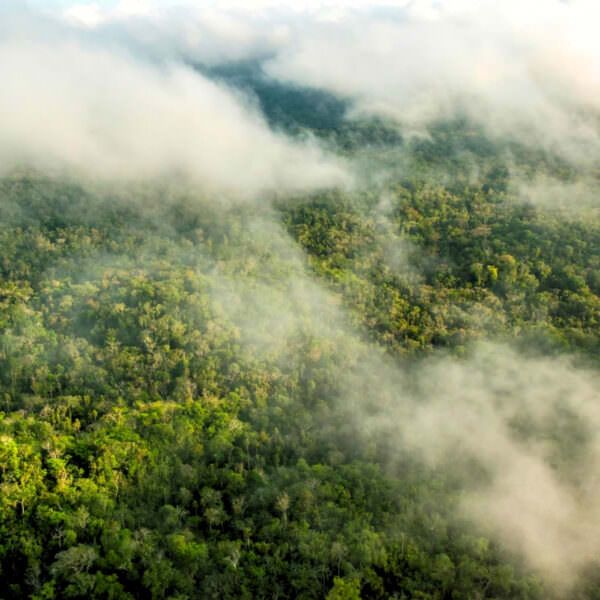
Cachalú Biological Reserve, Colombia


Lesson 4 -- The Long Road to Coffee

Concept

Sign up here for our free monthly

e-newsletter.

Coffee goes through many processes during its transformation from a plant in

Colombia to being sipped in a kitchen in New York. 

Essential Question

How can kids help adults understand how their coffee really got in their cup?

Total Time:  90+ minutes

Objectives

1. Students organize picture cards in the sequence of how food gets from a local

    farm to their home.

2. Students organize picture cards into a sequence to illustrate how coffee grown in

    Colombia gets to their home.

3. Students compare the differences between the steps locally and foreign grown

    produce takes to get to their home.

4. Students create an exhibit to illustrate to their parents how Colombian coffee

    beans make their way from the coffee fields to their home.

View Lesson Plan

Additional Resources

Slideshow – Click below for a slideshow and script about the Cachalú reserve that

  includes background information about the animals, people and landscape of this  

  region. The slideshow can be downloaded for viewing in the classroom, or printed

  out and read as a story, or viewed online with the students.

                    Download as PDF [~5.5M]             View On-Screen

                    Download script as PDF [~17K]

Chayo’s Andean HomeA Rainforest Alliance original story that teaches

  children about the animals that Chayo sees on the farms and what her family is

  doing to help protect the forest.

            English:   View on Screen          Download [PDF ~2.3M]
            Spanish:   View on Screen         
Download [PDF ~664K]
            Portuguese:  View on Screen          Download [PDF ~664K]

Species Profiles – Profiles include: photos, habitat, foraging behavior, group

  relationships, threats, etc.

− Spectacled Bear             View on Screen      Download [PDF ~71K]

− Nine-Banded Armadillo      View on Screen      Download [PDF ~64K]

− Cock of the Rock             View on Screen      Download [PDF ~40K]

Leaf-Cutter Ant               View on Screen      Download [PDF ~36K]

Andean Condor                View on Screen      Download [PDF ~43K]

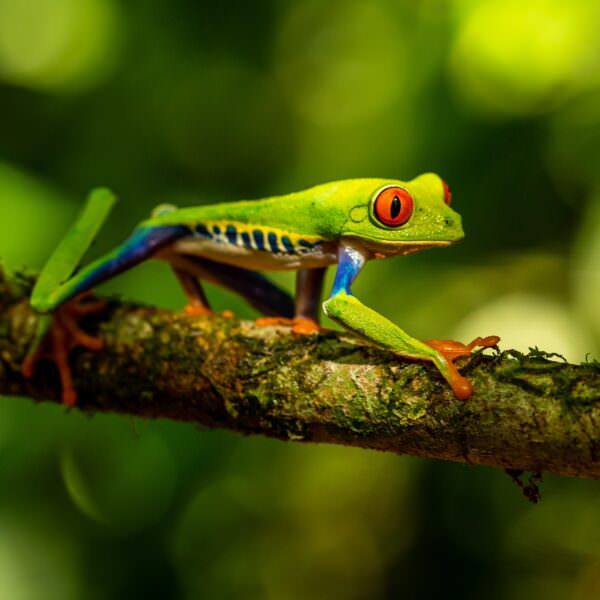
− Red-eyed tree frog           View on Screen      Download [PDF ~47K]

Coloring Pages

         - Spectacled bear               Download [PDF ~217 K]
         - Red-eyed tree frog            Download [PDF ~217 K]

Rainforest Products – Click here for a summary of products that we use in our

  everyday lives that originate in rainforests. Both teachers and students will find

  information on the products found in their homes and supermarkets that either

  originated in tropical forests or are currently produced there.


Conservation Coffee Summary – This summary includes the environmental,  

  social and cultural impact that coffee has had on the Americas, the connection  

  between coffee farms and wildlife and a glossary of relevant terms. 

  Download [PDF ~92K]

Rick and the Gang Find Out Why Some Coffee is Bad for BirdsThis article  

  from Ranger Rick Magazine describes the impact some coffee harvesting techniques

  have on bird habitat.  Download [PDF ~5.7M]

Profiles in Sustainability – Click here for case studies on companies who work    

  closely with the Rainforest Alliance to ensure that their practices protect wildlife,

  workers and communities.

Sample Parent Letter – Download a sample parent letter to be used as part of

  Unit.   Download [PDF ~18K]

Certificate of Accomplishment – Print out colorful rainforest certificates for your

  students to commemorate their completion of these units.   Download [PDF ~594K]

Great Resources – Check out this page for easy access to additional supplemental  

  materials that complement these dynamic units.


Informational Introduction for the Teacher

This series of lessons challenges students to compare and contrast how locally grown

apples and coffee grown in Colombia get to their kitchen. Coffee grown some 3000 miles

away goes through several of processes as it travels from being a plant in Colombia to

students’ homes. Understanding how this process works will help students realize the

interconnectedness of their community and Colombia and begin to create an

understanding of the differences between locally and non-locally grown produce. 

Informational Introduction for the Students

How does food grown in a farm near where we live get from the farm to our dinner

table? How does coffee that is grown 3000 miles away in Colombia (where Chayo lives)

get to your home? Food goes through many processes and travels in all sorts of

vehicles like tractors, boats, planes, trains, trucks and cars just to get to your kitchen

table. Your challenge is to compare how food grown nearby and coffee grown in

Colombia compare in terms of how they get to your homes.


STEP 1 - CONNECT (The Concept to Prior Knowledge)                15 minutes

Challenge

Challenge students to reveal their ideas for how locally grown apples get to their

kitchen.

Materials (per class)

-Large map of your region marked with a blue house for your students’ home area

-1 set of 4x6” cards representing the path that a locally grown apple travels to get to

the students’ home. (Cards: apple tree, apple picker, tractor pulling large supply of

apples, apple mill at same farm (washing & packaging for distribution), truck, grocery

stores, automobile going to store, family buying food at a grocery store, automobile

bringing food to home).

-Bag of locally grown apples (1 apple per student)

-1 paper cut-out of a red apple (to mark location of locally grown apples on regional

map)

Procedure

1. Show your students the locally grown apples. Using the map of your region, ask    

    students where they think these apples came from. After a few guesses, tell them

    that they come from a local apple orchard about x minutes away from school. Ask if

    anyone can find the orchard on the map. Place a paper cut-out of a red apple on

    the map indicating the orchards location.

2. Reveal the 4x6” cards that are placed randomly on a board for all to see. Ask

    students to figure out with a partner how the cards should be ordered to illustrate

    how the apples from their local orchard get to their home.

3. Invite partners to come up to the board and arrange the cards. After a pair

    arranges the cards, ask if another group has a different order.

4. Invite other students to reveal and explain their sequence.

5. Tell students to watch you reorder the cards (if necessary) according to the

    actual pathway the apples take. Ask students if they noticed any differences

    between how you and they arranged the cards. Ask them what surprises them

    about the path and processes these apples go through to get to their home.


STEP 2 - LITERATURE/DISCUSS (Give Expert Information Book; Ask Questions)                                                                                                                                         15 minutes


Challenge

Review the story, Chayo’s Andean Home, a Rainforest Alliance story, and decipher

true and false statements in order to consider the origins of where coffee comes from

that ends up in your home.

Materials

-Story: Chayo’s Andean Home, available on the Learning Site

Procedure

1. Tell students that you are going to read them some passages from Chayo’s story

    that have to do with coffee. Tell them that you are going to make a number of

    statements after reading, some which will be true and other statements that will not

    be true. Tell them their challenge will be to figure out which statements are true and

    to correct what’s wrong about the statements that are false.

a. Coffee is grown in tropical rainforests in Colombia. (True)

b. Coffee harvest lasts 4 months from November to May. (False. Coffee harvest

    lasts 5 months from December to April).

c. Coffee comes from a plant (tree) that produces orange berries. (False. The

    berries are green and red.)

d. Coffee plants on Chayo’s farm grow in an open, sunny field like corn is grown

    around here. 

    (False. Coffee plants are grown beneath shade trees.)

e. Birds don’t like the smell of coffee berries and stay away from Chayo’s shady

    coffee plants.

    (False. We don’t know if birds like the smell of coffee berries. Lots of birds

    hang out around the coffee plants under the shade trees.)

f. Only the green berries are picked. (False. Only the red berries are picked.)

g. Inside the red berries is liquid coffee, like the liquid found in coffee cups.

    (False. Inside the red berries are beans.)

h. The beans are laid out on the ground to dry in the sun. (True)

2. Ask students these additional questions:

a. Do you know of any coffee farms around our area? If so, where?

b. Have you ever see a coffee farm? If so, describe what you saw.

c. Why do you think coffee isn’t grown in cooler areas like where we live?

d. What 5 questions would you want to ask Chayo and her father about how

    they make coffee?


STEP 3A - PRACTICE                                                            20 minutes

Challenge

Challenge students to determine how the coffee grown on Chayo’s farm gets to their

home. The challenge them to compare and contrast the two pathways they have

explored so far.

Materials

-Large map of the Western Hemisphere that can be seen by the entire class (includes

both United States and South America)

-A blue paper house marking your students’ home area and a coffee bean taped near

Chayo’s home in the Andean Mountain Range

-Regional map used in Step 1

-1 can of Colombian coffee

-A coffee bean and clear tape-4x6” cards representing the path that coffee travels

from Chayo’s farm in Colombia to your students’ homes. (Cards: coffee tree, berries

being picked, beans being extracted from berries, farmer raking beans for drying in sun,

truck, industrialized coffee roasting or grounding factory, truck, packaging plant, truck

distribution center, truck, plane/boat, truck, U.S. distribution center, truck, store, car

going to store, customer buying coffee at store, car going home).

-4x6" cards used in Step 1.

-Supplemental information about coffee conservation See Additional Resources in the

beginning of this unit.

Procedure

1. Show your students a large map of the Western Hemisphere.

2. Ask a student to tape a coffee bean on the area to indicate where Chayo lives.

3. Ask another student to tape the blue paper house to indicate where they live.

4. Reveal the 4x6” cards that are placed randomly on a board for all to see. Ask

    students to figure out with a partner how to order the cards to illustrate how the

    coffee grown on Chayo’s farm gets to their homes.

5. Invite partners to come up to the board and arrange the cards. After a pair arranges

    the cards, ask if another group has a different order.

6. Invite other students to reveal and explain their sequence.

7. Tell students to watch you reorder the cards (if necessary) according to the actual

    pathway the coffee takes. Ask students if they noticed any differences between

    how you and they arranged the cards. Ask them what surprises them about the path

    and processes coffee goes through to get to their home.

8. Display both sets of cards, with the apple sequence above the coffee sequence.

    Try to line up similar steps in both sequences, one on top of the other.

9. Tell students that you are going to see how many times you can go around the room

    and have each of them say something new that compares the path of the local

    apples with the path of the coffee to their home. (For example, “The coffee travels

    in more different kinds of vehicles then the apples.” Or, “The apples go through

    fewer steps to get to our home than the coffee once it is removed from the tree.”)

    If you want, you can offer each of them an apple if they can go around at least

    1.5 times without repeating each other.

10. Encourage them to do simple counting comparisons when possible.


STEP 3B- CREATE (Performance Tasks Related to Standard Indicators)                                                                                                                

Challenge                                                                                                   40 minutes

Challenge your students to create a new coffee can label that illustrates the many

steps Colombian coffee takes to get to their homes.

Materials (per student)

- 16 oz. coffee can

- Assortment of colored paper and art supplies

- Crayons, markers, etc.

- Scissors

- For students doing the Alternative Procedure: Poster board divided into 8-12

sections.

This paper will represent a storyboard.

Materials (per class)

- General assortment of art supplies (tape, glue)

- Lots of magazines that can be cut up

- The 4x6”cards depicting the correct sequence of steps of coffee from Colombia to

coffee at students’ homes

Procedure

1. Tell students that they are going to create a new label for a coffee can that they

    will bring home to educate their parents about the many steps coffee goes through

    to get to their home. The labels should surround the entire can. Welcome them to

    use the top and bottom of the can too.

2. Challenge students to use the 4x6”cards as a reference to create their new

    labels.

3. Ask students to tell you what you should name the coffee and where you should

    write the name on their label.

Alternative Procedure (for students who would prefer a larger area to create on)

1. Give each student a storyboard and drawing utensils. 

2. Ask your students to draw in order each step of the coffee process on this

    storyboard.  The children should draw a picture in each square on the paper.


STEP 4 – PRESENT  (Edit Work/Students Orally Present Projects)        20 minutes


_

Challenge

Invite your students to exhibit their respective coffee labels (or storyboards) with each

other before bringing them home. Then challenge your students to teach their parents

how coffee grown in Colombia makes its way to their coffee cup.

Materials (per class)

- Newly labeled coffee cans

- Student-created storyboards

Procedure

1. Have students exhibit their coffee cans around the room. Invite students to roam

    around the room like they would an art exhibit, to admire each other’s labels.

2. Tell the students that they can take their new coffee cans home to help teach their

    parents about what they just learned.  

4. Send your students’ coffee cans and storyboards home to their parents with a

    note explaining what the students were learning about. On this note, encourage the

    parents to ask their child the following questions. Review these questions with your

    students first.

a. Where is coffee grown? (Coffee is grown in places that are hot and humid like

    the tropical rainforests in Colombia.)

b. Does coffee come from a bush? (No. Coffee comes from a shrub-like tree that

    grows 10-12 meters high.)

c. Is coffee made from the tree’s twigs or roots? (No, coffee comes from berries

    on the tree.)

d. If a coffee farmer saw green and red berries on the coffee tree, which ones

    should they pick?  (The red berries.)

e. What’s inside the berries? (Coffee seeds are inside the berries.)

f. How long does the coffee harvest last? (About 6 months, from December

   through May.)

g. Is it better for coffee trees to grow under shade trees or in the open like

   corn? (Coffee plants should grow beneath shade trees, not only to help the

   coffee plants survive, but to create a place that birds will be protected and

   can feed.)

h. Are the beans are laid out on the ground to dry in the sun? (Yes.)

i. Do other animals, like reptiles, depend on coffee too? (Yes, they do. The

   coffee plants provide habitat for birds, insects, mammals and reptiles.)

Read more about Rainforest Alliance-certified coffee here.

In your note to the parents, tell them that their child expects them to share at least 5

things they learned from their child’s coffee label or storyboard that they didn’t know

before about how coffee gets from Colombia to them.


Extensions

1. Chart the path of other fruits and vegetables grown in the United States and

    Colombia, such as potatoes, pineapples, oranges and corn.

2. Let your students smell and touch the ground coffee, and look at the pictures of

    the coffee plant and beans.  Remind them to think about this coffee’s journey.

3. Using the list of rainforest products provided under the supplemental information, ask

   your students to determine if there are any other products that they use in the

   everyday lives that make the same type of journey.

4. Read Rick and the Gang Find Out Why Some Coffee is Bad for Birds to your

    students and begin a discussion on this topic.  This story can be found under

    the Additional Resources found at the beginning of this series of lessons.


LESSON 4 ASSESSMENT RUBRIC: 

Teacher observations of tasks with rubrics as listed below, as well as collected

work samples.

Assessment Guidelines

3 = P

(Proficient)

2 = S

(Satisfactory)

1 = NW

(Needs Work)

1. Student works well with partner and focuses on task to reveal their current thinking about the process it takes for locally grown apples to get to their home.


2. Student actively shares his/her ideas for how coffee gets from Colombia to his/her home. 


3. Student creatively and accurately illustrates the coffee process by creating a new coffee can label.


4. Student is able to answer many of the questions about how coffee is produced and the process it goes through to get from Colombia to their home.


Top of Page