Retailers play a critical role in shaping more sustainable supply chains, but they are often far removed from the origins of some of the products they carry. This means that their visibility into potential sourcing risks may be limited.
For companies like Coles—one of Australia’s leading grocery retailers—visibility into the supply chain is important, especially when sourcing a high-impact commodity like palm oil, which typically moves through complex global sourcing networks. That’s why Coles engaged the Rainforest Alliance Corporate Advisory Services (CAS) team to better understand deforestation and human rights risks in its Own Brand palm oil supply chains, strengthen due diligence, and support more targeted sustainability action at the farm level. Combining strategic advisory with technical services such as our Sourcing Risk Assessment (SRA), the collaboration helped Coles build a structured, data-driven approach to managing risk.
Supporting your sustainability journey: Corporate Advisory Services
The Rainforest Alliance CAS team supports companies sourcing high-impact commodities in advancing their sustainability journey.
We work across three key areas:
- Strategy and commitments: Defining credible, actionable sustainability goals
- Sustainability assessments: Identifying risks across supply chains using the SRA method
- Sustainability programs: Designing and implementing impactful solutions
Our integrated approach helps companies move from ambition to measurable action.
Diving deeper for a clearer picture of risks
Coles came to the Rainforest Alliance with strong responsible sourcing and risk management practices in place. Notably, all Coles Own Brand food and drink products that contain palm oil, sold in Coles supermarkets, support the production of sustainable palm oil through the Roundtable on Sustainable Palm Oil (RSPO) certification.
Coles’ aim was to build on that progress with a deeper, more specific view of its palm oil supply chains. Our goal was not only to pinpoint deforestation, human rights, and sourcing risks, but also to better understand how those risks showed up across different sourcing relationships—and identify where Coles’ efforts to address those risks would make the greatest impact.
Risk mitigation: From insight to action
Step 1: Assess
For the first phase, we focused on building a comprehensive understanding of sustainability risks across Coles’ Own Brand palm oil supply chains. To do this, we used our SRA as the core analytical method
The SRA leverages the full power of the Rainforest Alliance’s capabilities and experience, pairing supply chain mapping with on-site data collection and verification to provide companies with a full picture of where risks may exist across their supply chains.
Key activities included:
- Mapping Coles’ Own Brand palm oil supply chains across Indonesia and Malaysia to the plantation, mill, and supplier levels
- Engaging suppliers to collect data, clarify sourcing relationships, and strengthen visibility into product origins
- Assessing the human rights and responsible sourcing practices of Coles’ indirect suppliers through targeted questions designed to evaluate their approach to sustainable sourcing
- Analyzing environmental, social, and economic criteria at the farm level to assess potential sustainability risks
- Using geospatial analysis to identify potential deforestation risks and other sustainability concerns linked to sourcing areas
- Scoring and prioritizing identified risks based on rigorous risk aggregation methods
This process provided Coles with a detailed, data-driven understanding of sourcing risks, putting us in a good position to identify priority areas for action.
“This project helped us dive deeper into our palm oil supply chains, and informed the next steps for strengthening our commitment to sourcing palm oil responsibly, including the scope of our initial No Deforestation ambition.”
Responsible Sourcing Manager, Coles
Want a clearer view of your supply chains?
Learn more about the Rainforest Alliance Sourcing Risk Assessment and how it can help your business strengthen visibility, make more informed sourcing decisions, and prioritize actions.
Step 2: Act
Building on the SRA findings and mitigation recommendations, the Rainforest Alliance team helped Coles translate these supply chain insights into a focused action plan for strengthening responsible palm oil sourcing. This approach combined top-down action, focused on supplier engagement, traceability, due diligence, and certification, with bottom-up action in priority sourcing landscapes where risks are experienced on the ground.
Key supply chain-level activities included:
- Translating assessment findings into strategic priorities to help guide responsible sourcing decisions, including identifying high-risk sourcing areas requiring targeted intervention
- Helping Coles strengthen internal decision-making by making supply chain risk data more visible and easier to apply through a data dashboard
- Reviewing how identified risks aligned with existing responsible sourcing frameworks and certification systems, including RSPO
- Developing a due diligence strategy
- Defining a clear roadmap for mitigating identified risks
- Supporting the integration of insights into an ongoing sourcing strategy and risk management process
This resulted in five key recommendations:
- Engage with suppliers that have limited traceability to the mill level
- Accelerate the transition from RSPO Mass Balance certification to RSPO Segregated certification
- Engage suppliers sourcing from uncertified, high- and medium-risk mills
- Engage suppliers on improving traceability beyond the mill level to the farm level
- Investigate high-risk supplier’s mitigation practices through regular surveys and engagement
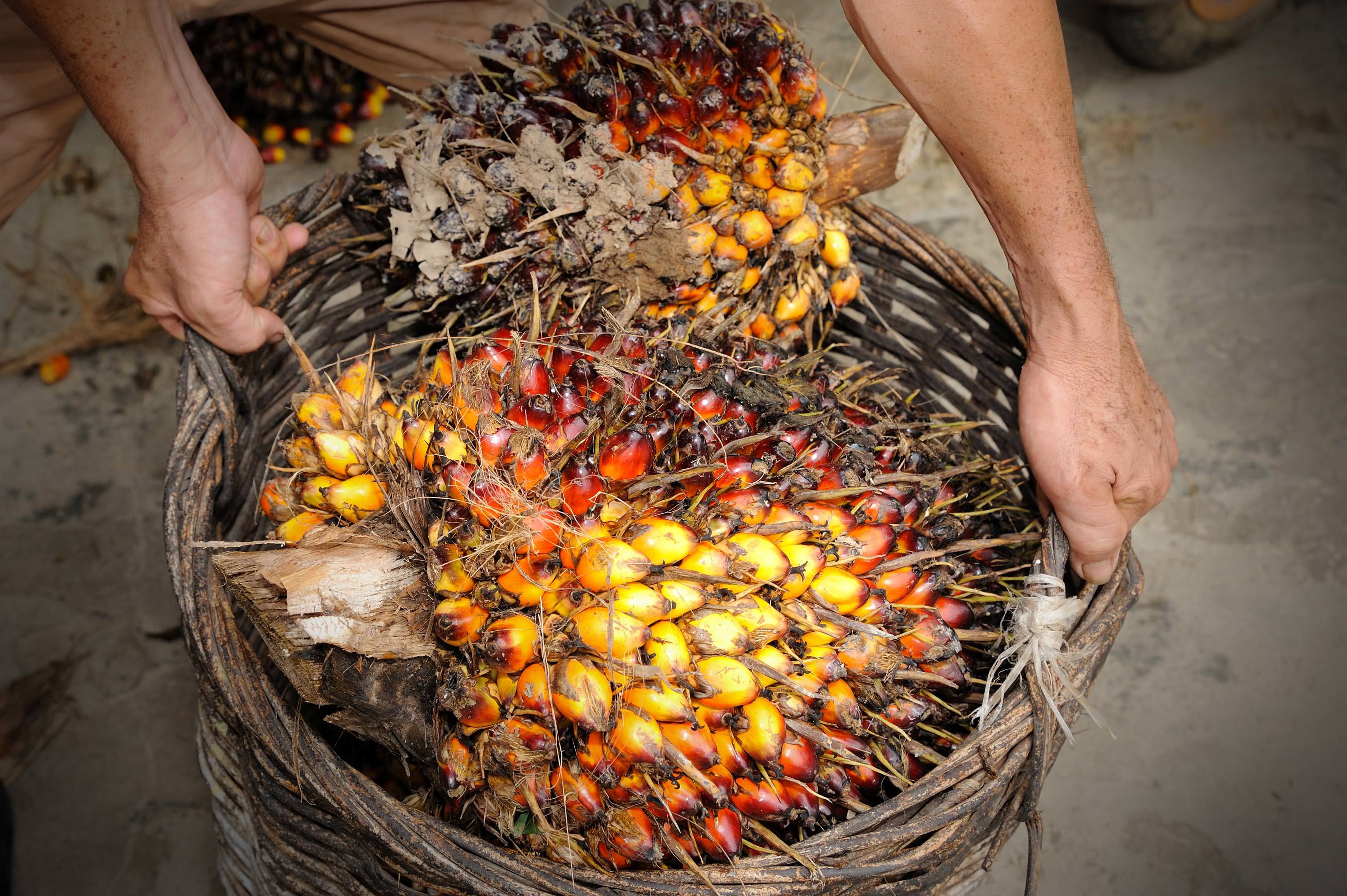
Landscape-level action in Sintang, Borneo
Alongside these supply chain-wide recommendations, the CAS team identified a Rainforest Alliance-led project that would allow Coles to take direct action in one of its particularly high-risk sourcing regions.
Located in West Kalimantan on the island of Borneo, Sintang is one of Indonesia’s main palm-growing areas. The district spans 2.2 million hectares and faces complex sustainability challenges, including deforestation risks and socio-economic pressures on smallholder farmers. Coles sources from seven of the 12 palm oil mills located in the district, making Sintang a priority landscape.
Through its co-investment in the Sintang Palm Landscape Project, Coles is supporting work that brings together local government, farmers, palm oil companies, and civil society organizations to restore forests, improve business practices, and promote more sustainable palm oil production. The project aims to reach more than 3,000 smallholder farmers and improve the management of 1.1 million hectares of forest and ecosystems.
Together, these activities helped Coles build on its existing commitments and further strengthen its sourcing practices.
Impact highlights
- 1,821 supply chains mapped to the mill level
- 23 countries covered through supply chain analysis
- 143 suppliers engaged across Coles’ supply chains
- 407 farms contributed data
- 561 Own Brand products assessed
“From a data-driven risk assessment to an impact-driven landscape-level project, Coles demonstrates how downstream retailers can act on the principles of shared responsibility.”
Nicola Vroomen, Corporate Advisory Services Manager
Strengthening responsible sourcing from the farm to store shelf
Through this process, Coles has deepened supplier engagement, focused resources where they are needed most, and continued strengthening its due diligence approach over time.
Looking ahead, the retailer’s co-investment in the Sintang project marks an important next step. The project allows Coles to support practical solutions on the ground, while the retailer also works to strengthen the business processes needed to drive lasting change.
Together, the SRA process and CAS recommendations demonstrate how companies can combine supply chain-wide improvements with landscape-level action to address risk more effectively, drive measurable progress, and build a stronger foundation for responsible sourcing.
Navigate supply chain complexity with confidence
For retailers operating complex global supply chains, sustainability challenges can feel difficult to navigate—but with the right support, they are achievable.
If your organization is ready to take action, the Rainforest Alliance CAS team will meet you where you are. Reach out to us at [email protected] to explore how we can help you better understand supply chain risks and decide where to focus next.