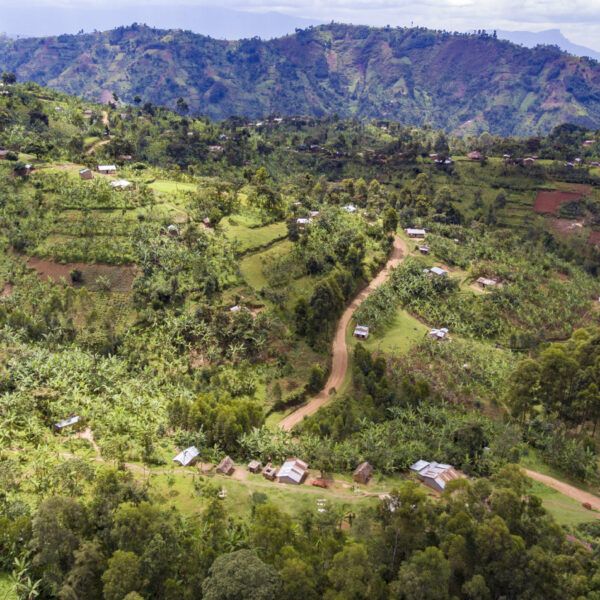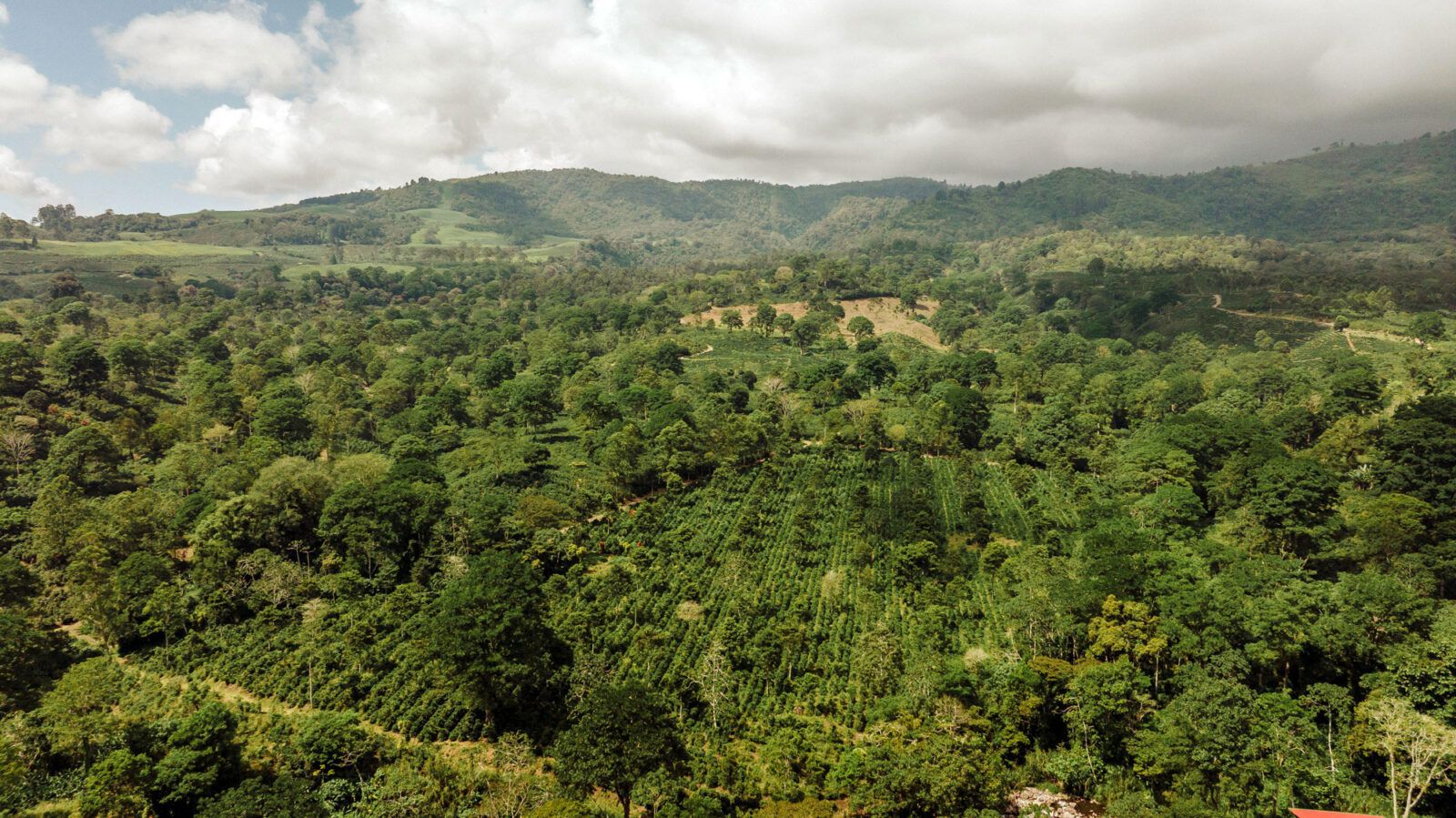
Nestled on the slopes of Costa Rica’s Turrialba Volcano, Aquiares Estate stretches over 600 hectares of lush, shaded coffee plantations and 200 hectares of protected rainforest. It acts as a wildlife corridor, connecting two national parks and boasting 130 bird species and 70 native-tree species. Rainforest Alliance Certified since 2003, Aquiares Estate achieved carbon neutrality in 2016, and now captures more carbon than it emits.
It should come as no surprise, then, that Aquiares Estate has emerged as a keen champion of regenerative agriculture—a way of farming that goes beyond harm reduction to add to nature’s richness. While Indigenous people have practiced a form of regenerative agriculture for millennia, the concept of healing the Earth through farming is now seen as key to tackling urgent issues like climate change and biodiversity loss. For us at the Rainforest Alliance, sustainability is a journey, and regeneration is the destination—and Aquiares Estate has advanced down that path beautifully.
How Rainforest Alliance certification jumpstarted a culture shift
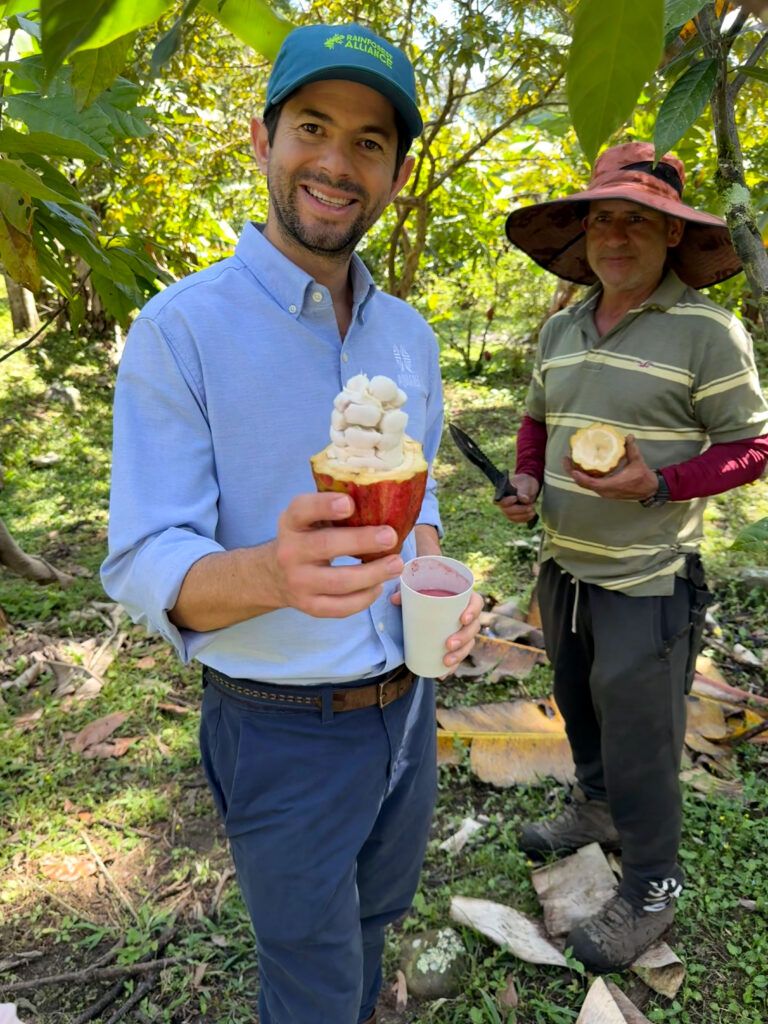
Once a full-sun, conventional coffee farm, Aquiares Estate transformed its practices in order to achieve Rainforest Alliance Certification in 2003. Farm manager Diego Robelo, whose family is one of three that co-owns the estate, recalls, “We changed our whole idea of what the farm should look like. We planted native vegetation alongside streams, which not only kept the water cleaner but brought wildlife back.” The farm also planted more than ten thousand shade trees among the coffee, and now, he says, “When you look down on the farm from high up the volcano, it’s hard to tell the farm from the protected forest areas nearby.”
Meeting our certification requirements turned out to be the start of a broader culture shift on the farm. “Back in the 90s, workers would trap colorful birds and put them [in cages] as decoration outside their homes,” Robelo recalls. “Then, with the Rainforest Alliance, we started saying, that is not allowed.” The practice stopped, and more importantly, a whole new “consciousness for the environment permeated the younger generation.” Now, many families have planted vegetation buffers behind their houses and near streams—not because it’s required, but because protecting the health of waterways is important to them.
“It’s really amazing how you [start making changes] because yes, you’re going to get audited, but then they become part of the culture,” Robelo says. “Having the community care about the environment that surrounds it—which is also the farm—helps us build the regenerative model.”
Communities with deep roots in coffee
Many of today’s 150 permanent employees have grown up on Aquiares—as did their parents and grandparents before them. This means that the skills and knowledge needed to produce high-quality coffee—how to prune, how to de-pulp, how to analyze pests and diseases on a plant, etc.—are passed down from generation to generation. “It’s a family heritage,” Robelo says.
The temporary workers who come for the harvest also have tight bonds with the farm, many of them bringing their families from Panama year after year. Aquiares sends a bus for them at the border, helps with their visa permits, and provides a free place to stay at the Coffee Picker Village, which houses 500 workers and 100 children. Workers and their families receive healthcare and other services, the most important of which, Robelo says, is daycare and schooling for the kids. Knowing their children are safe and fed during the day at the farm’s two government-funded schools, both parents can go to the field to “work, get a good wage, and save money to take back home.”
Regenerative coffee farming—now and into the future
As many coffee lovers know, our beloved morning beverage is under threat. “There are a lot of challenges,” Robelo says, pointing to climate change, labor shortages, and “price fluctuations [thanks to] a market not rooted in the principles of supply and demand.”
“But we’re not a company that judges itself quarter to quarter. We have a different way to measure our success: long-term stability. Our mission is to be here 100 years from now.” And for Aquiares Estate, that means continuing to invest in researching and testing new climate- and pest-resistant varietals that also taste great (a process that can take up to 10 years), in worker well-being, and in regenerative practices that keep waterways pristine, nourish soils, and enrich ecosystems.
Robelo hopes that when consumers sit down with a cup of Aquiares coffee, they take a moment to contemplate all that’s gone into making it. “It can be an introspective moment to think, ‘I’m connecting with a farm across the world that did all this.’”
After all, he reminds us, “We can enact change with every decision we make.”