Rainforests are biodiversity hotspots: from teeny tiny organisms breaking down leaf litter on the forest floor, to iconic animals like elephants and gorillas. In fact, rainforests are home to more than half of the world’s plant and animal species.
But this vital habitat is shrinking rapidly due to urgent threats like logging, wildfires, and deforestation for agricultural expansion. In 2024 alone, the tropics lost a record-breaking 6.7 million hectares of primary rainforest—putting more pressure on endangered rainforest animals than ever before.
What does “endangered” mean?
In 1964, the International Union for Conservation of Nature (IUCN) began publishing the Red List of Endangered Species. Today, it’s a vital resource for conservationists and nature lovers all over the world, monitoring and reporting on species’ statuses under broad categories.
IUCN Red List Categories
Extinct: No doubt that the last of the species has died.
Extinct in the wild: The species survives only in captivity or outside its natural habitat.
Threatened Categories
- Critically endangered: The species is at an extremely high risk of extinction in the wild.
- Endangered: The species is at a very high risk of extinction in the wild.
- Vulnerable: The species is at a high risk of extinction in the wild.
Near threatened: The species is not currently threatened but is close to qualifying for a threatened category.
Least concern: The species is not in danger.
10 endangered rainforest animals
Scientists warn that many thousands of rainforest species are at high risk of extinction. Here are just a few examples of what we stand to lose.
Sumatran rhinoceros
More closely related to extinct woolly rhinos than any modern ones, the Sumatran rhinoceros is the world’s smallest living rhino, and the only Asian rhino with two horns. Sadly, experts estimate there may be no more than 30 left in the wild.
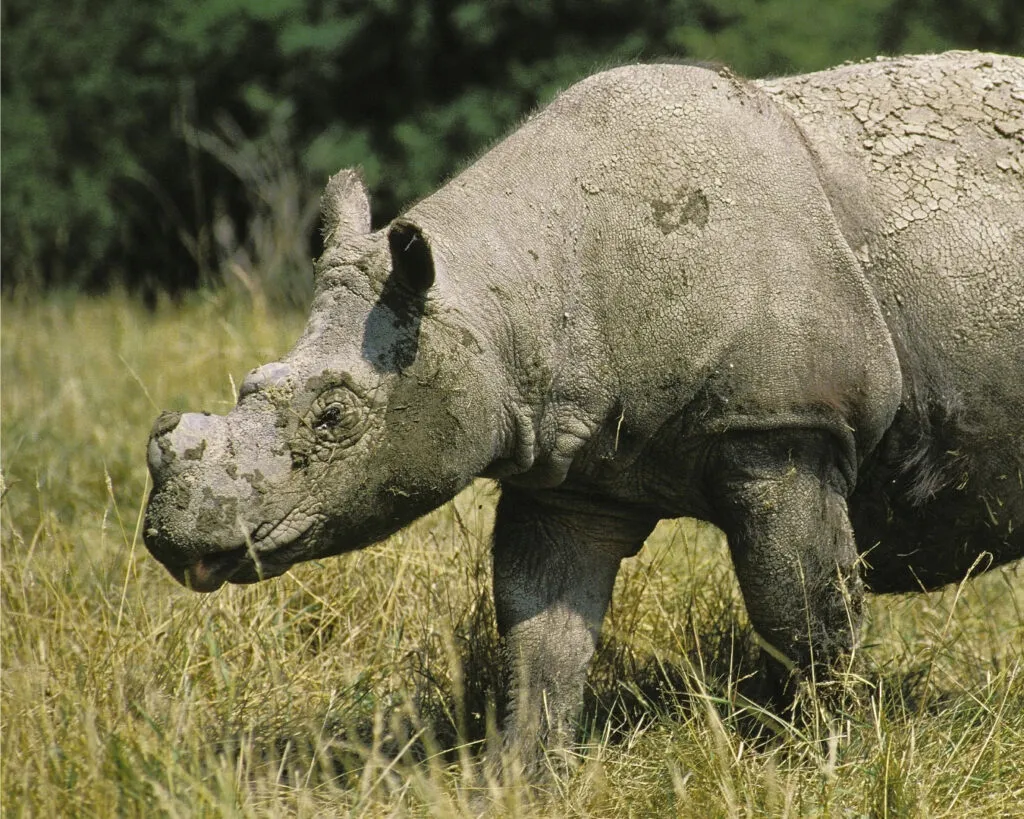
- IUCN status: Critically endangered
- Scientific name: Dicerorhinus sumatrensis
- Geographic range: Once found throughout southern Asia, it is now extinct everywhere except Indonesia.
- Habitat: Tropical rainforest and montane moss forest.
- Key threats: Agriculture, human disturbance, droughts, fires, hunting and trapping, logging, and human water usage.
Indian pangolin
This delightful, scaly mammal is unfortunately one of the most trafficked mammals on Earth. It defends itself from predators by rolling into a ball and lashing out with its tail, protected by its tough armor of scales. While most pangolins live on the ground, Indian pangolins have been reported to live in the forest canopy, where plenty of delicious ants are attracted by the fruit and flowers.
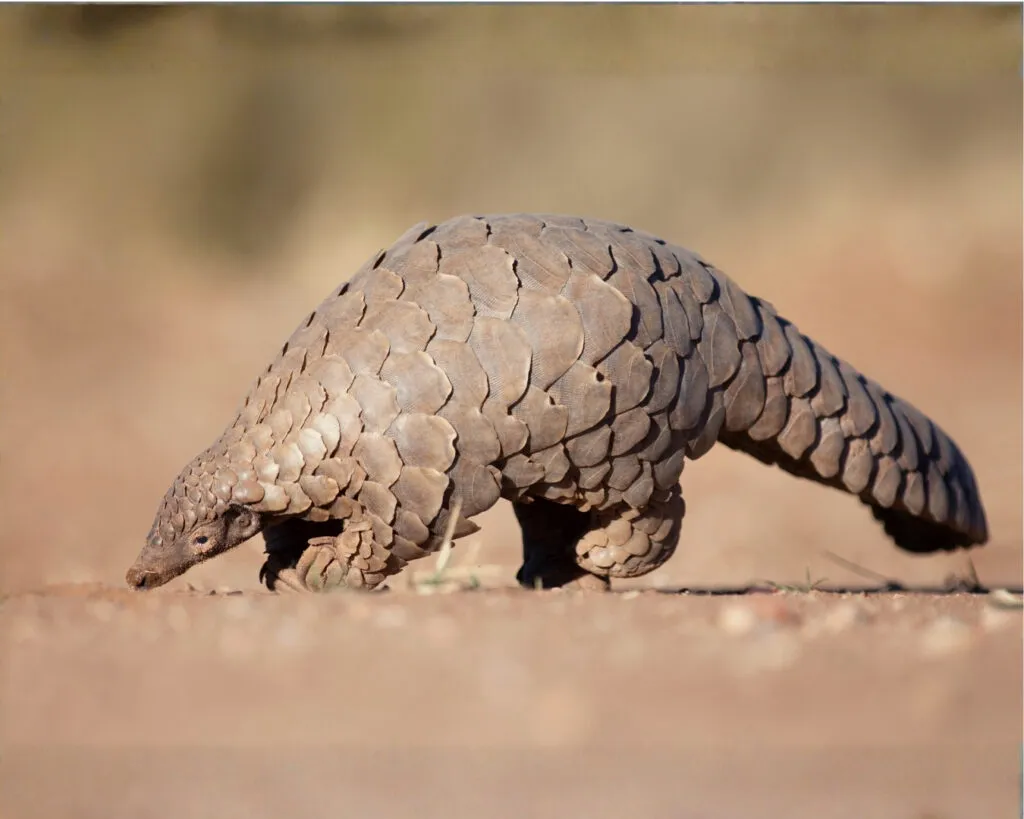
- IUCN status: Endangered
- Scientific name: Manis crassicaudata
- Geographic range: Bangladesh, India, Nepal, Pakistan, Sri Lanka.
- Habitat: Tropical forests, savannah, shrubland, and grassland.
- Key threats: Agriculture and hunting
Clouded leopard
These (small) big cats are named for the distinctive “cloud” patterns on their fur. It’s a solitary animal and it can open its mouth wider than any other cat to take down large prey—with teeth resembling those of the extinct sabertooth tiger. Conservationists estimate that only 3,700-5,580 mature individuals remain in the wild.
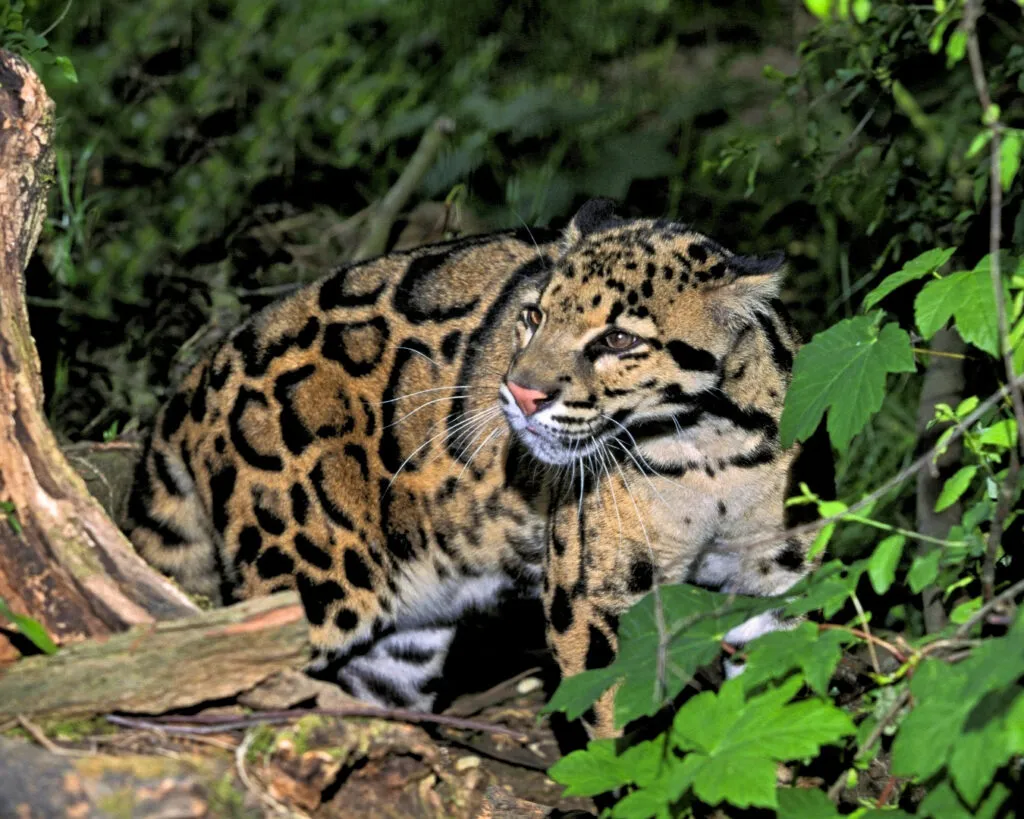
- IUCN status: Vulnerable
- Scientific name: Neofelis nebulosa
- Geographic range: Bangladesh, Bhutan, Cambodia, China, India, Lao People’s Democratic Republic, Malaysia, Myanmar, Nepal, Thailand.
- Habitat: Primary evergreen tropical rainforest.
- Key threats: Habitat loss due to development, agriculture, logging, and transport corridors, changes in water management (like dams).
Amazonian tapir
Also known as the Lowland or South American tapir, the Amazonian tapir is one of the largest mammals in South America. They are highly intelligent and communicative herbivores, and in Columbia, they are fondly known as the “gardeners of the forest” thanks to their rich, seed-filled dung spreading trees to new areas.
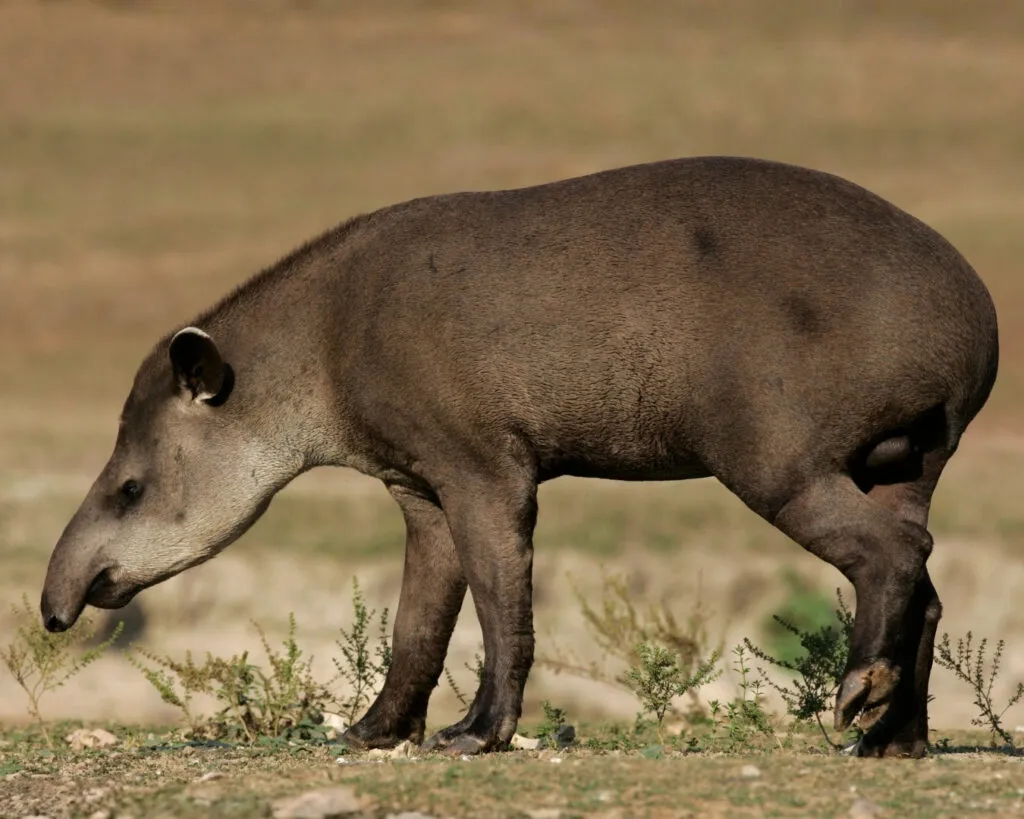
- IUCN status: Vulnerable
- Scientific name: Tapirus terrestris
- Geographic range: North and central South America
- Habitat: Tropical forests, savanna, shrub- and grassland, and inland wetlands.
- Key threats: Development, agriculture, logging, and hunting and trapping.
Hyacinth macaw
The Hyacinth macaw is the largest of all parrot species, with its distinctive blue and yellow colors complimented by the bird’s photogenic, “smiling” beak. Conservation efforts had once pulled the hyacinth out of Brazil’s endangered species list, but intensified habitat loss and the changing climate have brought it back to a high risk of extinction.
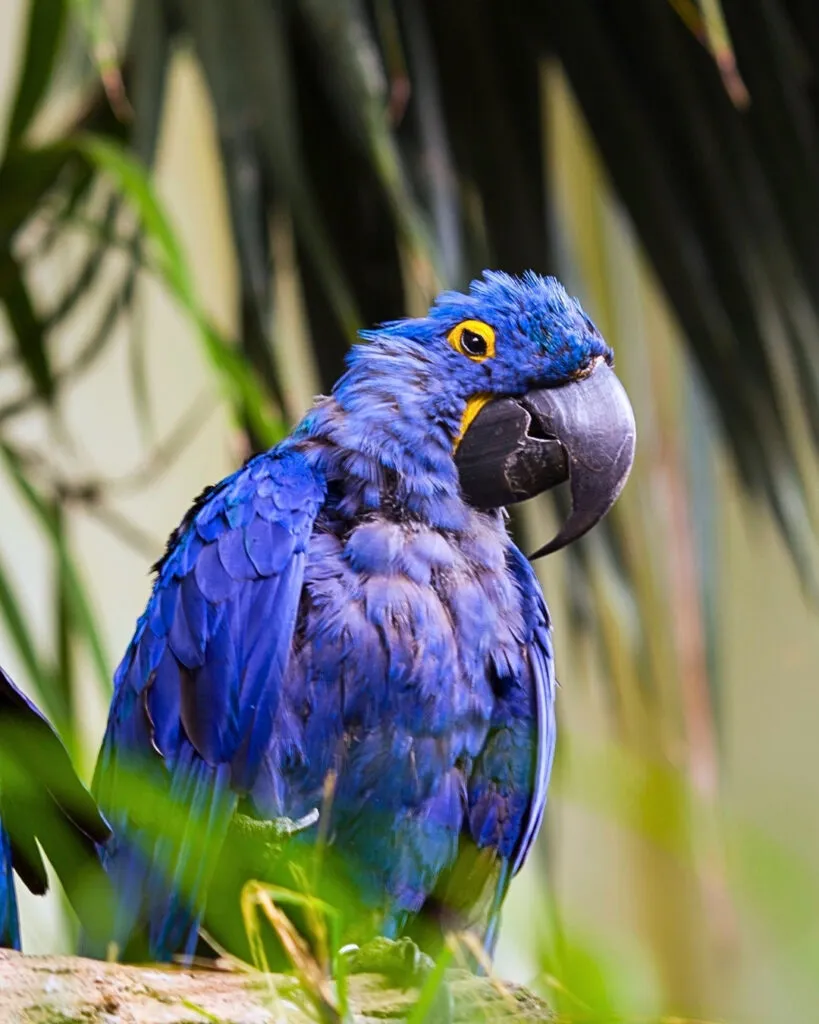
- IUCN status: Vulnerable
- Scientific name: Anodorhynchus hyacinthinus
- Geographic range: Bolivia, Brazil, Paraguay
- Habitat: Savanna, grassland.
- Key threats: Development, agriculture, hunting and trapping.
Sky blue poison dart frog
We love a cool tropical frog here at the Rainforest Alliance—and the sky blue poison dart frog is no exception. Fun fact: After females lay their eggs, their male mates guard the eggs for two weeks and then transport the fresh hatchlings to nearby water sources. What good dads!
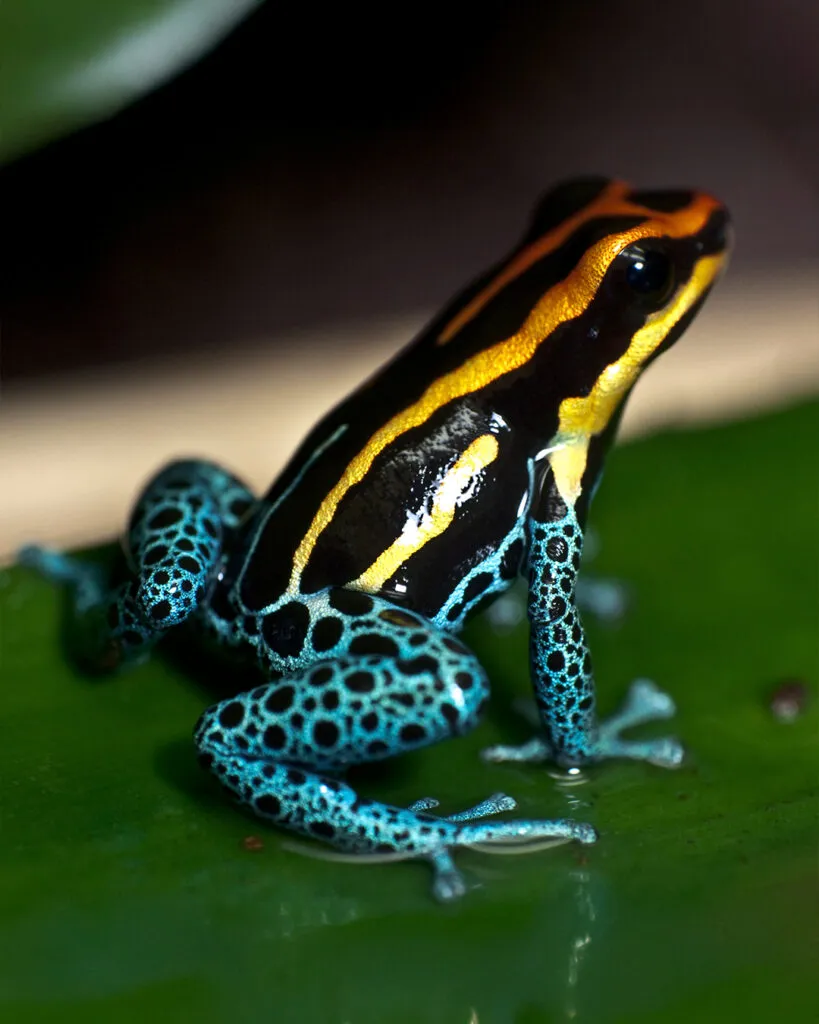
- IUCN status: Endangered
- Scientific name: Hyloxalus azureiventris
- Geographic range: Peru
- Habitat: Lowland primary tropical rainforest, wetlands (inland), caves, and non-aquatic subterranean habitats.
- Key threats: Development, agriculture, hunting and trapping.
Amazon river dolphin
This freshwater dolphin has famously pink skin; the murkier the water it lives in, the pinker it will be–they can even blush when excited! The Amazon river dolphin is more flexible than most other dolphins, able to turn their heads from side to side and paddle forward and backward to maximize maneuverability in flooded rivers.
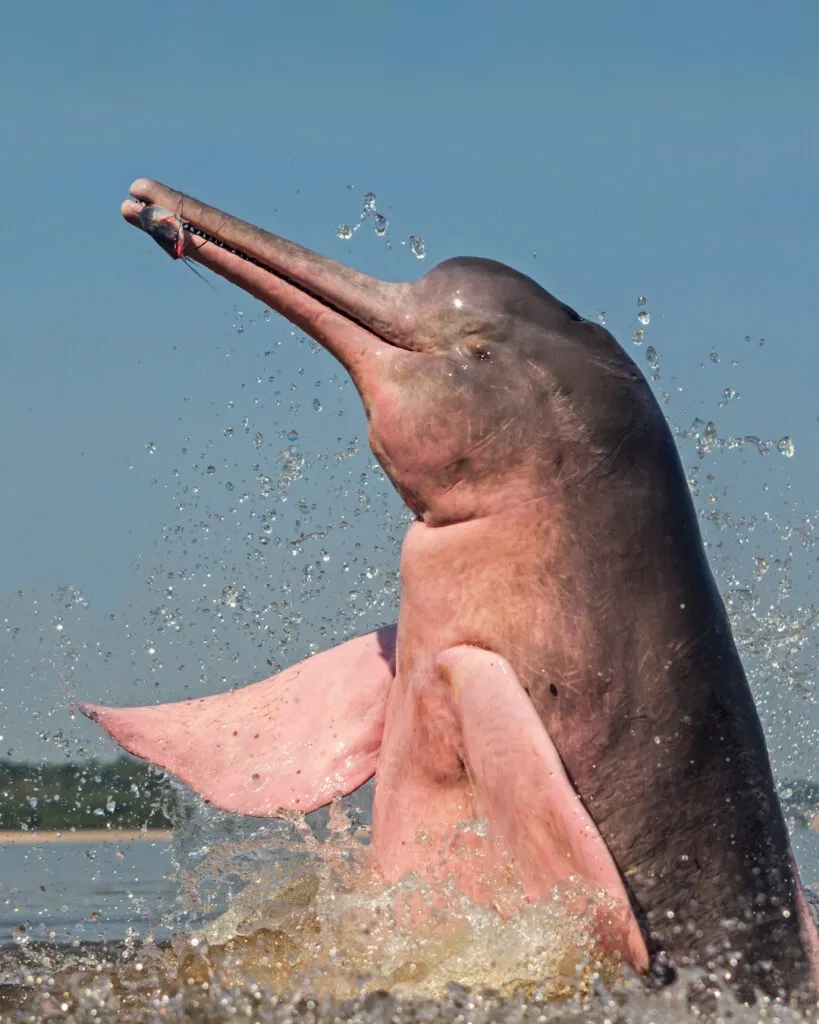
- IUCN status: Endangered
- Scientific name: Inia geoffrensis
- Geographic range: Throughout the Amazon and Orinoco river basins in Brazil, Bolivia, Colombia, Ecuador, Peru, and Venezuela.
- Habitat: Freshwater wetlands
- Key threats: Development, human water usage, changes in water management (like dams), oil and gas drilling, mining, human intrusion, and pollution.
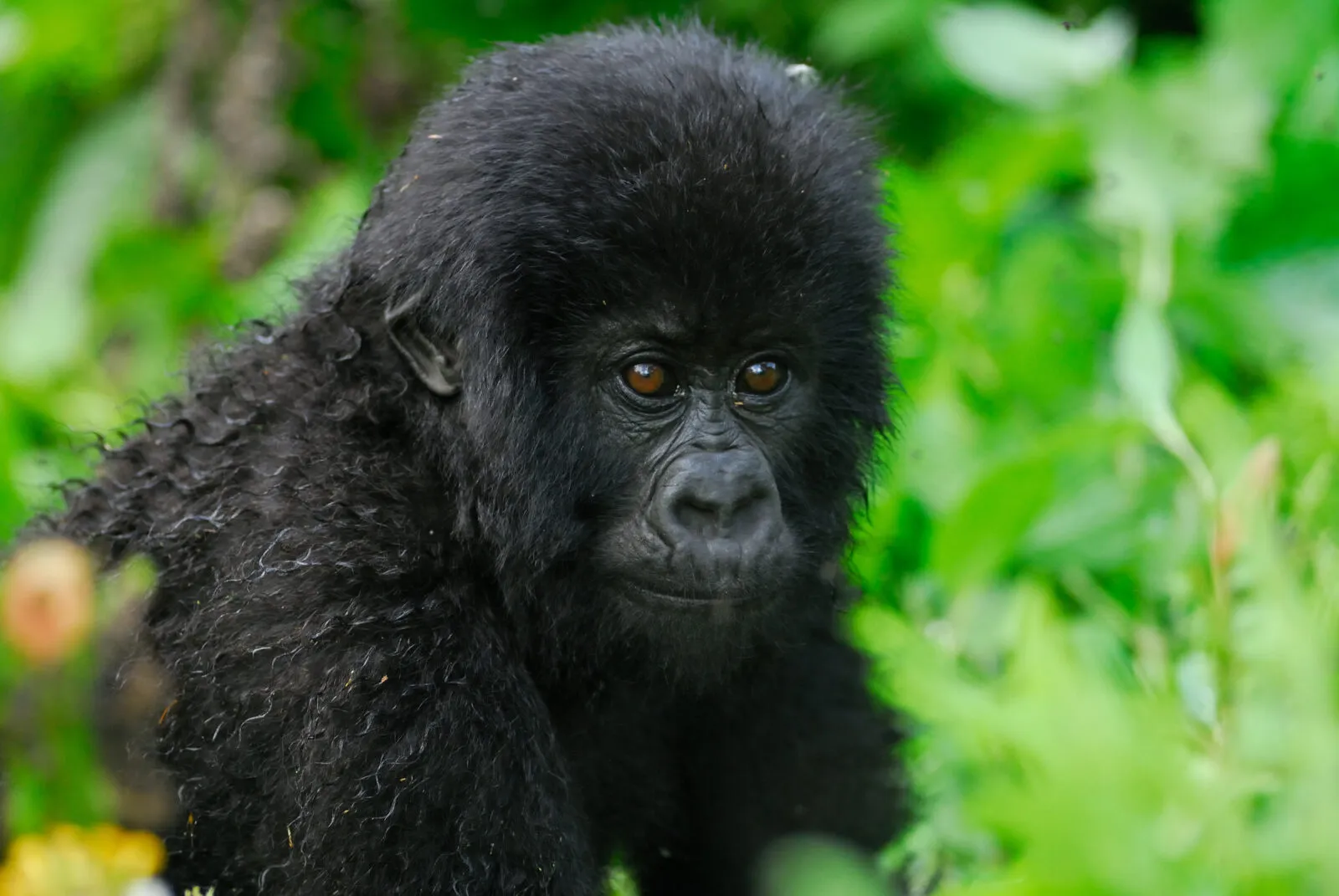
Western Lowland Gorilla
As well as having one of the best scientific names ever (see below), the Western Lowland Gorilla is very intelligent, with research suggesting this great ape can recognize tool functionality. In spite of conservation efforts, their numbers continue to decline—in part due to the Ebola virus, which is, unfortunately, endemic in Central Africa.
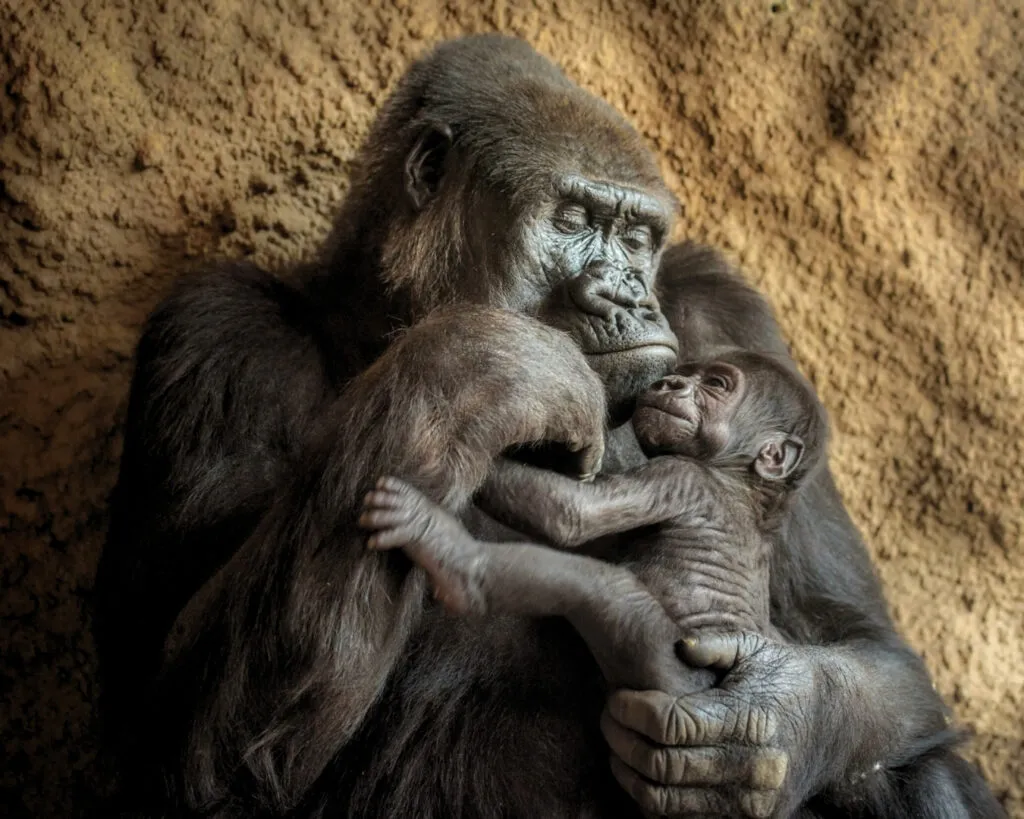
- IUCN status: Critically endangered
- Scientific name: Gorilla gorilla gorilla
- Geographic range: Central Africa: Angola, Cameroon, Central African Republic, Congo, Equatorial Guinea, Gabon.
- Habitat: A variety of forest types.
- Key threats: Agriculture, human disturbance, climate change, mining, logging, hunting and trapping, disease, and habitat loss due to transport corridors.
African forest elephant
African forest elephants are smaller than their savannah-dwelling kin, perfect for navigating their dense forest habitat. They live in family groups of up to 20 individuals. These fruit-loving “mega-gardeners” play a vital role in dispersing tree seeds throughout the forest—and their fertile feces also help conservationists estimate population size through “dung counts.”
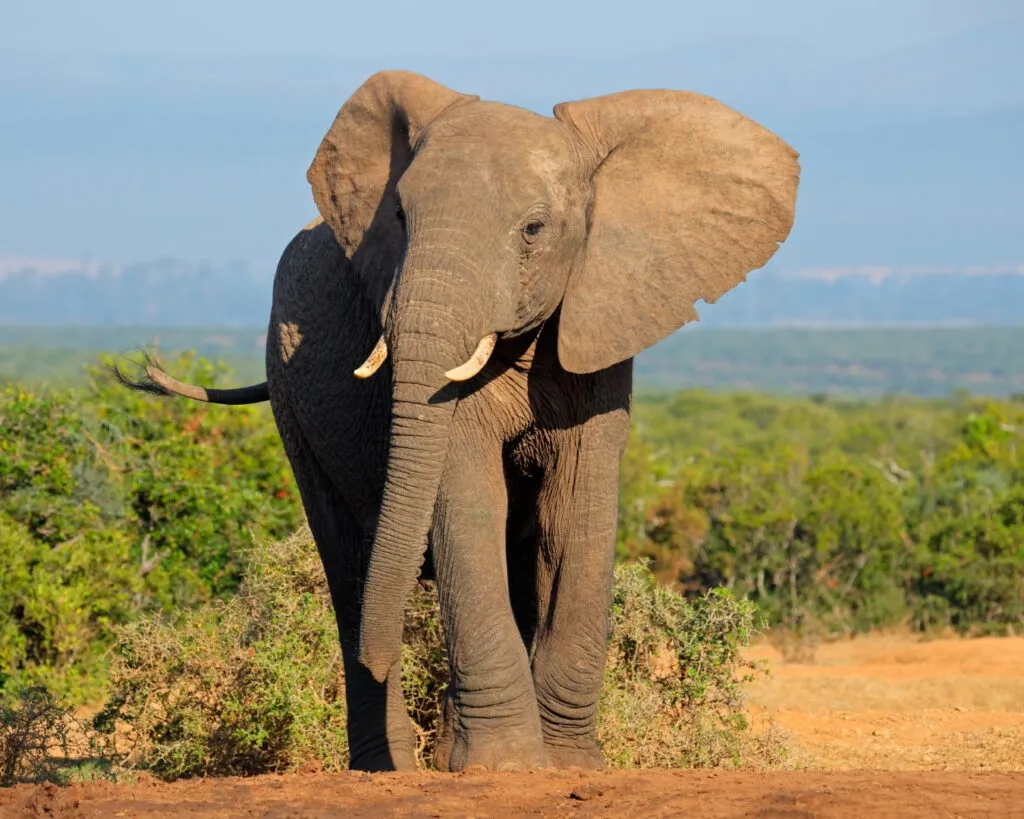
- IUCN status: Critically endangered
- Scientific name: Loxodonta cyclotis
- Geographic range: West and central Africa, but already declared extinct in Gambia.
- Habitat: A variety of forest habitats including tropical forests, swamp forests, the lower reaches of Afro-montane forests, dry forests, and forest-savanna mosaics.
- Key threats: Agriculture, human disturbance, climate change, mining, logging, hunting, development for tourism, fires, changes in water management, and habitat loss due to transport corridor.
Golden bamboo lemur
The Golden bamboo lemur is found only on Madagascar—and had no natural predators there until humans arrived. These big-eyed beauties survive on a diet of bamboo and have evolved a resistance to the high levels of cyanide found in bamboo leaves. Experts estimate there may only be 50-249 mature individuals left in the wild.
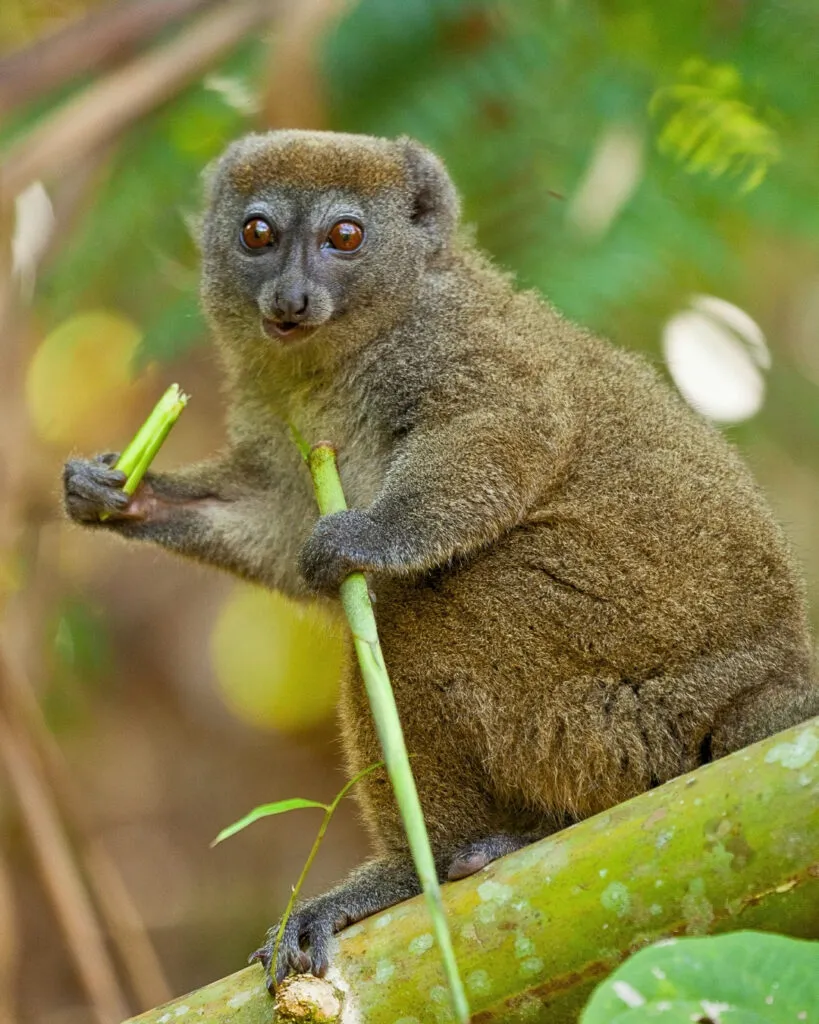
- IUCN status: Critically endangered
- Scientific name: Hapalemur aureus
- Geographic range: Madagascar
- Habitat: Humid forests and marshes with bamboo.
- Key threats: Habitat loss due to slash-and-burn agriculture.
How can endangered rainforest animals be saved?
There is still hope for these endangered rainforest animals. The IUCN Red List is an important warning that we need to act now to stop habitat loss, restore rainforests, and bring these species back from the brink.
Amazing things can be achieved when we all work together to find sustainable solutions.
In Guatemala’s Maya Biosphere Reserve, for example, the Rainforest Alliance’s community forestry work has helped local jaguar populations by promoting the protection of their habitat, food, and water sources. Community is key: By supporting the people living in these rainforest landscapes to manage their lands as sustainably as possible, the positive impacts stretch from soil to tree-top; human to animal; forest elephant to hyacinth macaw.
If you’d like to learn more about our work to protect tropical forests around the world, sign up to our mailing list and join our movement for change!
Together, we’re building a future where people and nature thrive. Sign up today and join our movement.
"*" indicates required fields