One sheet
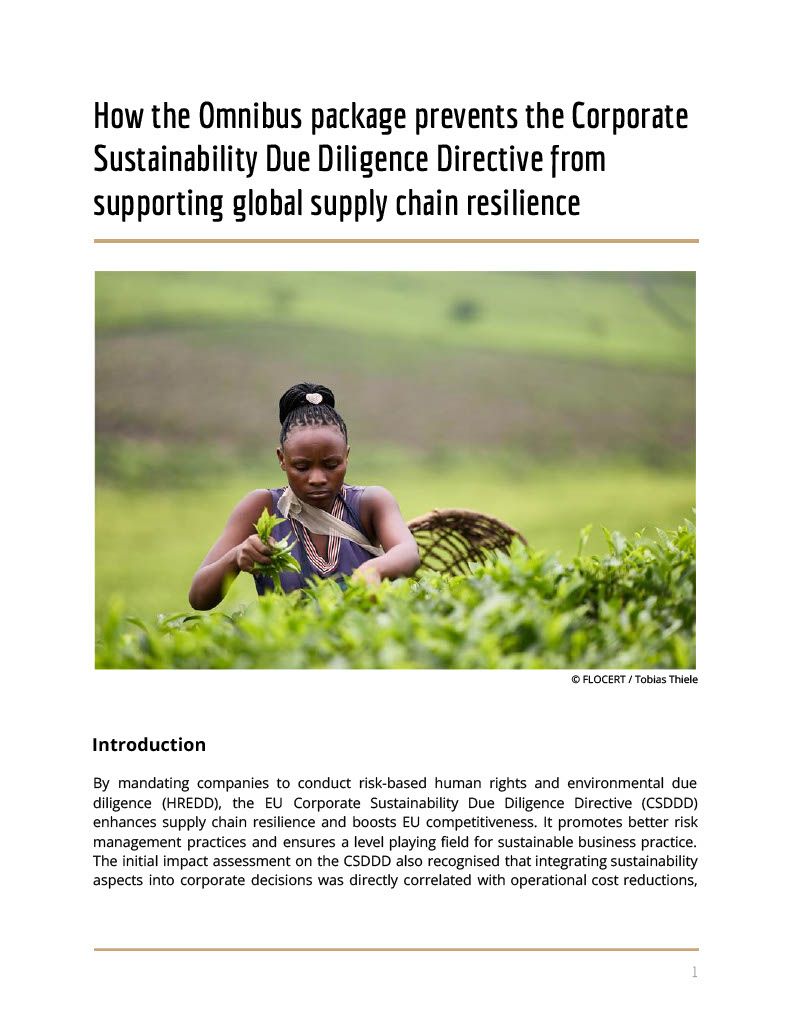
By mandating companies to conduct risk-based human rights and environmental due diligence (HREDD), the EU Corporate Sustainability Due Diligence Directive (CSDDD) enhances supply chain resilience and boosts EU competitiveness. However, it can only be achieved if all supply chain actors, including those beyond Tier 1, are included in companies’ HREDD processes. Specifically, smallholders are crucial actors in global supply chains, both as economic actors and rights-holders. There are approximately 600 million smallholder farmers worldwide, who produce 46% of the world’s food on just one-third of the world’s agricultural land. The European Union is a major market for smallholder-produced goods, such as cocoa, coffee and cotton.
They however face systemic challenges, including limited market access, inadequate financial resources, and insufficient infrastructure. If companies in scope fail to support smallholders, it can lead to supply chain disruptions, exacerbate farmers’ and their households’ poverty and further contribute to environmental degradation.
While we support the European Commission’s simplification efforts, we are concerned about the changes introduced by the Omnibus proposal that risk undermining the CSDDD. That’s why, together with 40 other civil society organisations, we call onto EU decision makers to: