Overview
- The EUDR applies to companies that sell cocoa, coffee, or derived products to EU markets or export them from the EU.
- It requires that products do not originate from land deforested after December 31, 2020.
- The Rainforest Alliance provides EUDR compliance services to our certified partners at no extra cost.
How, exactly, does deforestation contribute to climate change? The Rainforest Alliance breaks down the numbers for you—and explains our innovative approach to keeping forests standing.
How deforestation affects climate change
Among the many gifts forests give us is one we desperately need: help with slowing climate change. Trees capture greenhouse gases (GHGs) like carbon dioxide, preventing them from accumulating in the atmosphere and warming our planet.
When we clear forests, we knock out our best ally in capturing these GHGs.
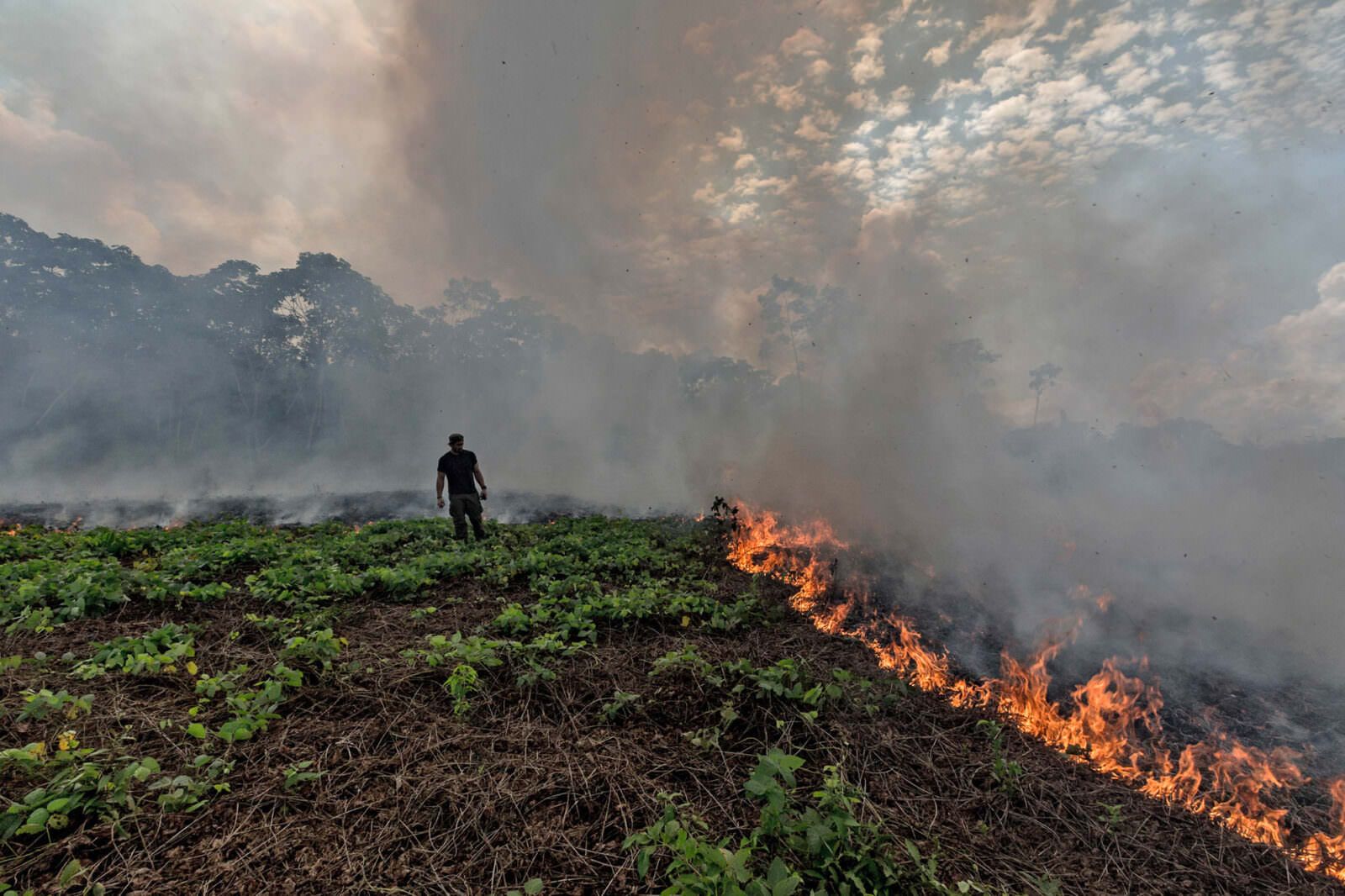
Deforestation also creates emissions. When trees are chopped down, they release all the carbon they’ve been storing into the atmosphere. If they’re burned (a common practice) or left to rot, they create even more GHG emissions. All told, deforestation causes about 10–20 percent of worldwide GHG emissions.
Healthy forests and vibrant communities are an essential part of the global climate solution. Sign up to learn more about our growing alliance.
Why deforestation happens
Knowing that deforestation robs us of a crucial weapon to fight climate change—and creates further emissions—why on Earth would anyone clear a forest? The main reason is agriculture. Big business razes forests to plant mega crops like soy and oil palm. Meanwhile, on a much smaller scale, subsistence farmers often clear trees so they can plant crops to feed their families and bring in small amounts of cash.
But there’s a tragic irony to clearing rainforests for agriculture: The quality of their underlying soils is extremely poor. All the nutrient richness is locked up in the forests themselves, so once forests are burned and the nutrients from their ashes used up, farmers are left with useless soil. On they go to the next patch of forest: raze, plant, deplete, repeat. agriculture is responsible for more than 90 percent of tropical deforestation.
Not surprisingly, agriculture causes emissions, too—in fact, farm emissions are second only to those of the energy sector. In 2023, agriculture accounted for about 12.3 percent of GHG emissions globally.
Deforestation: a climate-change triple threat
Here are the knock-on effects of deforestation:
- We lose a crucial ally in keeping excess carbon out of the atmosphere (and in slowing climate change).
- Even more emissions are created when felled trees release the carbon they’d been storing, and rot or burn on the forest floor.
- What most often replaces the now-vanished forest—livestock and crops—generate massive amounts of greenhouse gases, too.
The human impact—and how we move forward
We’ve explained how deforestation affects climate change. It also destroys the lives and traditions of forest communities and upsets ecosystems. The uptick in mosquito-borne diseases and the rapid spread of crop-destroying pests are all indirect consequences of forest destruction and a warming climate.
Obviously, protecting forests is urgent. But the need to feed a rapidly growing global population—projected to reach 9 billion by 2050—is urgent, too. That’s why the Rainforest Alliance is helping farmers transition to regenerative agriculture—a way of growing food that doesn’t just protect nature, but also restores it.
And of course, the Rainforest Alliance remains committed to its work with tropical forest communities all around the world. In Cameroon, we recently worked with traditional chiefs to restore their sacred forests, and in the Democratic Republic of Congo, we helped establish community forests. Communities we’ve worked with for more than 20 years in Guatemala’s Maya Biosphere Reserve have gained world renown for maintaining a near-zero deforestation rate—an impressive feat given neighboring areas have lost significant forest cover. Part of our strategy is to build livelihoods for these communities that don’t endanger the forest.
There’s no doubt about it: If we want to fight climate change, we have to protect and restore forests—which is exactly what the Rainforest Alliance has been doing for almost 40 years.