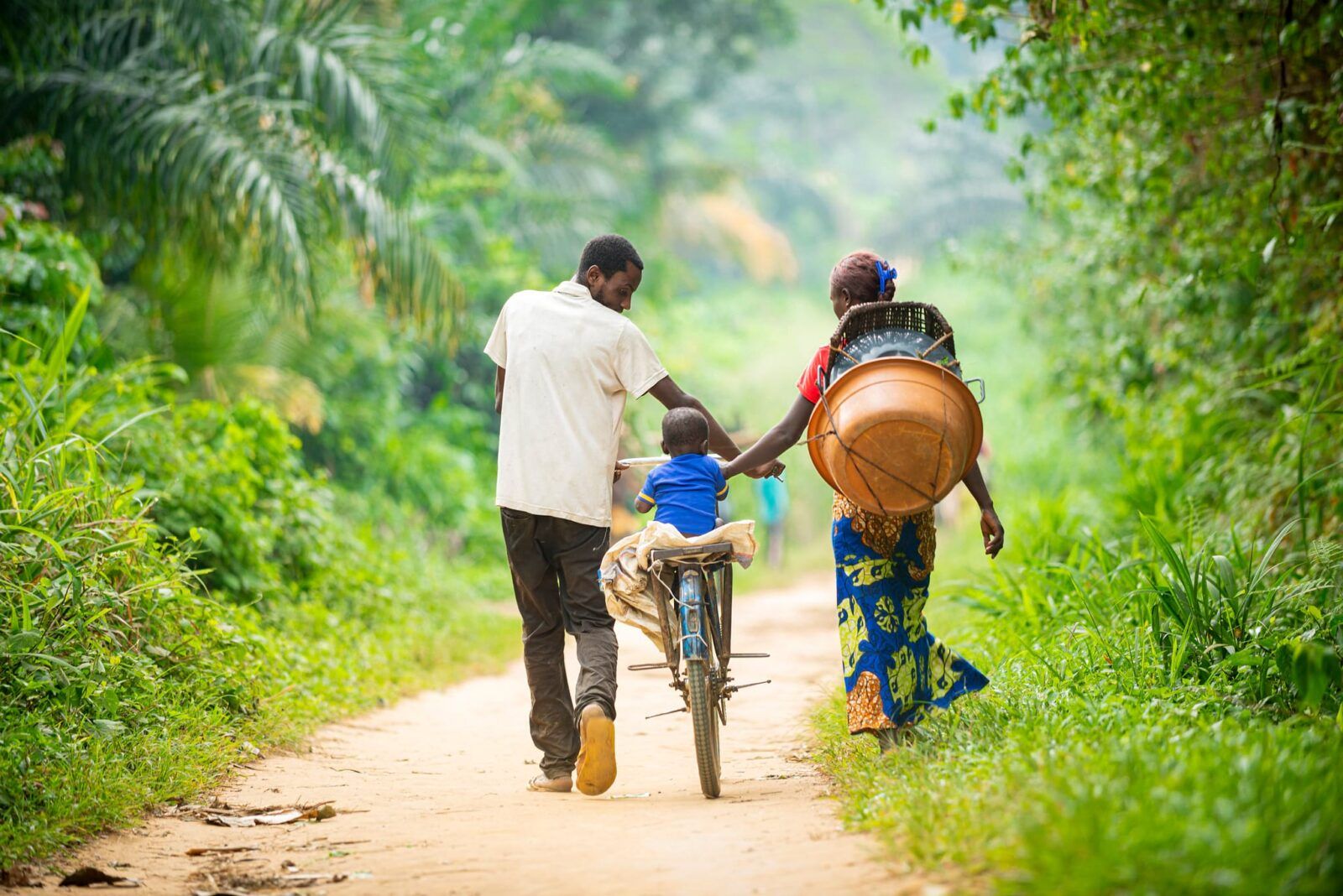
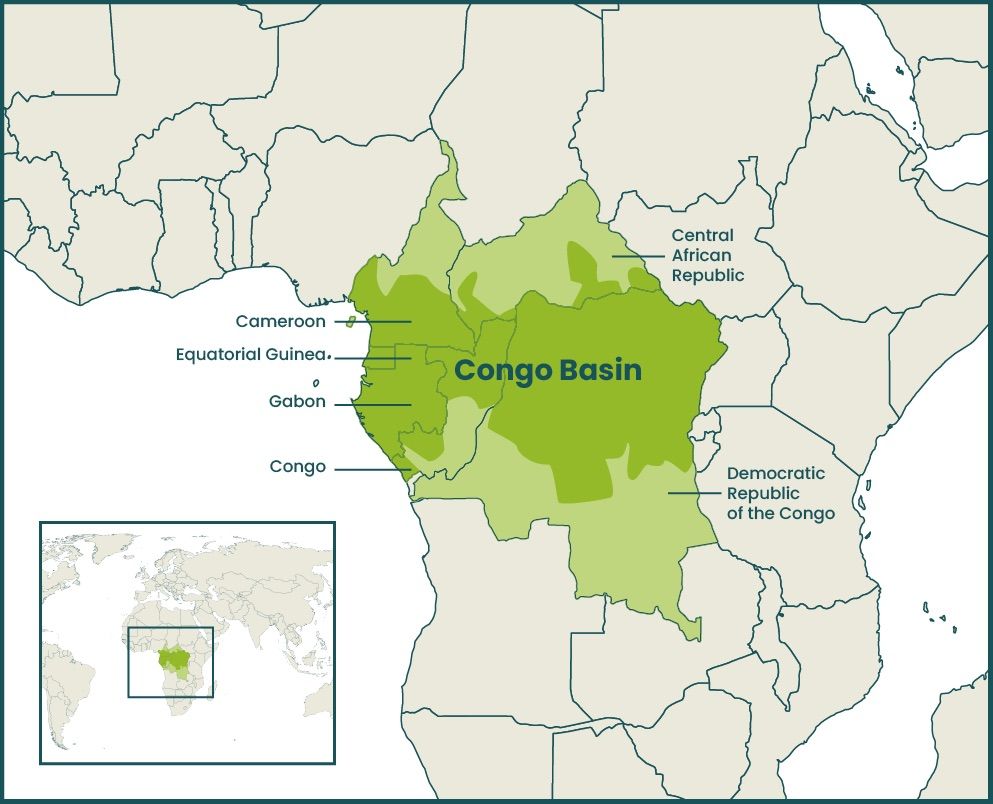
The Congo Basin, the world’s second-largest tropical forest after the Amazon, absorbs six times more carbon dioxide than its more famous counterpart. Yet it receives a miniscule fraction of global forest conservation money. No wonder it is sometimes called the forest the world forgot.
Meanwhile, threats to this global treasure mount: agricultural expansion, extraction, and a lack of sustainable livelihoods for the people who live in it.
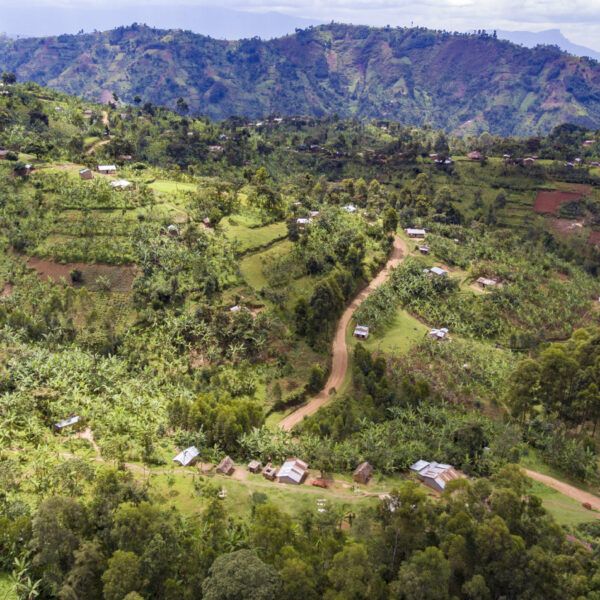
That’s why we are working in Cameroon’s Western Highlands (Mounts Bamboutos and Bana–Bangangté–Bangou landscapes) and on the southern periphery of the Dja Biosphere Reserve, as well as in the Monkoto corridor of the Democratic Republic of Congo’s Salonga National Park. Our aim is to protect and restore forest ecosystems by supporting local communities on better farming practices, forest management, and sustainable livelihoods, as well as on landscape restoration and governance.
Protecting forest ecosystems in the Congo Basin
In the Western Highlands lie some of Cameroon’s sacred forests—important cultural sites for ancestral communication and ritual ceremonies. But these forests, historically , are facing the same threat as the rest of the region. Over a period of five years, we worked with traditional chiefs to restore and protect these forests in ways that respect local customs. Together with communities, we set up 12 tree nurseries, producing more than 100,000 native seedlings that were planted across more than 250 hectares of sacred forests.
In the Monkoto corridor, a strip of land that divides the majestic Salonga National Park into two sections, we supported 14 communities in establishing 62,192 hectares of community forestry concessions. By helping to establish a management plan, we are building ways for these communities to make a living from the forest while protecting it.
In the Monkoto corridor, a strip of land that divides the majestic Salonga National Park into two sections, we supported 14 communities in establishing 62,192 hectares of community forestry concessions. By helping to establish a management plan, we are building ways for these communities to make a living from the forest while protecting it.
Our work in Guatemala’s Maya Biosphere Reserve has proven the success of the concession model: The Guatemalan government allows communities there to extract timber and other forest products, as long as they do so sustainably. That means, for example, harvesting only one tree per hectare every 40 years and cultivating native species in nurseries to help restore degraded areas. All harvesting activities—such as collecting tree nuts off the forest floor—must leave the forest ecosystem intact. As a result of these practices, the MBR concessions have maintained a near-zero deforestation rate.
Regenerating ecosystems through better farming
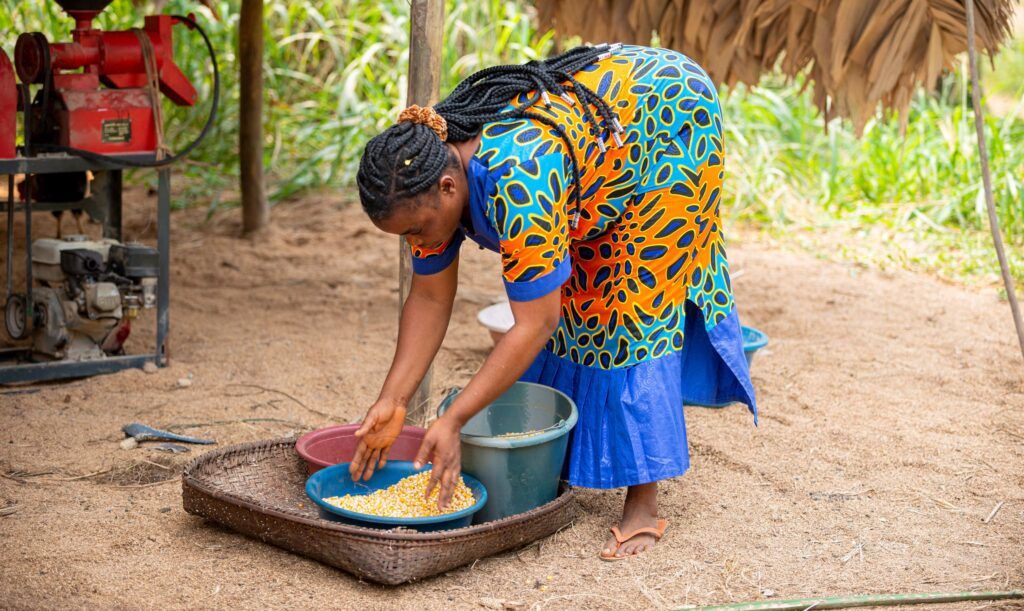
Agriculture causes a staggering 80 percent of deforestation—and when forests go down, forest ecosystems are destroyed, too. That’s why it’s so urgent to transition to farming techniques that enrich the health of the land; doing so helps improve yields and incomes, reducing farmers’ need to expand cropland into nearby forests.
As part of COBALAM, our five-year initiative in Cameroon, we trained 3,390 women in better farming practices. One of them, Fomado Virginie, said that learning how to make biofertilizers and reduce pesticide use transformed the quality of her soil. “Now, when I walk into a field where I’ve applied biofertilizers, and start turning the soil, I see ants and earthworms,” said Fomado, who is acting secretary of Mali Reunion, an association of 100 women farmers. Nearly 6,000 farmers in the Western Highlands—more than half of them women—have adopted sustainable practices because of our trainings.
For farmer Manga Paul, who lives in the Monkoto corridor, trainings not only sharpened his technical skills, but helped him and his neighbors diversify the crops they grow. “Our landscape was shaped by coffee plantations,” he said, but after Rainforest Alliance trainings, farmers added cocoa crops. This both increased his on-farm biodiversity and created more income streams. “I know that what I’m building today can be passed onto my grandchildren,” he said. “They will continue the work, support their education, and help the family.” In 2025 alone, we trained 1,541 farmers there and brought 972 hectares under sustainable agriculture.
Building rural entrepreneurship and alternative livelihoods
High poverty rates can sometimes lead communities living in the Monkoto corridor to go into the nearby forest park to hunt and fish, which is not only illegal but poses a serious threat to the ecosystem. Christian Lokuli Besongo, for example, used to supplement his income as a tailor with poaching, but after attending a six-month embroidery training delivered by the Rainforest Alliance and local NGOs, Besongo’s tailoring business flourished.
“It allowed me to buy land and build my own house. I am convinced if others see what I have been able to achieve, they will follow the same path and move away from illegal activities linked to the park.”
Christian Lokuli Besongo, Tailor and small business owner
Benzi Ekuma also went through trainings, which led to him expanding his farm activities beyond crop cultivation to include sustainable pig and fish farming. “I am very happy about what we are learning,” he said. “We will make sure to put this into practice to use our land in a way that doesn’t destroy the forest.”
Building sustainable businesses was also a focus in Cameroon, where we provided equipment—ranging from protective suits to honey packaging bottles—to 144 beekeepers. 38 women (22 of them young women) learned how to process products like avocado oil and potato flour to earn more money.
Training women leaders
Giving women a voice in decision-making is key to improving community well-being, since women are more likely than men to invest in education, health, and nutrition. That’s just one reason we trained 3,390 women in Cameroon in leadership skills.
Saho Françoise was already a town councilor in the town of Batcham, in Cameroon’s Western Highlands—an impressive feat since elections are quite competitive, not to mention male-dominated. But after Rainforest Alliance leadership trainings for women, she became even more confident. “Whatever I do now, I know I can succeed. I know I have value,” she said.
Françoise also learned to see her position as one that could change the trajectory for women and girls on a larger scale. “My greatest dream is for the young girls and women in my community to speak freely, to have access to education and not be limited to becoming wives and mothers,” she said. “I want them to take on leadership roles in society, to be real actors in development. I want them to have access to inheritance of land, and to equal opportunities in everything they do.”